Get all your news in one place.
100's of premium titles.
One app.
Start reading
The Economic Times
The Economic Times
Muskan Singh

In 2025, Mowi launched Chile’s first floating-solar salmon farm. 1 year later, solar and batteries cover 57% of its power needs and are expected to cut diesel use by 36,750 gallons a year

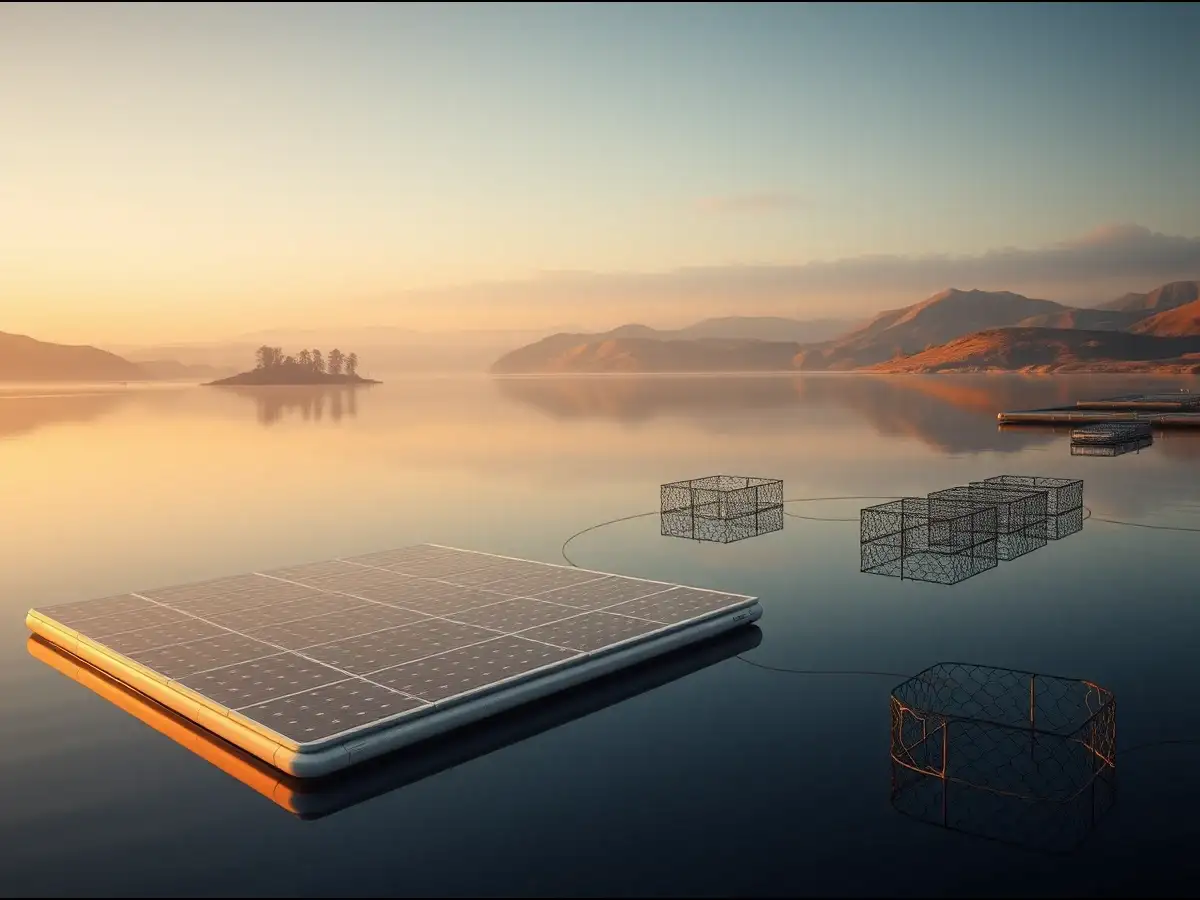
A salmon farm in southern Chile is using floating solar panels and batteries to reduce its reliance on diesel generators. At Mowi’s Huar Norte pen in the Los Lagos region, the system now supplies much of the farm’s electricity without changing where the salmon are kept.

The floating solar setup covers about 57% of the site’s power needs over a year and is expected to replace roughly 36,750 gallons of diesel annually. It also reduces the need for fuel deliveries by boat and lowers the farm’s carbon emissions, as reported by The Pulse.

READ ALSO: Texas used towering wind turbines as accidental frost fans based on a 2019 NASA observation; the result warmed ground temperatures 4–7°F on winter nights

How does solar power work on a salmon farm?

An offshore salmon farm needs electricity around the clock. Feeders, pumps, lights, cameras and oxygen-monitoring equipment all require power, while remote pens may have no connection to the electricity grid.

Traditionally, that means relying on diesel generators and bringing fuel to the farm by boat.

The floating solar system changes that arrangement. Solar panels are positioned on pontoons around the fish cages and connected to batteries. A control system manages the solar power, stored energy and generator, allowing the diesel engine to operate mainly when the renewable system cannot meet demand.

On sunny days, the panels and batteries can supply the platform without the generator running continuously.

The project brings together three companies. Mowi operates the salmon farm, while Alotta provides the floating solar system and Fjord Maritime handles the batteries and energy management.

READ ALSO: In 1836, a pangolin from Nepal entered a London museum collection. 190 years later, scientists sequenced its preserved DNA and confirmed Manis aurita as a distinct species, giving conservationists a new tool against poaching

What does Chile’s first floating solar salmon farm save?

The numbers are significant for a remote operation. Over the course of a year, solar power and battery storage are expected to provide around 57% of the farm’s electricity. That reduces diesel consumption by approximately 36,750 gallons.

The fuel savings also have an environmental effect. The project is expected to prevent about 385 tons of carbon dioxide from entering the atmosphere annually, equivalent to roughly 770,000 pounds.

There is another practical benefit. Less diesel consumption means fewer boat trips to deliver fuel to the offshore farm. That reduces both the cost and the risks associated with moving fuel across open water.

The system also changes the atmosphere around the fish pens. A generator that once operated continuously can remain off for longer periods, reducing the engine noise and vibration experienced by workers and the salmon.

Why could quieter pens matter for salmon?

The fish themselves have not been moved to a different environment. What has changed is the noise surrounding the cages. Constant generator noise and vibration can contribute to stress in penned salmon. Reducing that background noise can therefore create a calmer environment for the fish.

The floating panels do not mean that a new population of fish has moved beneath them, either. Floating solar can create shade and cooler water that attracts fish in reservoir settings, but that is a separate phenomenon from what is happening at the Chilean salmon farm. Here, the main change is the reduction in noise and the greater use of solar power.

READ ALSO: Put rosemary and water in a jar: Why people recommend this simple bedroom trick for natural freshness

Could floating solar work for other remote farms?

The Chilean project highlights a wider challenge for aquaculture. Many fish farms operate far from electrical grids and depend on fuel transported by boat.

Replacing part of that diesel demand with solar and batteries could therefore offer a way to reduce fuel use at other remote sites.

The basic arrangement is straightforward. A farm already has a working area on sheltered water and a constant need for electricity. Floating solar allows that same water to be used for energy production without moving the fish cages.

Alotta had previously worked with floating solar in Norway before bringing the system to Chile. The project at Mowi’s Huar Norte farm combines the floating solar technology with battery storage and energy management.

The result is not a complete replacement for diesel. The generator remains available when solar production and stored energy cannot cover the farm’s needs.

But the shift is measurable. Solar and batteries supplying 57% of the farm’s annual electricity demand means substantially less diesel has to be transported and burned. The projected reduction of 36,750 gallons a year gives the project a clear environmental and operational benefit.

For a remote salmon farm, the attraction is to use the available sunlight, store what can be stored, and keep the diesel generator for the moments when it is actually needed.

READ ALSO: Quote of the Day by Amber Heard: 'I am constantly struggling to show people that there is more to me than my appearance...'- Inspiring life lesson on self-worth and being more than your appearance by the actress famous for playing Queen Mera in the DC superhero film Aquaman

FAQs

How much power does the solar system provide?

Solar and batteries cover about 57% of the farm’s annual power needs.

How much diesel could it save?

About 36,750 gallons a year.

Sign up to read this article
Read news from 100's of titles, curated specifically for you.
Already a member? Sign in here
Related Stories
Top stories on inkl right now
One subscription that gives you access to news from hundreds of sites
Already a member? Sign in here
Our Picks
Fourteen days free
Download the app
One app. One membership.
100+ trusted global sources.