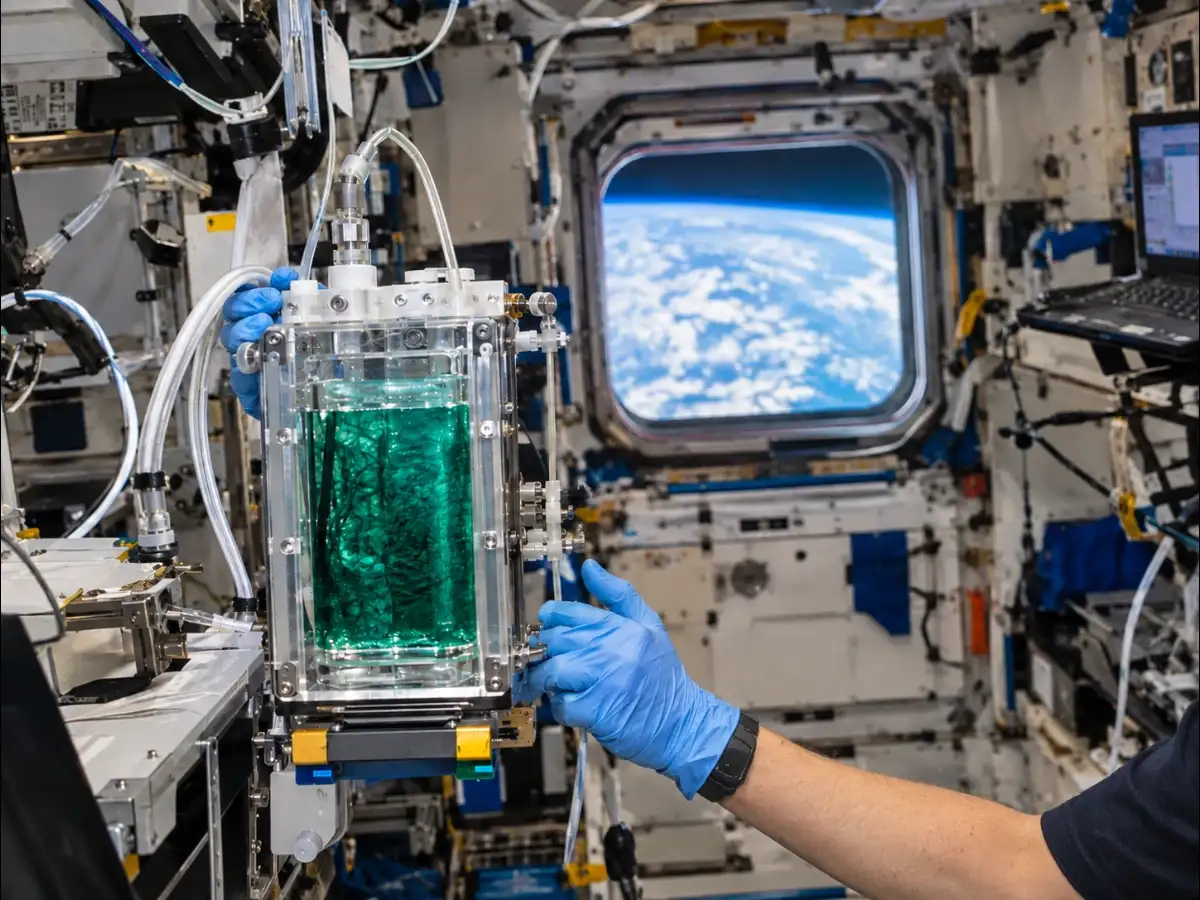
Scientists on the International Space Station quietly experimented on something that might determine the breakfast of future Mars crews, and it involves the same blue-green algae that can be found in your pantry. According to a 2025 DLR press release, scientists report that they were able to cultivate the cyanobacterium Limnospira indica (aka spirulina) continuously in the space environment on the ISS, where it produced oxygen and harvestable biomass. The (Deutsches Zentrum für Luft- und Raumfahrt) or German Aerospace Center experiment, known as Arthrospira-C, is a crucial step towards growing food and breathable air in space without having to ship all the calories from Earth.
Meet the microbe doing double duty in orbit