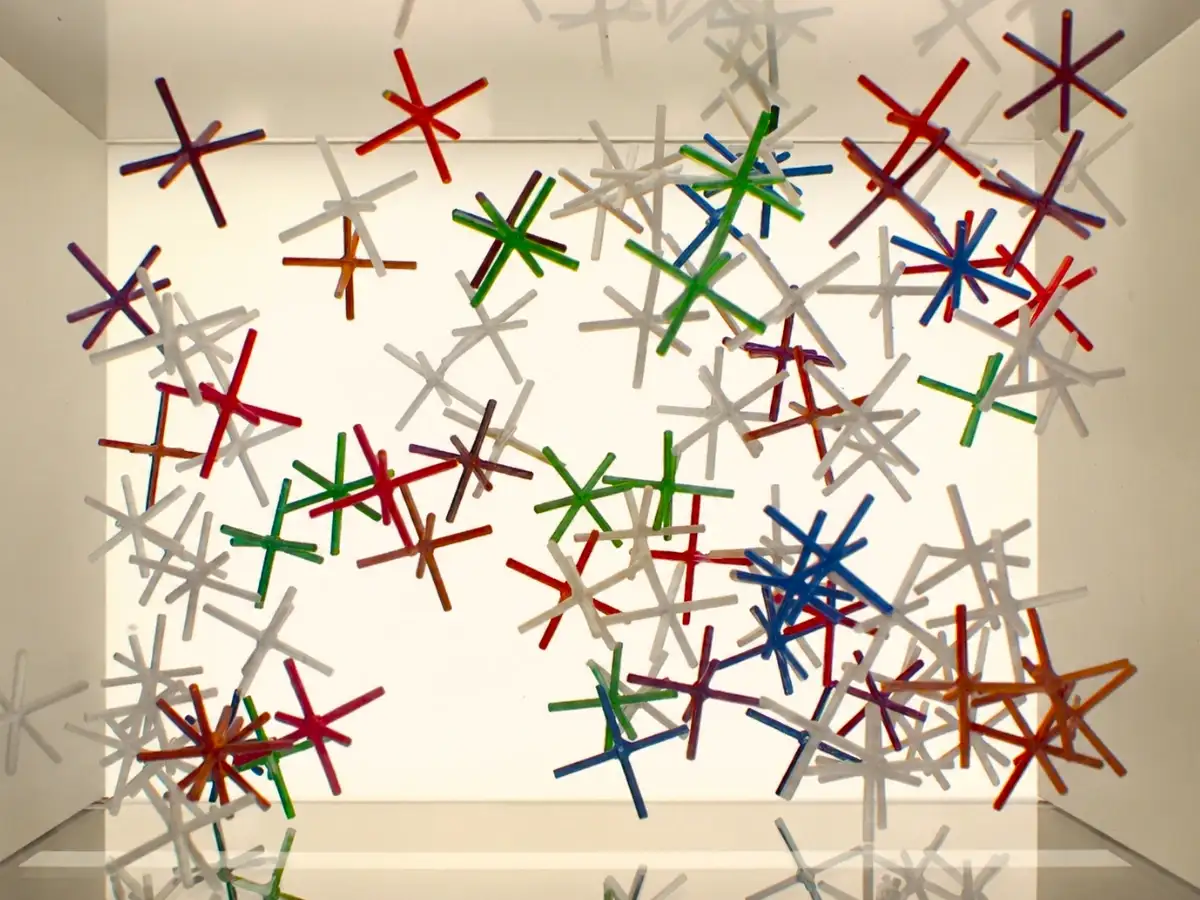
On November 26, 2024, a sounding rocket launched from a spaceport in northern Sweden, carrying an experiment that sounds almost like a toy: hundreds of tiny brass crosses, shaped like children's jacks, bouncing around inside a sealed box. The rocket climbed to 256 kilometers, providing scientists with some six minutes of weightlessness to see these particles collide, according to the European Space Agency. It’s called the JACKS experiment, and it’s trying to answer a big question with very tiny objects: how do grains of matter behave when there’s no gravity around to settle them down?
Why scientists needed weightlessness for this
On Earth, free particles like sand and gravel fall because gravity pulls them down, making it difficult to study how particles interact through collisions. However, it is possible in space. The rocket was named SubOrbital Express-4, and it was launched from Esrange Space Center, which is located near Kiruna and operates under the Swedish Space Corporation. The European Space Agency says it carried six scientific experiments in all, but JACKS concentrated on the so-called granular gas, which is a cloud of particles colliding with each other instead of forming a heap.
The particle structure of JACKS resembled that of hexapods, three rods arranged at right angles to one another, a structure researchers sometimes just call jacks. This form matters because many particles in space, such as dust in comet tails and material in planetary rings, are not perfectly round; they have irregular shapes. This experiment, conducted by a group of researchers from Brandenburg University of Applied Sciences and Otto von Guericke University Magdeburg in Germany, was aimed at exploring how these more realistic, complex shapes collide and dissipate energy compared to smooth, round particles.