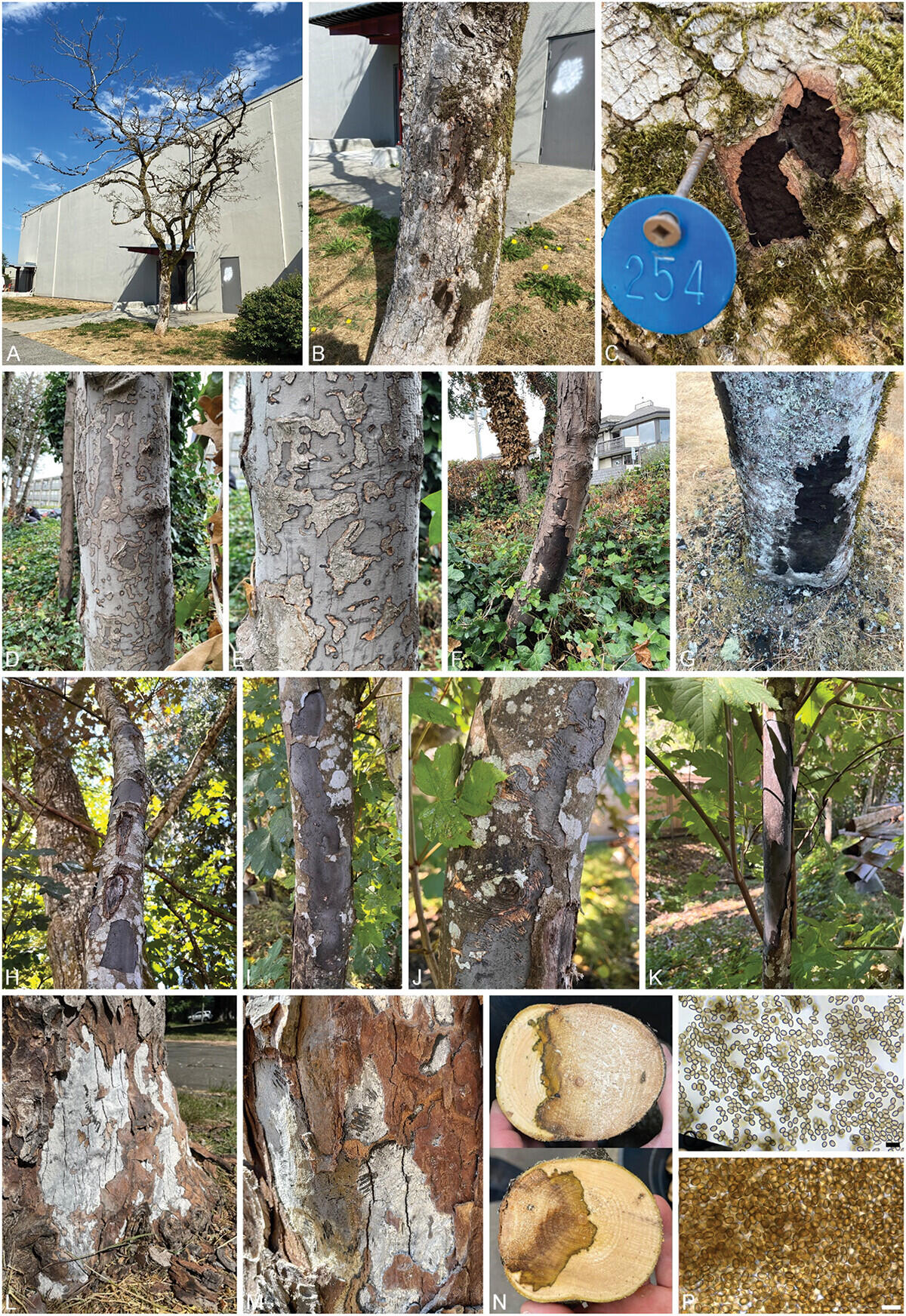
In British Columbia, maple trees have been observed with sooty bark disease, and researchers are working on ways to reduce the rate at which the disease spreads. Sooty bark disease, which is associated with a fungus called Cryptostroma corticale, was detected in British Columbia for the first time in 2022. This disease has already affected ornamental maples and is spreading to a Canadian native species of maple trees.
Get breaking news anytime, anywhere. Download the TOI app now!

It has become a concern for scientists because the bigleaf maple is a key component of the West Coast ecosystem. Canada’s largest maple species, known for its large leaves and tall growth, is an important part of the country’s deciduous forests. According to a Natural Resources Canada article , scientists at the Pacific Forestry Centre discovered sooty bark disease in bigleaf maple.
A hidden fungus waiting for the right conditions
Sooty bark disease is caused by a fungus that can lie dormant in trees until environmental stress triggers it, according to Natural Resources Canada’s research on the disease. It was discovered by scientists at the Pacific Forestry Centre, including Joey Tanney and Nicolas Feau.
The research suggests extreme weather may have helped trigger the recent outbreak. The combination of record heat and prolonged drought placed significant stress on trees, potentially triggering the dormant fungus to become active.
Once symptoms appear, the disease can progress rapidly, causing affected trees to wilt and decline. The fungus may remain dormant inside a tree for years before becoming active under hot, dry conditions, and it can kill a tree in as little as three years. The disease has spread so quickly that scientists and forest managers have found it difficult to predict where new infections will appear.
One important question posed in this research by Natural Resources Canada is whether the fungus was native to the region of British Columbia or if it had been introduced to the area undetected. It is believed that if the fungus was introduced to British Columbia, it could have been around for years with no issues arising until the environment became stressed.
From ornamental maples to British Columbia’s bigleaf maple
Sooty bark disease was first found in British Columbia in European maple trees, including Norway and sycamore maples in the Victoria and Vancouver regions, but it is no longer thought to be limited to ornamental maples. Sooty bark disease was first reported in a bigleaf maple near the Pacific Forestry Centre in Victoria. To date, almost 100 bigleaf maples have died as a result of this disease.
The speed of the spread has surprised scientists. Nicolas Feau, a research scientist with the Pacific Forestry Centre, noted that infected trees were not found in the same areas just a few years earlier. The rapid change has pushed researchers to investigate how widely the fungus may have spread and what conditions are encouraging outbreaks.
Natural Resources Canada’s sooty bark disease research also focuses on understanding whether other important maple species could face similar risks. Scientists are studying sugar maple trees to determine whether environmental stress could trigger the disease in this species as well. Sugar maples are economically and culturally important in Canada, making early understanding of potential threats especially valuable.
To keep an eye on the disease, scientists are using methods like tree testing, genetic screening, and surveys that can detect the disease before symptoms show up. This will help scientists determine how big the problem is and get ready for any outbreaks.
New technology is helping scientists respond.
In the wake of the spread of sooty bark disease in British Columbia, scientists have developed tests to diagnose the disease. Scientists at Natural Resources Canada have developed tests to detect sooty bark disease in trees and to differentiate it from other diseases.
These tests are important not only for identifying infected trees and responding to outbreaks but also for protecting workers who handle or remove affected trees. The fungus can release billions of allergenic spores from a single symptomatic tree, creating potential health concerns for people who remove or handle infected wood, according to Natural Resources Canada’s research on sooty bark disease . Exposure to these spores can contribute to hypersensitivity pneumonitis, a rare lung condition also known as “farmer’s lung”.
Community participation has become another key element in tracking the outbreak. Researchers from Natural Resources Canada have resorted to citizen science, establishing an iNaturalist project which allows community members in the Victoria region to submit photos of possible sooty bark disease instances. The information is used by scientists to determine whether there is an infection, take samples and learn more about the transmission process. Further research conducted by Natural Resources Canada intends to clarify key aspects of the fungus and preserve precious maple species. As research continues, the link between climate stress and healthy forests may prove important for Canada’s maple forests.