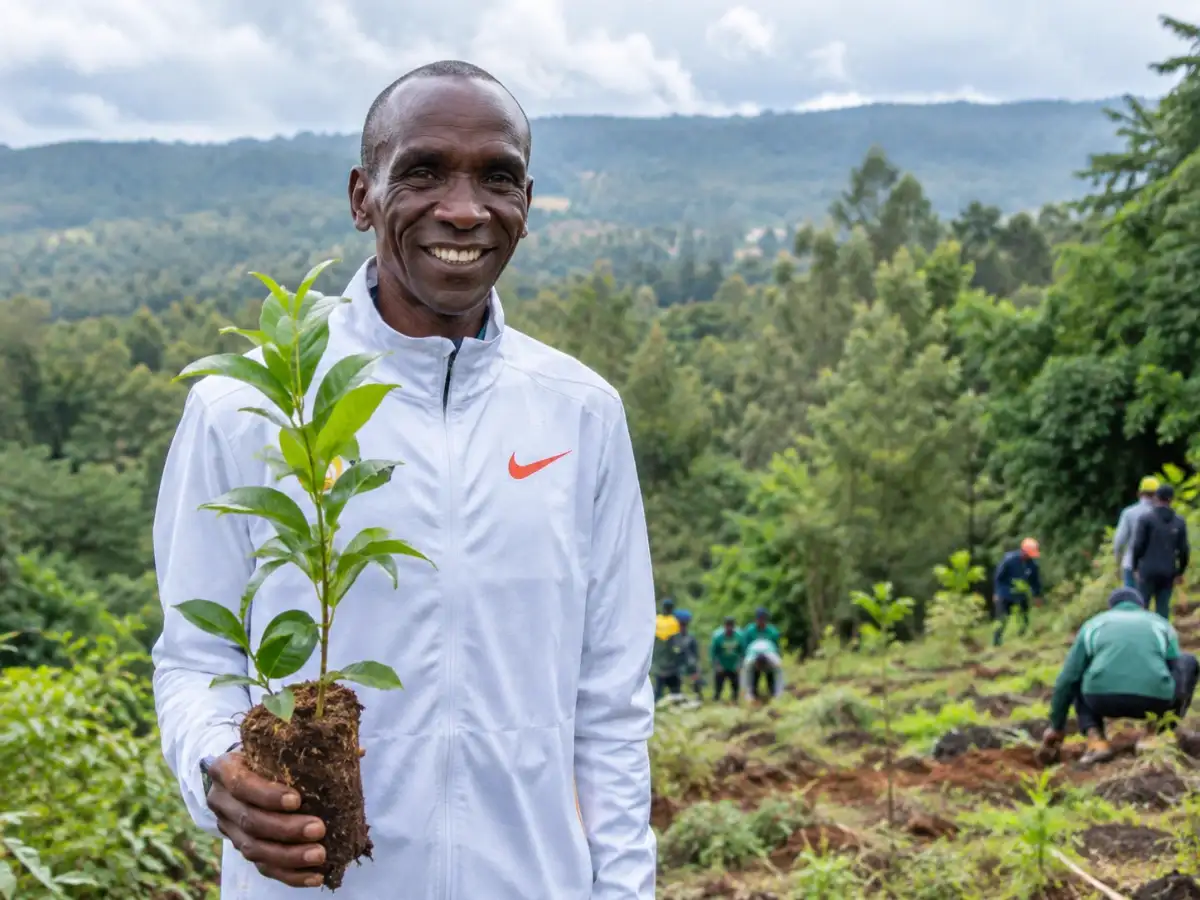
In 2021, Olympic marathon champion Eliud Kipchoge adopted 50.8 hectares of Kenya's Kaptagat Forest for rehabilitation. 5 years later, more than 1,277 hectares of the wider ecosystem had been rehabilitated. The work is part of a programme that began in 2017 after large sections of the forest were identified as degraded because of human activity. The target is to restore 2,000 hectares across five forest blocks. Government agencies, community groups, conservation organisations and other partners are involved. Kipchoge has also linked the protection of the forest to the environment and the high-altitude areas used by Kenyan athletes for training.
How the Kaptagat Forest restoration began?
The Kaptagat ecosystem rehabilitation initiative began in 2017. Environment and Forestry Principal Secretary Dr. Chris Kiptoo said the original target was to rehabilitate 2,000 hectares of forest. More than 1,277 hectares have now been rehabilitated within the wider Kaptagat forest ecosystem, according to Kiptoo. The work has involved several stakeholders and community groups.
The programme focuses on protecting the Kaptagat water tower. A water tower in Kenya is a forested area that helps collect, store and regulate water. Protecting these areas can support water resources and ecosystems.
The restoration programme covers five forest blocks:
- Sabor
- Benon
- Kaptagat
- Kessup
- Kipkabus
Kiptoo said the programme is being carried out with communities and organisations from different sectors. These include the banking sector, Worldwide Fund for Nature Kenya, Kenya Forest Service, Kenya Water Towers Agency, Eldoret Water and Sanitation Company, Kerio Valley Development Authority, and the governments of Elgeyo Marakwet and Uasin Gishu counties.
Eliud Kipchoge's 50.8-hectare forest commitment
Eliud Kipchoge adopted 50.8 hectares of degraded Kaptagat Forest through the Eliud Kipchoge Foundation. His commitment includes branding, rehabilitation and maintenance of the adopted area. The site has become part of the wider Kaptagat conservation programme.
During one of the tree-planting exercises, 42,000 bamboo seedlings were planted in the 50.8-hectare area adopted by Kipchoge. Kiptoo, accompanied by Dr. Belio Kipsang, commissioned the official fencing of the site. The project received funding from Trillion Trees, UK-Pact and WWF-Kenya.
Kipchoge has spoken about the importance of forests around Kaptagat because the area is also used as a high-altitude training location by Kenyan athletes. He has called for the protection of forests from climate change and deforestation.
700,000 seedlings planted during the sixth exercise
The sixth annual tree-planting exercise at Kaptagat included the planting of 700,000 tree seedlings. The seedlings were bought from community forest associations with support from the United Nations Development Programme and the wider UN system.
The use of community forest associations is part of the programme's approach to involving local communities in restoration. The government has also introduced a financing mechanism to support continued tree planting. Kiptoo said the government had established a tree-growing fund with support from the National Environment Trust Fund, also known as NETFUND.
The fund is intended to provide continuous financing for buying tree seedlings from:
- Community forest associations
- Women's groups
- Youth groups
The seedlings can then be used during annual tree-planting exercises.
Why the restoration target is 2,000 hectares?
The initial target for the Kaptagat ecosystem programme was 2,000 hectares. More than 1,277 hectares had been rehabilitated, leaving about 723 hectares based on the figures provided. Kiptoo said the remaining 700 hectares could be cleared in the next one or two editions of the rehabilitation and restoration programme.
The difference between the two figures comes from rounding. The programme is therefore continuing beyond the areas already restored. The work is focused on degraded forest land across the five forest blocks. The wider aim is to protect the Kaptagat water tower while involving communities in forest restoration and maintenance.
Kenya's forest and tree cover figures
Kiptoo also provided figures on Kenya's forest and tree cover. A report assessment released on May 27 indicated that Kenya's forest cover had increased to 8.8 per cent. The figure was 6.99 per cent in 2010 and 7.2 per cent in 2015. The Principal Secretary also said Kenya's tree cover had reached 12.3 per cent.
He said this was above the constitutional requirement of at least 10 per cent tree cover. The government plans to increase tree cover beyond gazetted forests. The focus will include farmland. Under the approach described by Kiptoo, landowners would be expected to maintain trees on at least 10 per cent of their farmland as Kenya works toward its forest-cover target.
Kipchoge plans forest adoption across Kenya
Kipchoge said his conservation plans extend beyond Kaptagat. He said he planned to adopt a forest in each of Kenya's 47 counties through the Kipchoge Foundation. The plan would expand the foundation's involvement in forest rehabilitation across the country. Kipchoge also called on sponsors with similar conservation interests to support the effort.
The Kaptagat project therefore forms part of a wider effort involving government agencies, local communities, conservation groups, funding organisations and private partners.
What happens next in Kaptagat?
The restoration programme still has work to complete. The initial target is 2,000 hectares, while more than 1,277 hectares have already been rehabilitated. The next stages will involve planting more trees, maintaining restored areas and continuing community participation.
The tree-growing fund is intended to provide a source of financing for future planting exercises. Community forest associations, women and youth groups can also participate by supplying seedlings.
The programme also seeks to protect the Kaptagat water tower and the forest blocks connected to it. Kipchoge's adoption of 50.8 hectares adds a separate foundation-led conservation effort to the broader government and community programme.