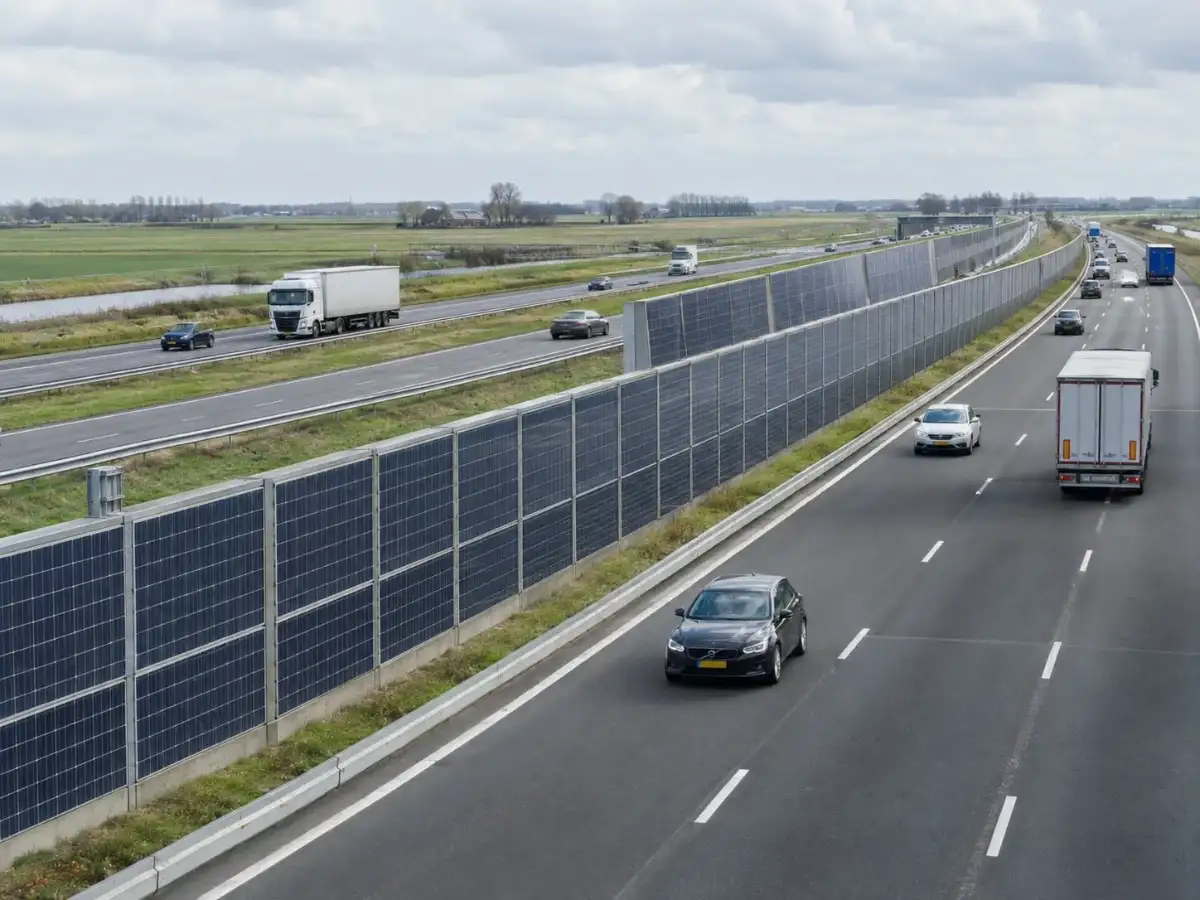
You may drive past them every day and never even seem to notice as such: the highway sound walls. They are tall, grey, and built to block traffic noise from reaching nearby homes, infrastructure that has quietly lined densely populated highway corridors for over 20 years, lowering noise levels and, in some cases, contributing to better air quality. In the town of Uden in the Netherlands, some engineers wondered about that 1,300-pound mass of dead weight and pondered a pretty good question: Why is this thing just standing there?
Their response was a noise wall of double-sided solar glass that generated 325.5 megawatt-hours in an 18-month testing period from January 2019 to June 2020, enough to power approximately 60-70 homes for a year, while remaining part of the working roadside mounted directly on the barrier structure alongside the A50 motorway's traffic, according to the European Commission's official results page for the Solar Highways project. No farmland levelled and no open field taken away. The wall halfway there, doing a partial job. Now it does two, which is a mildly infuriating thing to learn, if you'd been told there's no room left for clean energy.