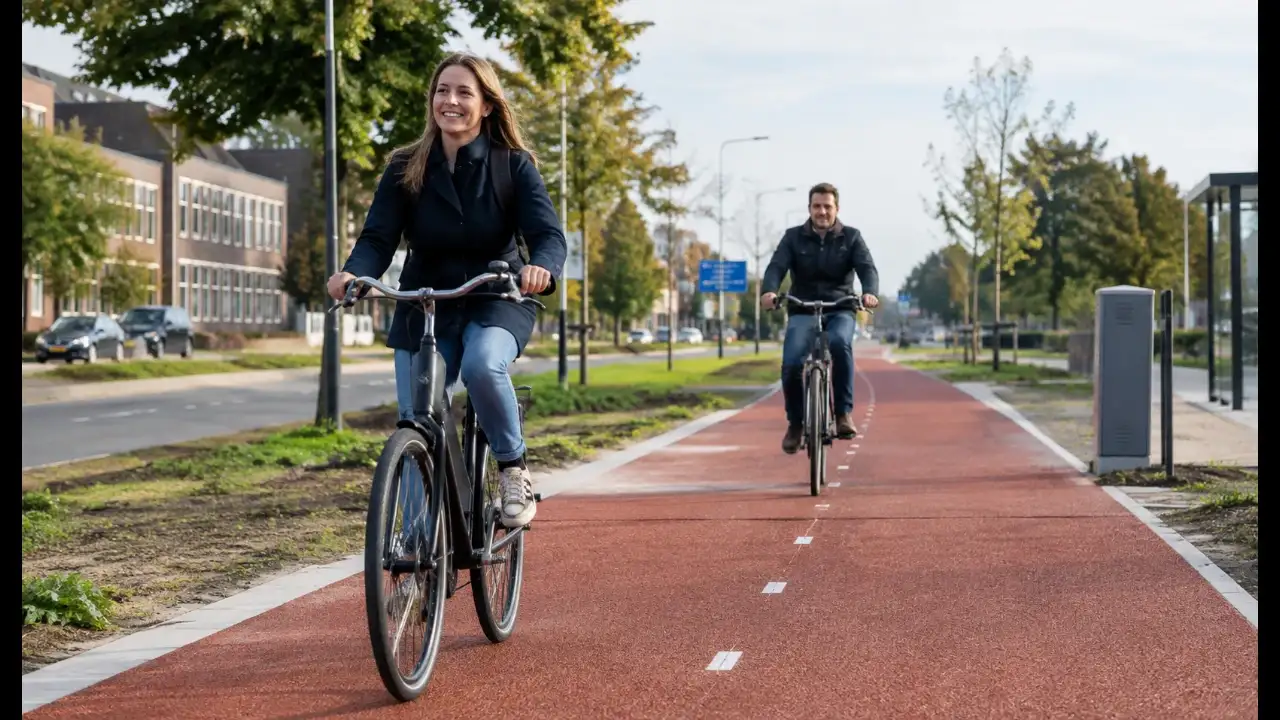
In late 2018, the Dutch town of Zwolle laid down thirty meters of cycle path that looked ordinary from a distance, yet represented a radical shift in urban design. Engineers gathered one thousand kilograms of household plastic waste, roughly equivalent to two hundred eighteen thousand disposable cups, and transformed it into lightweight prefabricated road slabs. Built by civil engineering partners KWS, Wavin, and Total, the project proved that municipal trash could replace traditional asphalt without sacrificing strength.
Rather than solid pavement, these modular sections feature hollow chambers that store stormwater during heavy rains, protecting surrounding neighborhoods from surface runoff. Internal sensors continuously track structural wear and surface temperature, offering city planners real-time data on how synthetic roads withstand daily traffic. Because the panels last three times longer than asphalt and remain entirely recyclable, this short track reframed everyday litter as practical infrastructure for resilient modern cities.