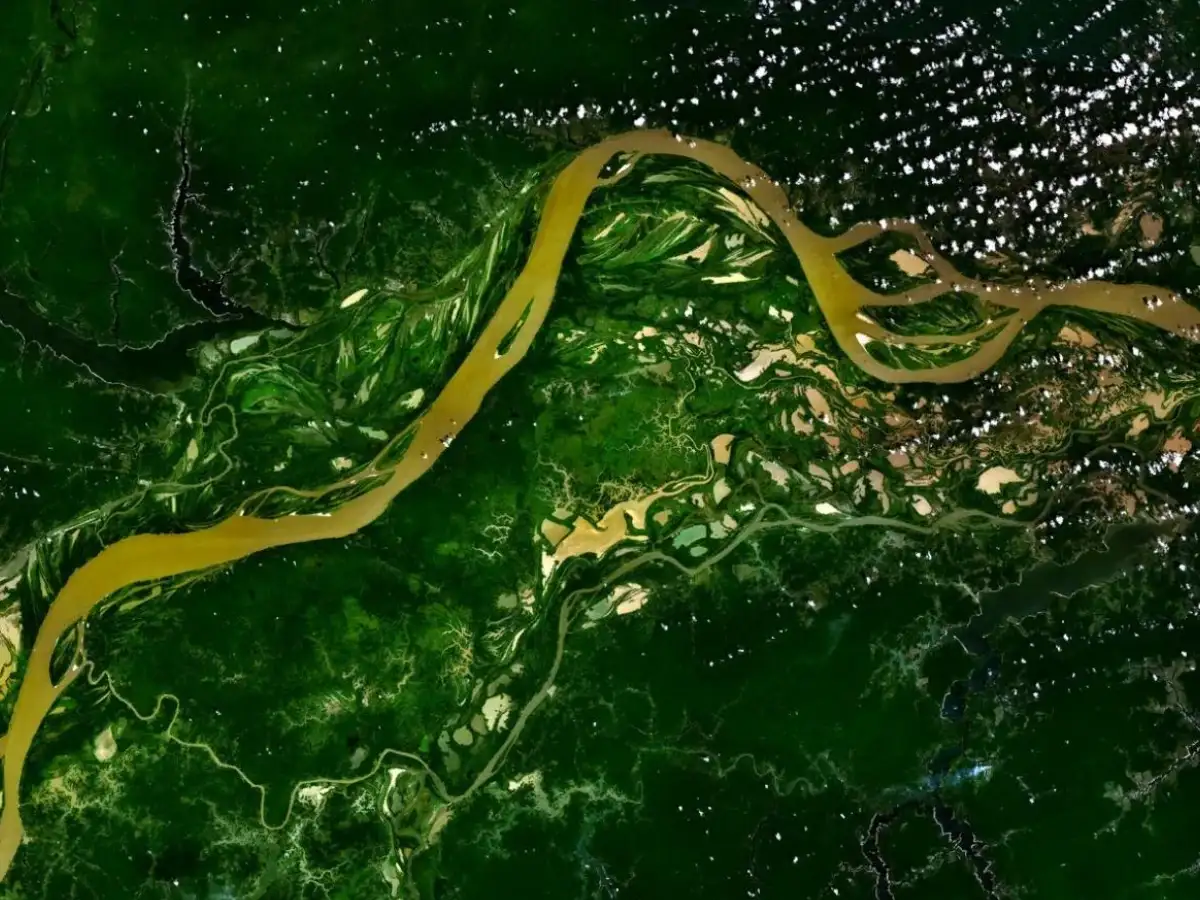
The "untouched" Amazon rainforest often pictured in nature documentaries as an empty, unbroken expanse of forest, was in fact home to planned settlements centuries before European contact. Archaeologist Jonas Gregorio de Souza and colleagues reported this in a 2018 Nature Communications article, "Pre-Columbian earth-builders settled along the entire southern rim of the Amazon." Using satellite imagery, the team identified 81 previously unmapped archaeological sites in the Amazon, revealing fortified villages and ceremonial earthworks built around the early-to-mid 1400s, in the closing decades of Europe's medieval period. This finding adds to a body of evidence, built up over a series of studies in recent years, that the Amazon was not the empty wilderness of popular imagination but a landscape that supported dense, complex societies.
What the satellites actually picked up on under the canopy