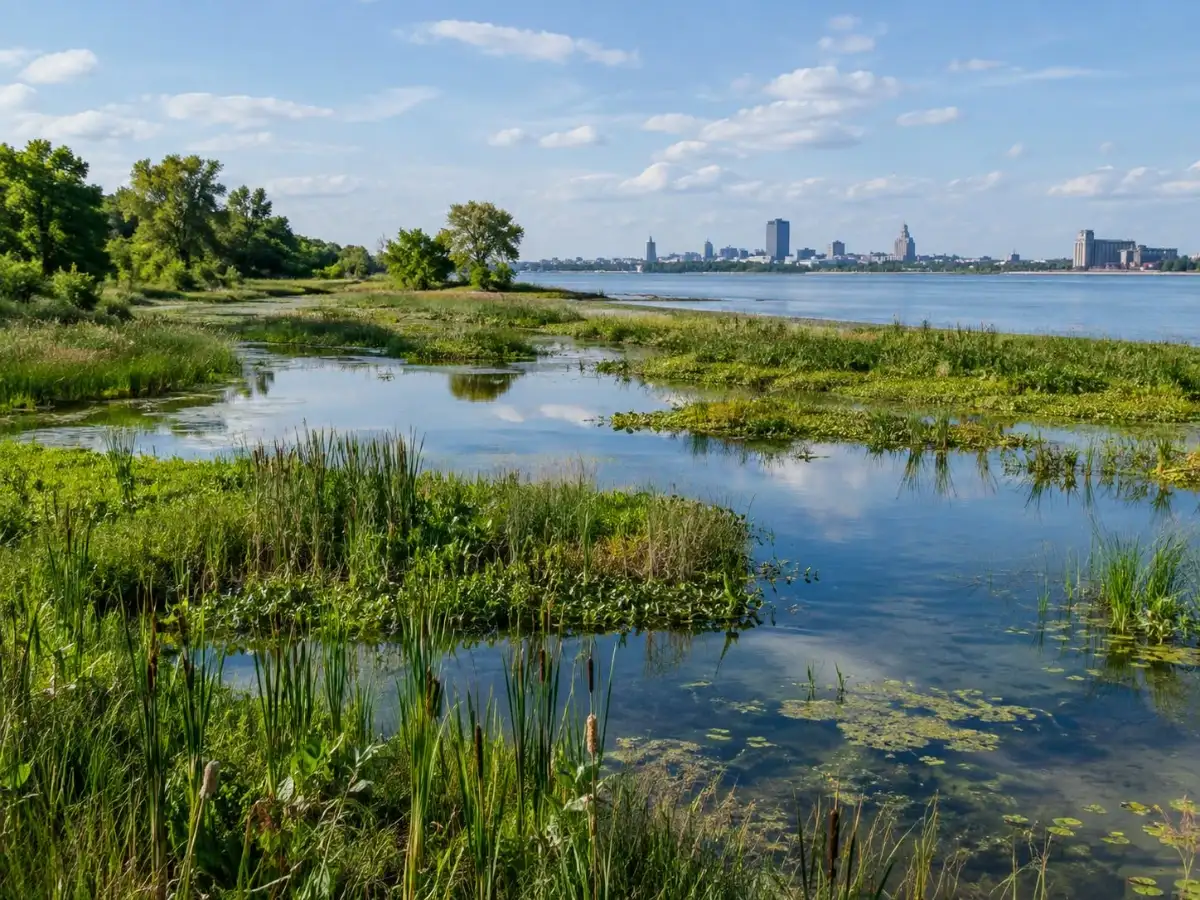
Imagine a water body being deemed as "biologically dead." A 2021 USACE report says that was not hyperbole, but in 1969, the Buffalo River was actually given that label after decades of industrial dumping. Adjacent to it, Unity Island was for most of the 20th century the literal garbage dump of the city, and the North Pond was a stagnant, dead-end pool for many years, cut off from the Niagara River by a stone dike. It is one of the less-discussed chapters of American environmental history: the long, unglamorous period of industrial contamination that preceded any cleanup.
Turning sludge into shoreline

The eventual fix did not require a large-scale technological breakthrough. It came down to reusing mud that would otherwise have been discarded. Literally. In 2011, the USACE report states that dredging of the Buffalo River was begun by the Corps and the EPA and by the community to remove more than a million cubic yards of contaminated sediment. That legacy cleanup is a separate, much larger undertaking from the Unity Island project described below: it dealt with contaminated material removed from the riverbed itself. Not all sediment pulled from the river is toxic, though. In the years afterward, routine dredging of the river's federal navigation channel: ordinary maintenance work, unrelated to the earlier contamination, kept generating sediment that state and federal regulators certified as clean and safe to reuse.