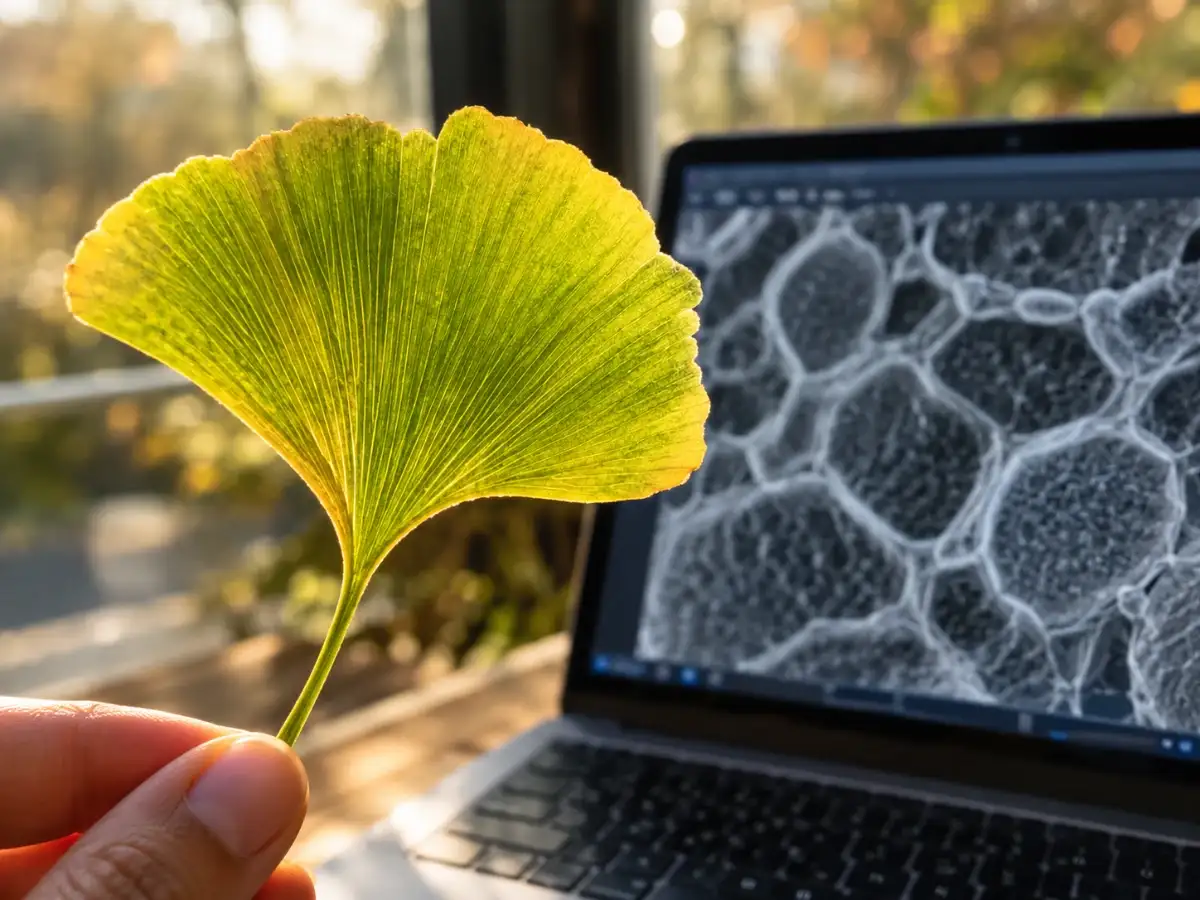
Ginkgo trees have barely changed in 270 million years, which makes them a strange kind of time capsule. The leaves have small openings known as stomata, which serve as breathing points for the plants. According to astudy led by Laura Soul and colleagues at the Smithsonian Institution's National Museum of Natural History, the density of such breathing pores changes according to the amount of carbon dioxide in the air; hence, scientists can examine the fossilized leaves of ginkgo and get an idea of the state of the atmosphere millions of years back. The study noted that the slowest part of this work is simply counting the pores in each leaf.
How a leaf pore reveals old air