Get all your news in one place.
100's of premium titles.
One app.
Start reading
The Economic Times
The Economic Times
Muskan Singh

In 2016, a buried bear skull revealed a forgotten chapter of gladiator history dating back to the Roman era

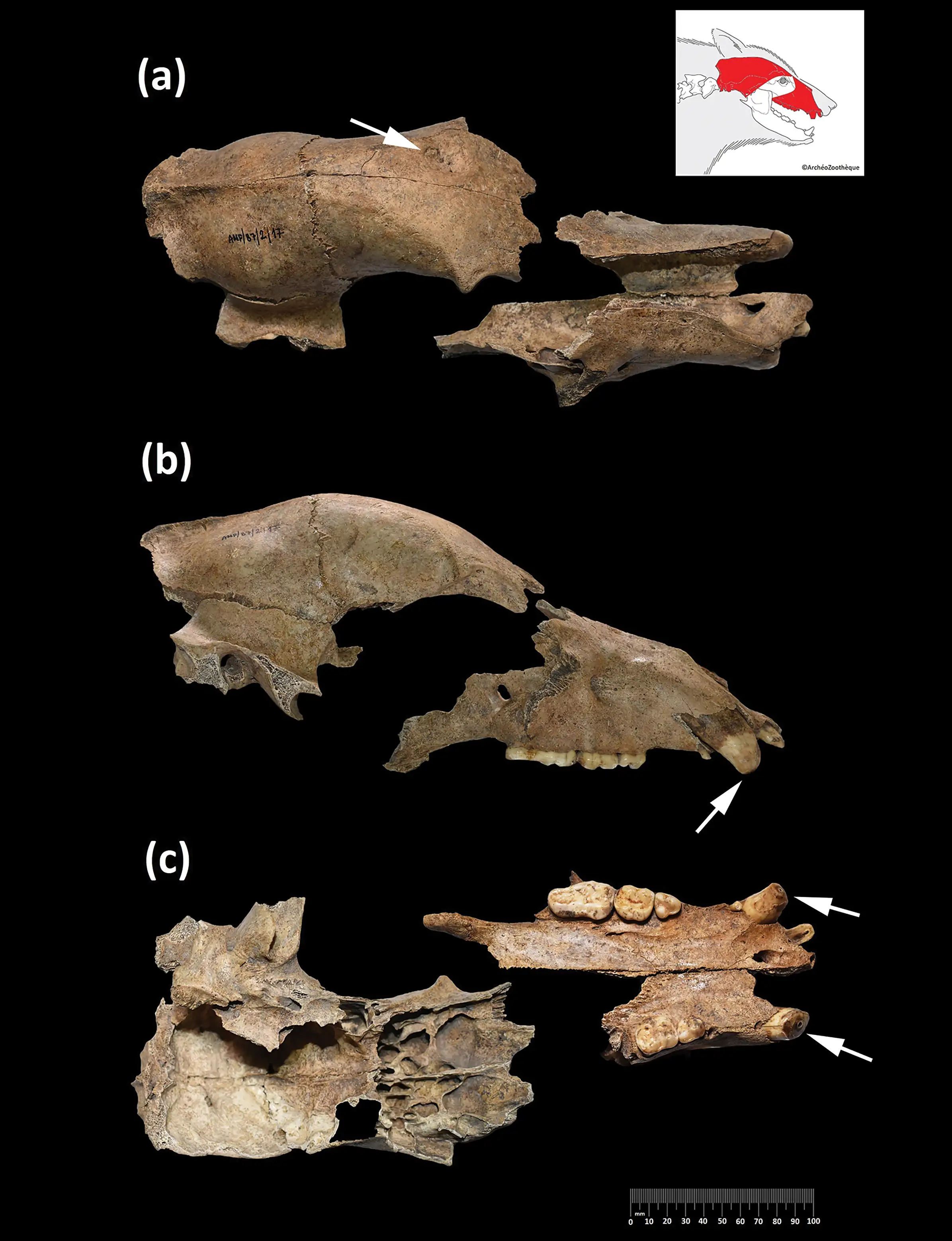
A remarkable archaeological discovery made in 2016 has uncovered a chilling glimpse into the brutal world of Roman gladiator spectacles. Near the ancient Viminacium amphitheater in present-day Serbia, researchers found the fossilized skull of a brown bear whose injuries tell a story of captivity, combat, and survival. The findings, published in Antiquity and reported by Live Science and Popular Mechanics, offer the first definitive skeletal evidence of brown bears being used in Roman arena spectacles.

READ ALSO: Starting July 27, these 3 zodiac signs could unlock their biggest breakthrough yet

Buried bear skull revealed a forgotten chapter of gladiator history

The discovery, first made in 2016 and later analyzed in a study published in Antiquity, offers what researchers describe as the first definitive skeletal evidence that brown bears were captured and used in Roman arena events.

The remains belonged to a six-year-old male brown bear whose bones revealed a life marked by captivity and violence. Researchers found an impact fracture on the animal's frontal bone that had begun to heal before becoming infected. According to the study, the infection eventually caused inflammation of the bone and likely contributed to the bear's death.

READ ALSO: Quote of the Day by George Patton: 'The test of success is not what you do when you are on top....'- Inspiring lessons on success, resilience, and never giving up by the most renowned American generals in World War II, known as “Old Blood-and-Guts”

How did the bear end up in a Roman arena?

The bear's teeth provided another important clue. Scientists observed excessive wear on its canine teeth, suggesting it repeatedly chewed on the bars of a cage during captivity. The evidence indicates the animal spent an extended period confined before appearing in public spectacles.

Researchers concluded that the bear had likely taken part in more than one event at the Viminacium amphitheater.

Lead author Nemania Markovic, senior research associate at the Institute of Archaeology in Belgrade, told Live Science, "We cannot say with certainty whether the bear died directly in the arena, but the evidence suggests the trauma occurred during spectacles and the subsequent infection likely contributed significantly to its death."

Built during the second century A.D., the Viminacium amphitheater could accommodate around 7,000 spectators. The bear's skull was discovered near one of its entrances alongside a leopard bone and other animal remains.

Markovic explained that previous research suggests animals killed during arena spectacles were butchered nearby, with their meat distributed while their bones were discarded close to the amphitheater rather than buried in a formal animal cemetery.

READ ALSO: Quote of the Day by Marie Curie: 'Nothing in life is to be feared...'- Inspiring life lessons on courage, curiosity, and the power of understanding by one of the greatest scientists and the first woman to win a Nobel Prize

What do the injuries reveal?

The injuries found on the skull point toward violent encounters inside the arena. Researchers believe the fracture was likely caused by a spear, indicating the bear fought against armed venators, the specialized hunters who battled wild animals for public entertainment.

The study states, “This indicates the bear was indeed captured for use in spectator fights, likely near to Viminacium, and sustained injuries fighting against armed venators, who fought wild animals for entertainment."

The researchers also determined that the bear was native to the Balkan region. They suggest it may have been captured either by civilians or professional hunters specifically to supply animals for gladiatorial spectacles.

Radiocarbon dating places the remains between A.D. 240 and 350, a period when Viminacium was actively hosting large public events featuring both gladiator contests and animal spectacles.

Historical records already describe Romans using wild boars, bulls, panthers, lions, dogs, and bears during arena performances. According to Antiquity, brown bears became one of the most recognizable animals in Roman entertainment as audiences increasingly demanded more dramatic displays of violence.

READ ALSO: Quote of the Day by Steve Jobs: 'It takes a lot of hard work to make something simple'- Thought-provoking life lesson on simplicity, innovation, hard work and what it takes to be successful by the co-founder of Apple and a pioneer of the microcomputer revolution

Why is this discovery so important?

Although written accounts have long described the use of bears in Roman spectacles, physical evidence has remained extremely limited.

The newly examined skull changes that. According to the study's authors, “This is the first osteological evidence for the participation of brown bears in Roman spectacles.”

They added, “It shows the significance of brown bears in spectacles across the wider empire and provides a fascinating insight into ancient relationships between humans and wild animals.”

READ ALSO: Quote of the Day by Dr. A.P.J. Abdul Kalam: 'Excellence is a continuous process and not...'-Inspiring life lessons on excellence, hard work, and continuous growth by the aerospace scientist known as the 'Missile Man of India'

For archaeologists, the discovery fills an important gap between historical records and physical evidence. For everyone else, it offers a sobering reminder of the harsh realities behind the grand entertainment that once filled Roman amphitheaters.

FAQs

Where was the bear skull discovered?

It was found near the ancient Viminacium amphitheater in present-day Serbia.

Why is the discovery significant?

It provides the first confirmed skeletal evidence of brown bears being used in Roman gladiator spectacles.

Sign up to read this article
Read news from 100's of titles, curated specifically for you.
Already a member? Sign in here
Related Stories
Top stories on inkl right now
One subscription that gives you access to news from hundreds of sites
Already a member? Sign in here
Our Picks
Fourteen days free
Download the app
One app. One membership.
100+ trusted global sources.