Get all your news in one place.
100's of premium titles.
One app.
Start reading
The Economic Times
The Economic Times
Team Global

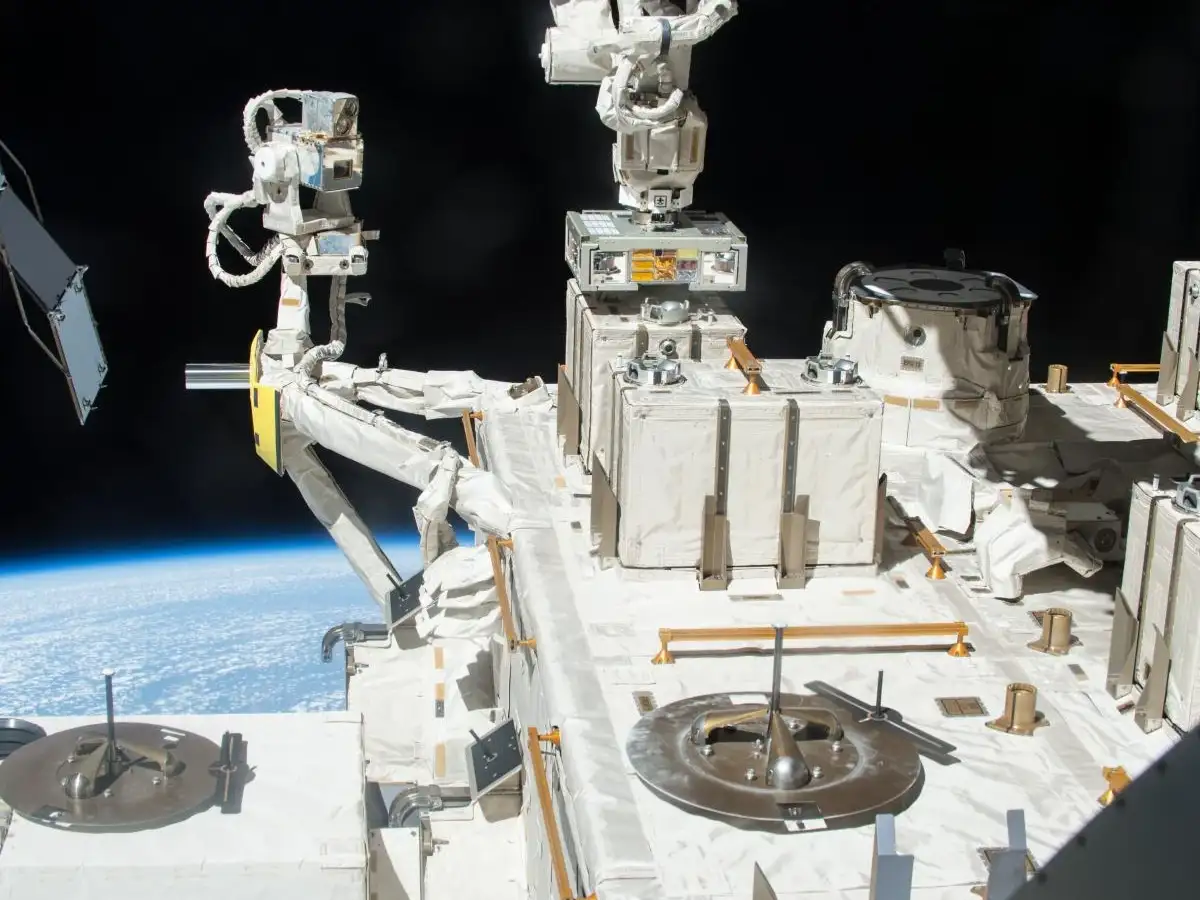
In 2015, Japan exposed bacteria outside the ISS for 3 years; some clumps survived, while thicker ones were estimated to last longer

In 2015, a team of Japanese scientists attached some dried clumps of bacteria to a panel and launched it onto the outside of the International Space Station. They left it there for three years. According to a study titled ‘DNA Damage and Survival Time Course of Deinococcal Cell Pellets During 3 Years of Exposure to Outer Space’ published in Frontiers in Microbiology, when the panel was eventually opened in 2018, the bacteria within the more compact clusters were found to be alive. The project was called Tanpopo, meaning "dandelion" in Japanese, and it was led by microbiologist Akihiko Yamagishi and his team from Tokyo University of Pharmacy and Life Sciences.

The bacterial species that was selected for this research was Deinococcus radiodurans. CNN has reported that scientists have given this organism a nickname: Conan the Bacterium. In the Guinness Book of World Records, it is listed as the most radiation-resistant life form, capable of surviving doses of radiation that are about 3,000 times higher than the amount that would kill a human being. It was first discovered decades ago in a can of meat that had been irradiated to sterilize it.

Why send bacteria into space on purpose

It wasn’t by accident, and that was the whole point of it. The scientists set out to investigate the controversial theory known as panspermia, which states that life can be transported from one planet to another by riding aboard microorganisms floating about. And if that’s possible, then life wouldn’t have to arise independently everywhere it exists. Earlier versions of this idea, called lithopanspermia, imagined microbes tucked safely inside rocks and shielded from the sun’s radiation as they floated through space. A 2013 study published in the journal Origins of Life and Evolution of Biospheres, by members of Yamagishi's laboratory, had already investigated the effects of heavy ion radiation, vacuum, and dramatic shifts in temperature on several Deinococcus species on Earth, and in it, they coined the term "massapanspermia" to describe bacteria surviving in space simply by forming a mass, or clump, rather than hiding inside rock.

Sign up to read this article
Read news from 100's of titles, curated specifically for you.
Already a member? Sign in here
Related Stories
Top stories on inkl right now
One subscription that gives you access to news from hundreds of sites
Already a member? Sign in here
Our Picks
Fourteen days free
Download the app
One app. One membership.
100+ trusted global sources.