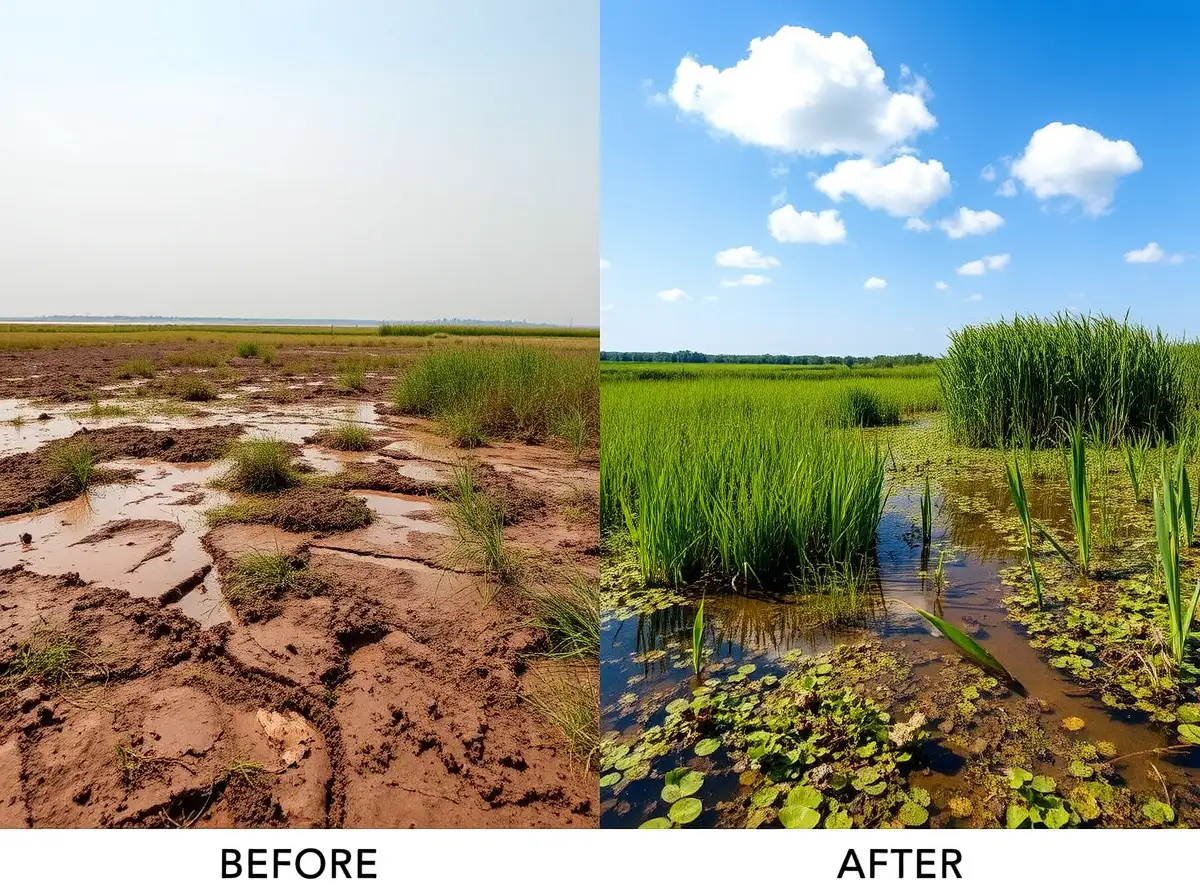
In 2014, an ambitious restoration effort at Dotson Family Marsh in Richmond, California, began demonstrating what can happen when a damaged coastal ecosystem is given a chance to reconnect with the tides. Located along the Point Pinole Regional Shoreline, the marsh had lost substantial tidal habitat after decades of filling, development pressure and other human impacts. The East Bay Regional Park District and its partners set out to reverse that damage by reshaping the landscape and restoring connections with San Francisco Bay. By 2020, aerial imagery showed a striking transformation: tidal water was once again reaching the restored wetland through newly created channels. The project has since become an important example of San Francisco Bay wetland restoration and climate-resilient conservation.
The history of Dotson Family Marsh helps explain why its recovery matters. The broader 150-acre property was acquired by the East Bay Regional Park District in 2008, following a long community effort to protect the land from development. The site was later named Dotson Family Marsh in recognition of the Dotson family and its contribution to the Parchester Village community and local open-space advocacy. Before restoration, portions of the property had been filled during the 20th century, eliminating tens of acres of tidal marsh. As a result, the natural relationship between the land and the Bay had been severely disrupted. Restoring that relationship required more than simply planting vegetation; it meant rebuilding the physical processes that allow a tidal marsh to function.