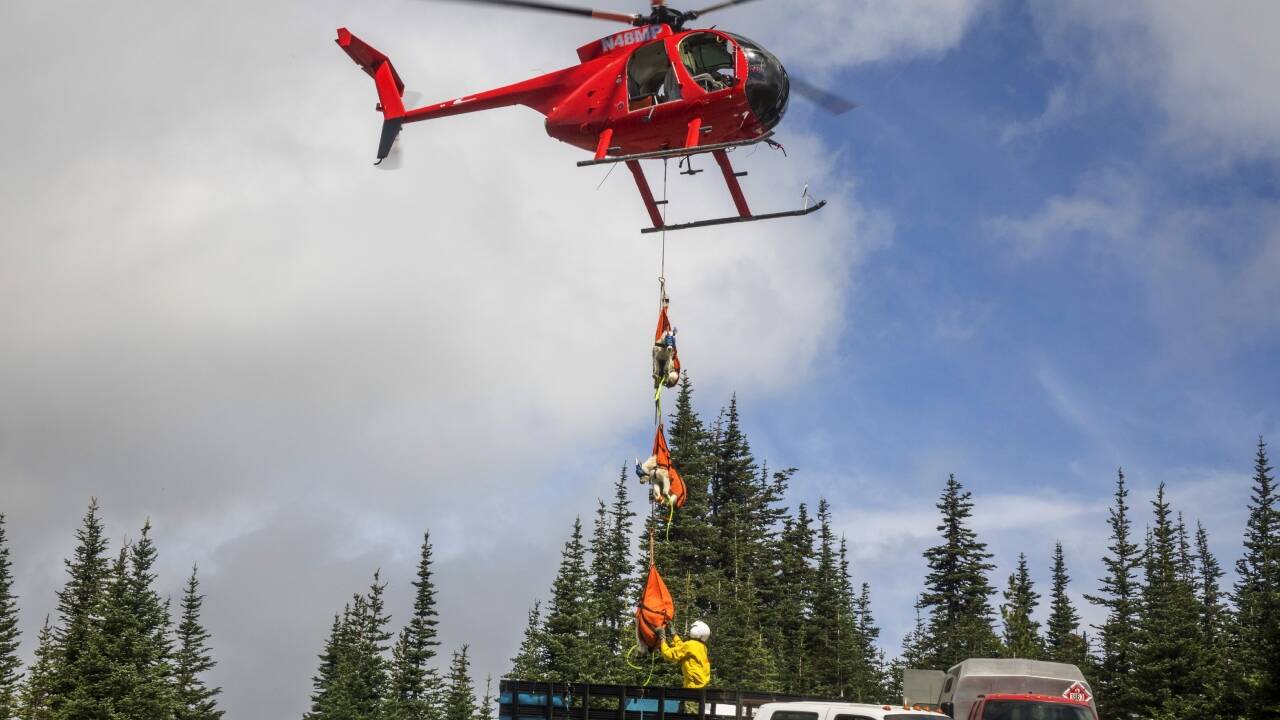
In September 2013, Utah wildlife officials faced an acute ecological challenge: a mountain-goat herd in the Tushar Mountains had grown to roughly twice the population ceiling considered sustainable for its range. To mitigate severe overgrazing on delicate alpine ridges, resource managers launched a targeted relocation campaign. Biologists captured surplus animals from alpine slopes approaching 12,000 feet, initiating a multi-year management framework designed to downsize the Tushar population while establishing new herds elsewhere in the state.
Get breaking news anytime, anywhere. Download the TOI app now!

From six goats to a statewide population
Mountain goats were not present in Utah when European-American settlers arrived, and the Salt Lake Tribune says the state’s first introduction came in 1967. Six goats were reportedly released from Washington into the Lone Peak Wilderness, and wildlife officials subsequently used translocations to establish populations in suitable high-altitude habitats across Utah. By 2013, marking a 46-year population progression, the species occupied several mountain ranges, although their status as native wildlife remained a subject of debate.
The Tushar herd’s rapid growth created an immediate reason for the 2013 operation. High Country News reported that the population was roughly double the management target of 125 goats. Instead of allowing the herd to become increasingly concentrated, Utah Division of Wildlife Resources (UDWR) biologists captured these animals for relocation. This strategy also reflected a broader state management objective: to maintain sustainable populations while using surplus animals to establish or strengthen herds elsewhere. However, this relocation framework exposed a glaring ecological loophole in state management priorities: rather than reducing total grazing pressures, the operation simply transferred the overconsumption risk to an entirely different, previously undisturbed alpine ecosystem.
Biologists flew over steep mountain terrain and used pneumatic net guns to capture the goats. It is worth noting that, while resource managers deployed these immediate ground handling techniques to prevent physical trauma and fractures from thrashing, field data demonstrates they function strictly as mechanical safety measures; they do not alleviate or undo the severe, long-term physiological panic induced by the low-altitude helicopter chase itself. Once caught, the animals were restrained in specially designed bags and blindfolded before being taken to a staging area. National Geographic reported that wildlife staff would then conduct health examinations, collect blood samples and fit some individuals with radio collars before the animals were transported to their new locations.
Fifty-three goats were airlifted
The operation eventually involved 53 goats. Several news publications cited that 20 were sent to the La Sal Mountains east of Moab, 10 were sent to Mount Nebo to supplement an existing population, and 23 were transported to South Dakota. Notably, the goats were carried beneath helicopters in secure slings or transport bags, thus allowing the team to move animals from terrain that would otherwise have been extremely difficult to reach by road.
The relocation to La Sal was particularly controversial, as the 20 goats that got relocated there represented the first known population of mountain goats in that range. Utah Public Radio reported that wildlife officials believed La Sal contained enough high-elevation habitat to support a substantial herd. This stance drew sharp criticism from ecologists, who pointed out the irony of the state's environmental logic: under the guise of protecting alpine flora in the Tushar Mountains, officials introduced a heavy-hoofed, non-native herbivore that would immediately jeopardize the fragile, unaccustomed plant life of the La Sals.
A 2014 ecological assessment documented the first La Sal release and raised questions about the possible effects of grazing on alpine vegetation, including areas within the Mount Peale Research Natural Area. Researchers and conservationists subsequently monitored goat movements and signs of grazing to assess their ecological impact.
Why helicopters became a part of the management procedure
Helicopter capture and relocation offered the crew a way to manage animals living in terrain where conventional capture methods would be impractical. Additionally, the strategy allowed healthy animals to be selected, examined and transported relatively quickly. Utah’s current mountain-goat management programme continues to recognise translocation as a possible response when population exceed management objectives or when additional animals are needed elsewhere.
However, this approach requires a distinct operational trade-off, balancing the speed of remote capture against the temporary stress inflicted on the animals, as helicopters themselves can disturb the species' habitat. A 2013 study published in The Journal of Wildlife Management analysed goats exposed to repeated helicopter flights over more than a decade. The findings suggested only slight habituation and found that goats were still strongly disturbed when helicopters approached closely
Nevertheless, the 2013 Utah operation represented a deliberate attempt to reshape populations created through decades of human intervention. Six goats introduced in 1967 established a foundational herd that, alongside subsequent translocations and supplemental stock, ultimately helped expand the species across the state by the thousands. Wildlife officials used those same tools of human management to prevent individual localised herds from becoming too big while simultaneously supplying animals to other key locations.