Get all your news in one place.
100's of premium titles.
One app.
Start reading
The Times of India
The Times of India
World
TOI World Desk

In 2011, Mississippi sank a retired NASA hydrogen tank as an artificial reef during post-Katrina restoration efforts

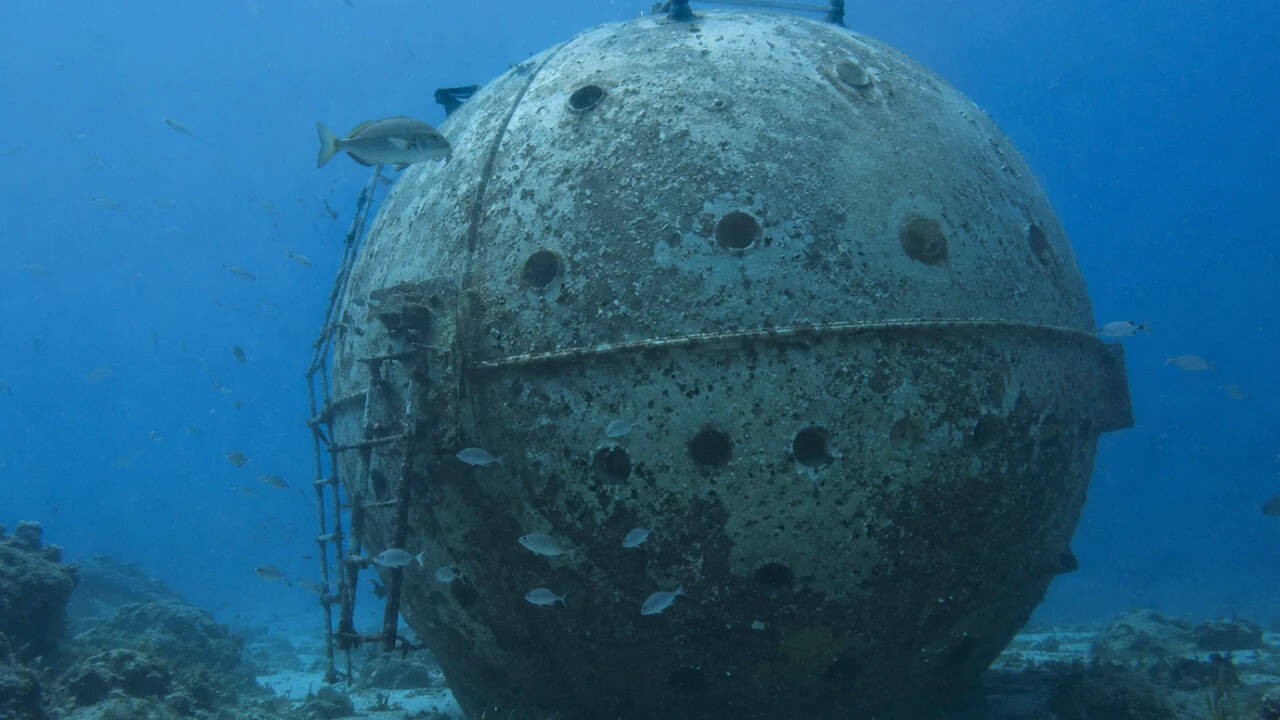
Off Pascagoula, in about 85 feet of water in the Gulf, lies a relic of the space race era. In October 2011, conservation engineers sank a ninety-eight-thousand-pound spherical hydrogen tank into the Gulf to serve as an artificial reef. Constructed in the 1960s to hold liquid hydrogen used as fuel for testing of Apollo rockets, it lay unused until transformed into an aquatic habitat.

Get breaking news anytime, anywhere. Download the TOI app now!
The project was undertaken as part of post-Hurricane Katrina restoration efforts to replace damaged artificial reef structures in Mississippi waters. When Hurricane Katrina swept through the region in 2005, it severely damaged many of Mississippi’s inshore and offshore artificial reefs.

According to the Mississippi Department of Marine Resources , NASA’s Stennis Space Center partnered with the agency to deploy a 107,000-gallon hydrogen sphere, along with two smaller fuel tanks, as part of Mississippi’s offshore artificial reef programme. Lead systems engineer Bryon Maynard of NASA's Engineering and Test Directorate said the structure, nicknamed the Big Round Thing or BRT, was originally built as an emergency reservoir for the Saturn V program. The tank remained unused after its construction and was later repurposed as part of an offshore artificial reef project.

The project was funded by the National Oceanic and Atmospheric Administration's Emergency Disaster Relief Program. Lifting bags were attached to the top of the 45-foot-diameter sphere to guide its descent and help position the structure as it sank to the seabed. Within less than ten minutes, the hollow aluminium sphere settled on the floor of Fish Haven 13, located about twenty-three miles offshore from the mainland.

The Big Round Thing becomes part of Fish Haven 13

According to Gulf Live, the structure was placed in about eighty-five feet of water, with fifty feet of clearance above the top of the reef structure for passing vessels. The hollow sphere added another structure to Mississippi’s offshore artificial reef system, providing a foundation designed to attract baitfish and larger reef species.

According to the Mississippi Department of Marine Resources, species such as red snapper, mangrove snapper, grouper and triggerfish were expected to benefit from the new reef structure. The deployment added another structure to Mississippi’s offshore artificial reef network.

A collaboration that gave old technology a new purpose

The partnership allowed Mississippi to incorporate unused aerospace equipment into its artificial reef restoration efforts. The Mississippi Department of Marine Resources announcement describes how the 107,000-gallon hydrogen sphere, originally built for NASA’s Saturn V programme, was redeployed as part of an offshore reef project.

By using the retired structure at sea, the partnership demonstrated how unused aerospace equipment could be incorporated into offshore reef projects. The project was designed to provide habitat for reef fish and support recreational fishing opportunities in Mississippi waters.

Sign up to read this article
Read news from 100's of titles, curated specifically for you.
Already a member? Sign in here
Related Stories
Top stories on inkl right now
One subscription that gives you access to news from hundreds of sites
Already a member? Sign in here
Our Picks
Fourteen days free
Download the app
One app. One membership.
100+ trusted global sources.