
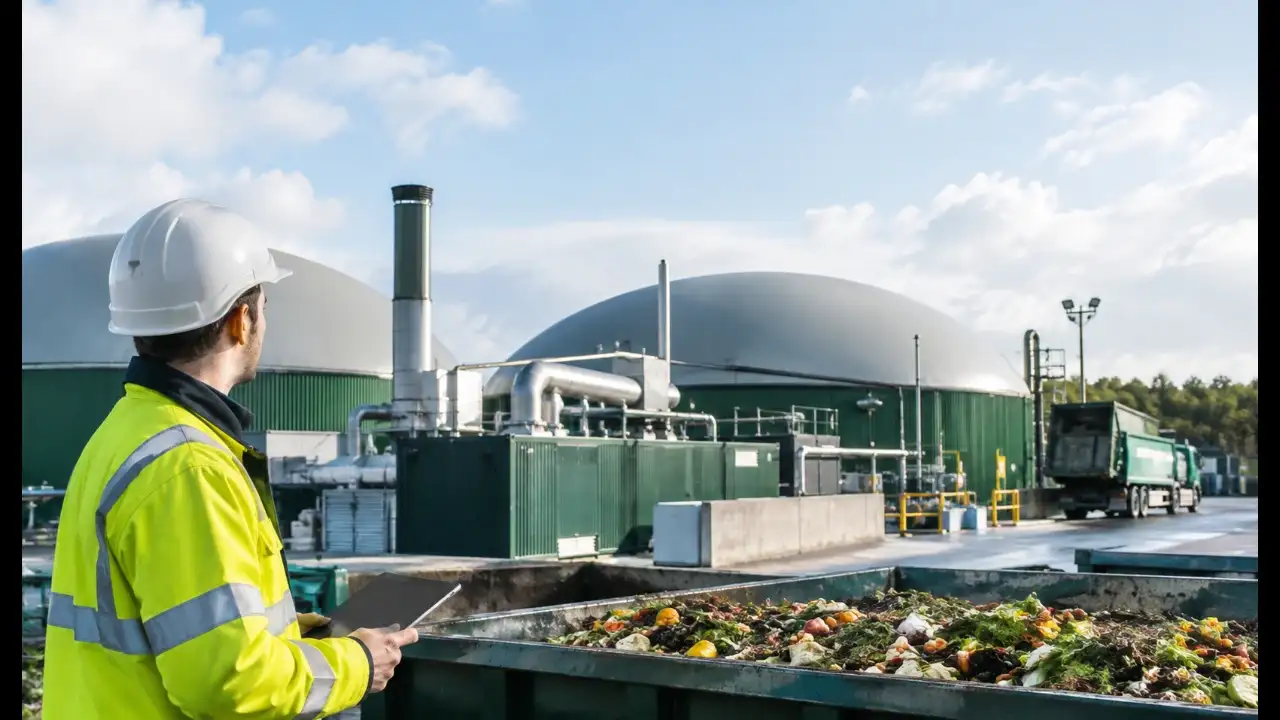
Food waste that might otherwise have been sent to landfill became the raw material for renewable energy at Biffa’s Poplars Anaerobic Digestion plant in Cannock, West Midlands. Developed at a cost of £24 million, the facility was designed to handle more than 120,000 tonnes of food waste each year while producing biogas that could be converted into electricity.
The project grew from a practical problem facing waste operators: large volumes of commercial and industrial food waste were being discarded even though the organic material still contained usable energy. Biffa, which had long operated the landfill site, proposed building an anaerobic digestion facility that could bring waste collection, preparation and treatment together at the same location.








