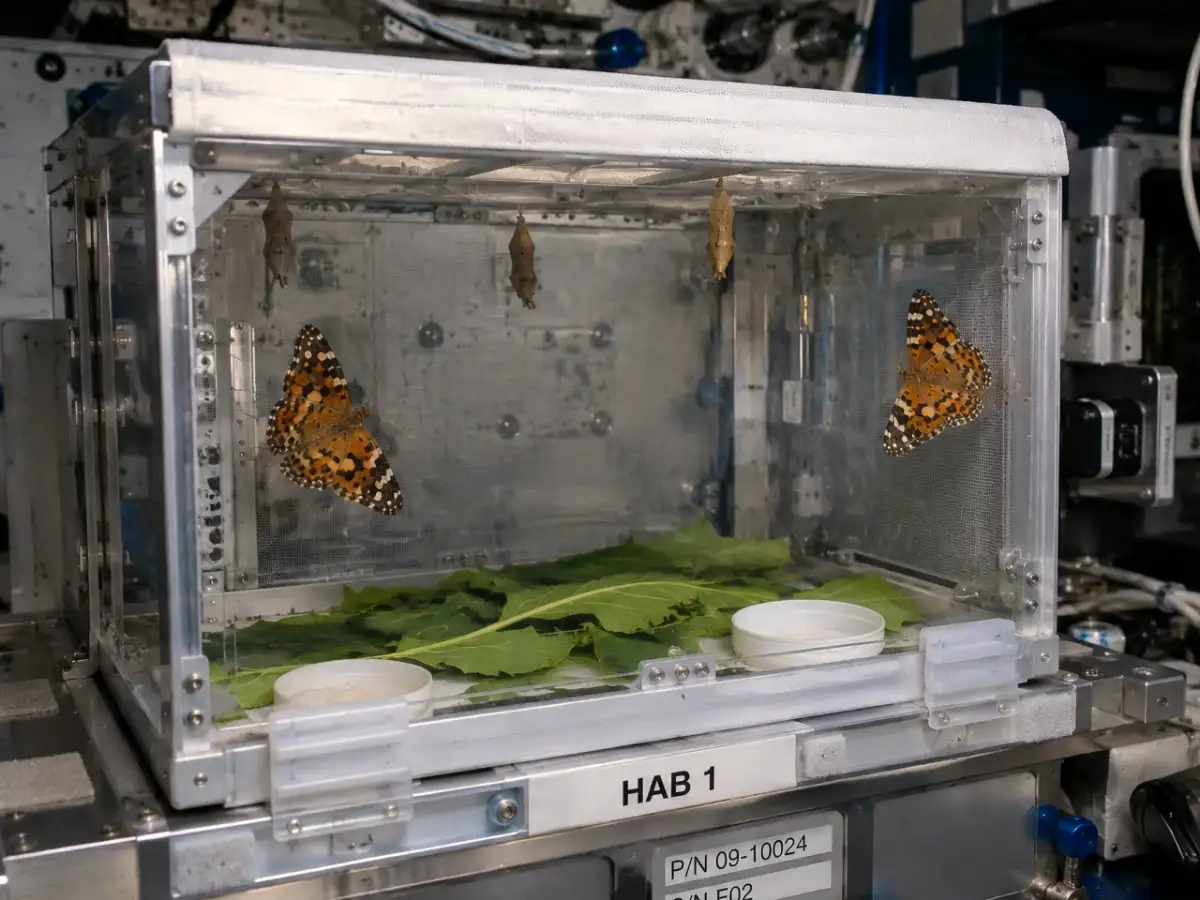
In November 2009, four painted lady caterpillars became part of a small biology experiment connected to the International Space Station. The project gave students a chance to follow a familiar life cycle in an unfamiliar environment, as the caterpillars were observed as they ate, moved, formed chrysalises, and eventually developed into butterflies.
The experiment was part of NASA's education activities associated with the space station. Painted lady butterflies are commonly used for classroom studies because their development from caterpillar to adult can be observed over a relatively short period. Putting them in a microgravity environment allowed students and researchers to consider a simple question with a distinctly unusual setting: what happens to a creature whose development normally takes place with gravity providing a constant sense of direction?