Get all your news in one place.
100's of premium titles.
One app.
Start reading
The Economic Times
The Economic Times
Shreya Biswas and ET Science Desk

In 2009, Belize’s Barrier Reef System was listed as endangered by UNESCO. 9 years later, oil drilling limits and protected fishing zones helped reverse its decline

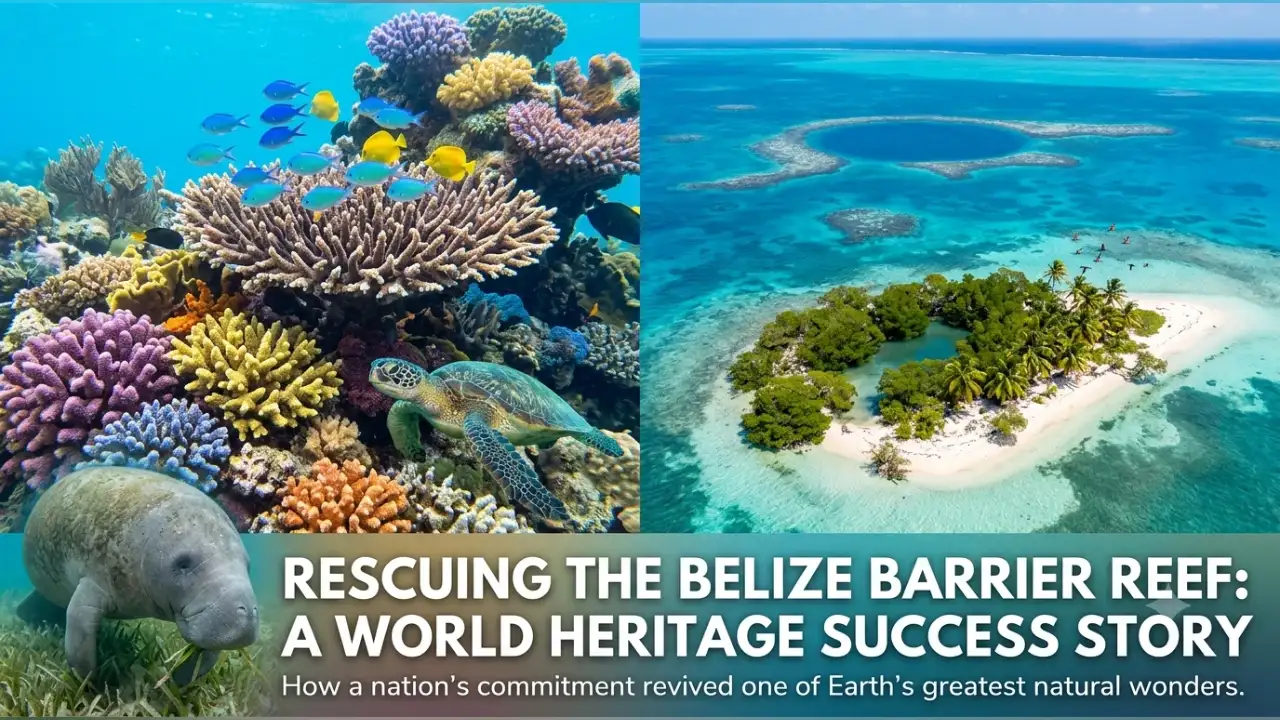
The Belize Barrier Reef Reserve System is the largest reef complex in the Atlantic-Caribbean region and represents the second largest reef system in the world. UNESCO inscribed it as a World Heritage Site in 1996, recognising its unique range of reef types and the biodiversity found across its seven protected areas.

But in 2009, the site was placed on UNESCO’s List of World Heritage in Danger. Concerns included the destruction of mangroves and marine ecosystems, offshore oil extraction and unsustainable development.
Nine years later, UNESCO removed the Belize Barrier Reef Reserve System from the danger list after Belize introduced a series of conservation measures. Among the measures UNESCO highlighted were a moratorium on oil exploration across the country’s entire maritime zone and stronger forestry regulations to improve mangrove protection.

A reef system with remarkable diversity

The Belize Barrier Reef Reserve System consists of seven protected areas: Bacalar Chico National Park and Marine Reserve, Blue Hole Natural Monument, Half Moon Caye Natural Monument, South Water Caye Marine Reserve, Glover’s Reef Marine Reserve, Laughing Bird Caye National Park and Sapodilla Cayes Marine Reserve.

Together, the seven protected areas represent about 12% of the entire reef complex. The wider system includes approximately 450 sand and mangrove cayes as well as offshore atolls, coastal lagoons, estuaries and different types of reefs.

UNESCO describes the reef system as one of the most pristine reef ecosystems in the Western Hemisphere. Its range of reef formations includes patch, fringing, faros, pinnacle and barrier reefs, as well as offshore atolls.

READ ALSO: In 2024, Botswana used Slaty Egret surveys to track ecosystem damage at Okavango Delta. 2 years later, researchers found 3 eggs, offering fresh hope for the Delta after a very long search

A habitat for threatened species

The reef system provides important habitat for several species of conservation concern.

These include the West Indian manatee, green turtle, hawksbill turtle, loggerhead turtle and American crocodile. The cayes and coastal areas also support important bird colonies, including red-footed boobies on Half-Moon Caye, brown boobies on Man O’War Caye and common noddies on Glover’s Reef.

The marine biodiversity is extensive. UNESCO records more than 500 fish species, 65 scleractinian coral species, 45 hydroid species and about 350 mollusc species in the area.

Sign up to read this article
Read news from 100's of titles, curated specifically for you.
Already a member? Sign in here
Related Stories
Top stories on inkl right now
One subscription that gives you access to news from hundreds of sites
Already a member? Sign in here
Our Picks
Fourteen days free
Download the app
One app. One membership.
100+ trusted global sources.