Get all your news in one place.
100's of premium titles.
One app.
Start reading
The Economic Times
The Economic Times

In 2008, Bosques Amazonicos SAC began training Ucayali farmers to grow food sustainably. 10 years later, hundreds of jobs were created and forest was regenerated in Peru

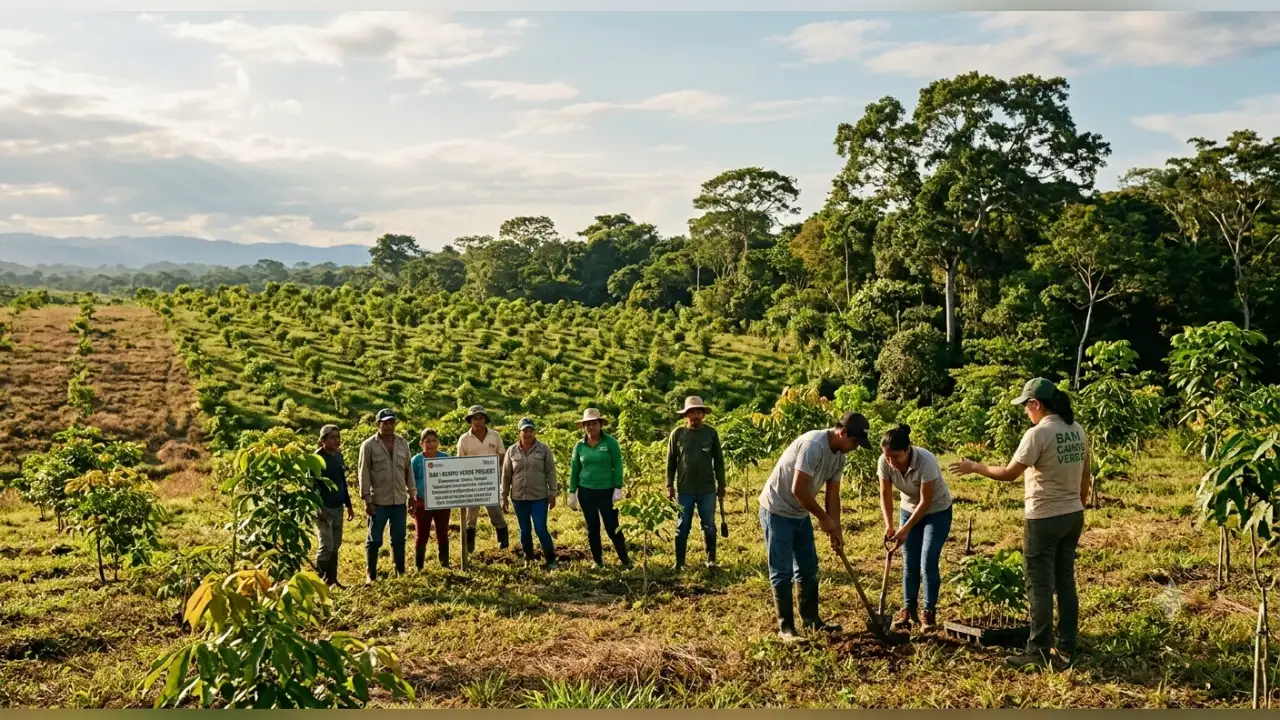
In 2008, Bosques Amazónicos SAC began the Campo Verde Project in Peru’s Ucayali region, reforesting degraded land with native tree species for timber and carbon purposes.

The project area had been affected by unsustainable logging and farming, followed by cattle ranching. By the mid-1990s, active production had stopped, while fires, overgrazing and soil degradation made it difficult for the original forest cover to regenerate naturally.

The project’s forest management plan for 2008 to 2012 aimed to reforest about 930 hectares of degraded pasture and carry out enrichment planting in about 268 hectares of secondary forest.

Training local communities

The project included a community development program involving neighbouring villages.

Communities surrounding the project received training in areas including reforestation, integrated pest management, fire control and soil recovery. BAM staff also provided on-site training and technical assistance to a farmers’ organization interested in replicating the experience.

The company gave neighbouring communities preference when hiring workers. During the peak plantation years, BAM provided employment to more than 400 residents in the area.

Women accounted for up to 40% of the labour force during the first two years of nursery production, before falling to around 20% in subsequent years.

READ ALSO: In 2020, American Rivers removed the Middle Fork Nooksack dam after 50 years of blocking fish in Washington. 2 years later, the river reopened 16 miles of habitat for Chinook salmon and trout

Nearly 2 million native trees planted

The project used native species including Simarouba amara, Dipteryx ferrea, Tabebuia serratifolia, Swietenia macrophylla and Inga edulis.

By 2018, around 870 hectares had been reforested with almost 2 million native trees. Another 124 hectares were being restored through protection measures and assisted natural regeneration.

Overall, the restoration interventions covered 2,040 hectares of degraded land through forest plantations and assisted natural regeneration.

Carbon credits generated

Carbon sequestration was another part of the Campo Verde Project.

By 2016, the project had generated 169,000 carbon credits. The first carbon sale was made at $8 per metric ton, while the price later reached $9 per ton.

The project became a Verified Carbon Standard afforestation and reforestation project in 2008.

The Campo Verde Project therefore combined native-tree reforestation on degraded land with community training, local employment and carbon-credit generation. By 2018, the project had reforested about 870 hectares and was restoring another 124 hectares through protection and assisted natural regeneration.

READ ALSO: Scientists may have found a major reason why we age after uncovering a hidden immune system breakdown

Sign up to read this article
Read news from 100's of titles, curated specifically for you.
Already a member? Sign in here
Related Stories
Top stories on inkl right now
One subscription that gives you access to news from hundreds of sites
Already a member? Sign in here
Our Picks
Fourteen days free
Download the app
One app. One membership.
100+ trusted global sources.