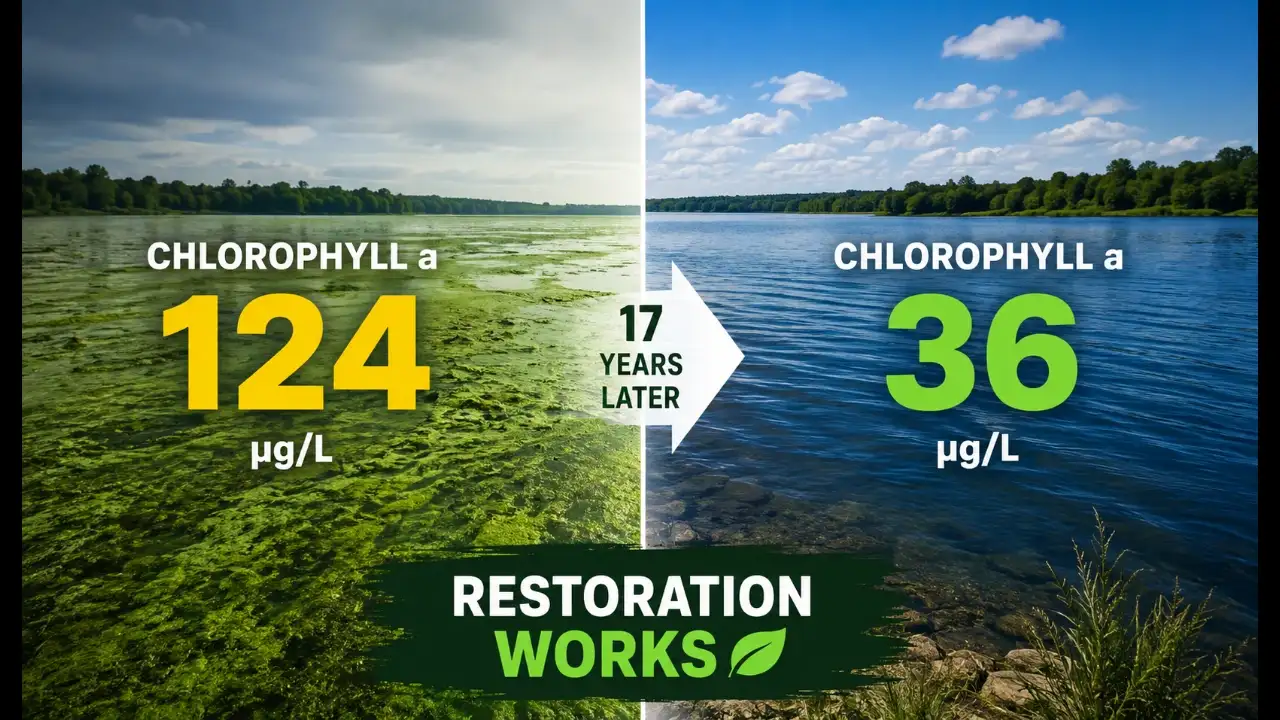
Lake Seminole restoration did not produce an overnight transformation. The change came slowly, through years of work aimed at nutrients, stormwater and contaminated sediment. Now, monitoring data show that the lake's northern lobe is carrying far less algae than before. That makes Lake Seminole an interesting case study in what patient environmental restoration can accomplish.
The lake sits in Pinellas County, surrounded by a landscape shaped heavily by homes, roads and development. That setting created a difficult water-quality problem because nutrients could enter the lake from many different sources. Researchers and county officials eventually had to look beyond the water itself and address what was happening across the surrounding watershed.