Get all your news in one place.
100's of premium titles.
One app.
Start reading
The Economic Times
The Economic Times
Muskan Singh

In 2005, trees in Georgia revealed hurricane secrets that had been hidden for more than two centuries

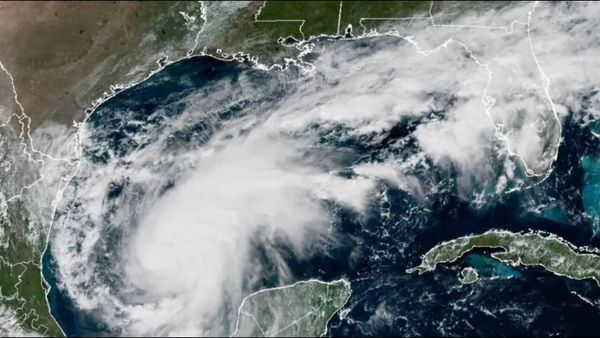
Trees do far more than provide shade and clean air. According to research presented in 2005, pine trees in Georgia have quietly preserved a record of hurricanes stretching back hundreds of years. The discovery offers scientists a valuable new way to study long-term storm patterns beyond the limits of written history.

Researchers studying longleaf pine trees near Valdosta, Georgia, discovered that the trees contain unmistakable signs of hurricanes preserved within their annual growth rings. Every storm leaves behind a unique chemical fingerprint, allowing scientists to identify individual hurricanes long after they passed.

The study was presented by Claudia Mora of the University of Tennessee at a joint meeting of the Geological Society of America and the Geological Association of Canada. By showing that trees preserve the chemical fingerprints of hurricanes, the research offers scientists a promising new tool for studying storms far beyond the limits of written history and understanding how hurricane activity has changed over centuries.

READ ALSO: Quote of the Day by Maureen O’Hara: 'My heritage has been my grounding, and it has brought me...'- Inspiring life lessons on identity, strength, and staying true to yourself by the legendary Irish-American actress known for films like 'The Quiet Man,' 'Miracle on 34th Street'

How Do Trees Preserve Hurricane History?

The research team, led by Claudia Mora of the University of Tennessee , compared chemical patterns in tree rings with documented hurricanes from the past 100 years.

The results were remarkably accurate. "We've taken it back 100 years and didn't miss a storm," Mora said.

Encouraged by those findings, the researchers expanded their work across the southeastern United States. Their analysis uncovered evidence of hurricane activity dating back 227 years, including signs left behind by the Great Hurricane of 1780 .

The trees also revealed periods of unusually active hurricane seasons during the 1870s and 1950s, matching known historical records. Additional evidence preserved in older trees recorded droughts and wet periods reaching as far back as 1450.

READ ALSO: In 2009, scientists revealed the world's most annoying insect, mosquito, turned out to have a romantic side

Why Is This Discovery Important?

The findings could prove especially valuable for climate research. Scientists continue to debate whether global warming is changing hurricane activity. While some research has suggested stronger storms or more frequent hurricanes, short-term weather records cannot answer long-term questions because hurricane activity naturally rises and falls over decades, as per a report by Live Science.

By extending the historical record hundreds of years into the past, tree-ring evidence offers researchers a much larger timeline for comparison.

As Mora explained, "What we're trying to do is understand frequency of hurricanes and how variable their occurrence is over the long-term. We're trying to come up with a reliable way to establish this."

READ ALSO: Irish proverb of the day: "No river reaches the sea without first making peace with..." — Timeless life lessons on resilience, struggle, forgiveness, emotional healing, inner peace, perseverance, and why true progress begins when we stop fighting every obstacle

What Did the Trees Reveal?

To identify ancient storms, the researchers examined both early-year and late-year tree growth. Since most hurricanes strike during August and September, they focused on changes in woody tissue formed later in the growing season.

The team searched for sudden drops in an oxygen isotope known as oxygen-18. Hurricane rainfall contains less oxygen-18 than ordinary rainfall. Because shallow-rooted longleaf pines quickly absorb this rainwater, each storm leaves behind a chemical signature in the tree's newest growth ring.

Using this method, the researchers reconstructed centuries of hurricane activity. The trees pointed to a relatively quiet period between 1580 and 1640, a finding that agrees with other evidence about the climate during that era. They also confirmed active hurricane periods in the 1870s and 1950s, matching historical observations.

READ ALSO: Quote of the Day by Enid Blyton: 'Leave something for someone but don't leave someone for...'- Inspiring life lessons on kindness, relationships and happiness from the woman who filled childhoods with adventure

Researchers hope to expand the technique to a wider geographic area and study even older trees. Doing so could extend the hurricane record to nearly 550 years, giving scientists an even clearer picture of long-term storm patterns.

FAQs

How can trees record hurricanes?

Hurricane rainfall leaves a distinct oxygen-18 signature in tree rings.

How far back did the tree record go?

Researchers found evidence of hurricanes dating back more than 227 years, including the Great Hurricane of 1780.

Sign up to read this article
Read news from 100's of titles, curated specifically for you.
Already a member? Sign in here
Related Stories
Top stories on inkl right now
One subscription that gives you access to news from hundreds of sites
Already a member? Sign in here
Our Picks
Fourteen days free
Download the app
One app. One membership.
100+ trusted global sources.