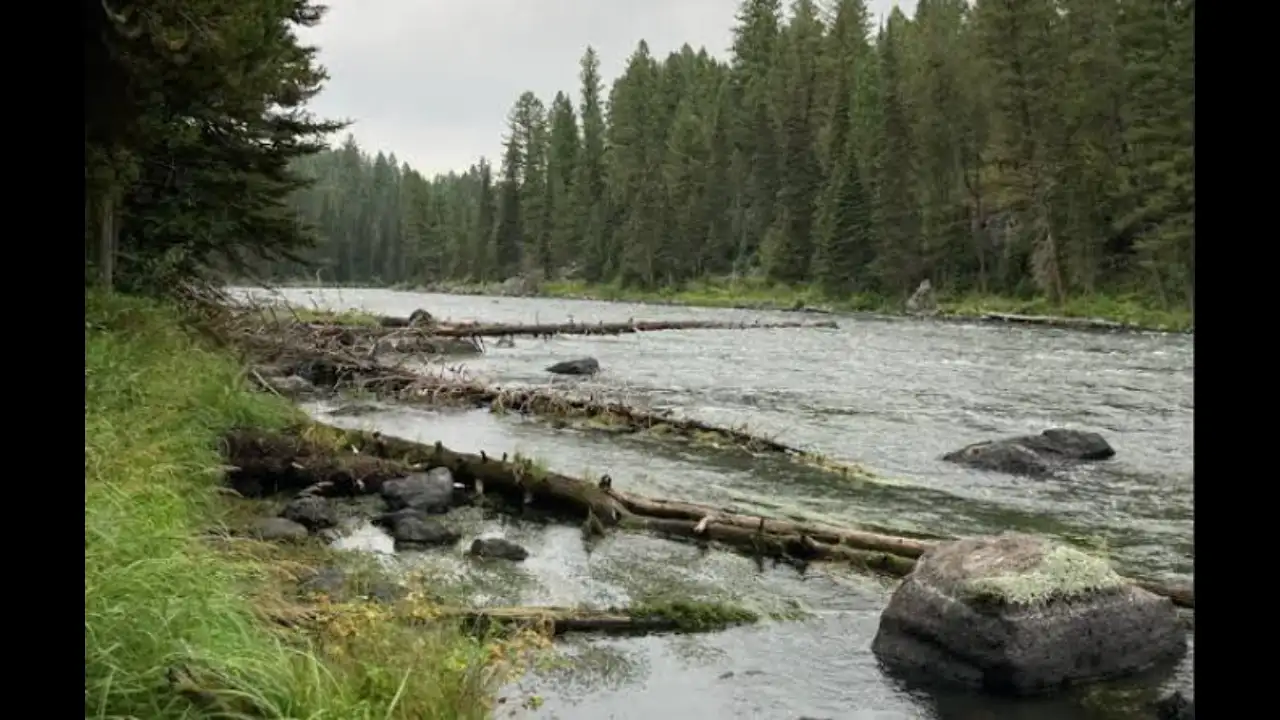
For years, the South Fork Palouse River carried a problem that could not be seen from its banks. Idaho had listed the river as impaired for bacteria, along with sediment, nutrients and temperature. Livestock grazing was among the sources identified in the watershed, adding pressure to an already altered stream system. Then the river began showing signs of improvement after years of conservation work.
The change did not come from one massive cleanup project. It came through practical measures across the watershed, including livestock controls, streambank work and restored vegetation. By 2016, Idaho removed E. coli as an impairment for the South Fork Palouse River. The decision offered a useful example of how steady work on the land can eventually show up in water-quality data.

What happened to the South Fork Palouse River?
The South Fork Palouse River begins on Moscow Mountain in northern Idaho. It flows past Moscow before crossing into Washington and joining the larger Palouse River system. Its Idaho watershed covers about 30 square miles and contains a mix of agricultural land, grazing areas, forest and development.
That landscape created several challenges for the river. Agriculture and other land uses had changed wetlands, floodplains and stream channels across the Palouse prairie. Those changes could increase runoff, erosion and the movement of pollutants into the river. Idaho’s 2007 watershed assessment identified E. coli, temperature, sediment and nutrients among the problems requiring controls.
Why was livestock grazing part of the problem?
Livestock can affect a stream in ways that are surprisingly direct. Animals with access to streambanks can leave manure close to the water or directly inside the channel. Rain and runoff can then carry bacteria from those areas into the river.
Grazing can also damage the vegetation that normally protects streambanks. Bare or trampled banks are more vulnerable to erosion during heavy rainfall and high flows. Idaho’s agricultural implementation plan identified livestock among the bacteria sources and recommended measures such as fencing, alternative livestock watering and better streamside management.
What did monitoring show?
The river’s bacterial problem was measurable long before restoration success became apparent. During the 2001-2002 monitoring season, seven E. coli samples exceeded Idaho’s applicable criterion. Additional sampling in 2006 also found E. coli concentrations above the geometric-mean standard at monitored locations.
Those results helped support the development of a bacteria TMDL, or total maximum daily load. In simple terms, a TMDL establishes how much pollution a water body can receive while still meeting its water-quality goals. Idaho approved the South Fork Palouse River TMDL in 2007, creating a framework for reducing pollution sources across the watershed.
How did restoration change the river?
The response focused on reducing the ways pollution reached the stream. Conservation projects included livestock fencing, streambank stabilization, riparian buffers and wetland restoration. These measures addressed several problems at once rather than treating bacteria as an isolated issue.
One documented project at Robinson Park treated more than 500,000 square feet of streambank and created nine wetlands. Another project stabilized roughly 1,670 feet of the river while establishing a variable riparian buffer. Such projects can reduce erosion while giving vegetation a better chance to protect the waterway.
What changed by 2016?
The important result came through monitoring rather than appearance. Idaho’s 2016 Integrated Report supported removing E. coli as an impairment for the South Fork Palouse River. EPA later referenced that change when documenting the deletion of E. coli from the river’s impairment status.
That does not mean the entire watershed suddenly became pristine. Idaho continued to identify other water-quality concerns in the broader Palouse River subbasin. The distinction matters because removing one pollutant from an impairment list is not the same as declaring an entire river fully restored.
The South Fork Palouse River offers a useful lesson for communities dealing with agricultural runoff. Many water-quality problems do not come from one obvious discharge pipe. They can develop through thousands of small interactions between soil, livestock, vegetation, rainfall and stream channels.
That makes restoration slower and less dramatic than a conventional cleanup. A fence may not look like environmental technology, and a restored streambank may not attract much attention. Yet those changes can reduce the pathways that carry bacteria into the water.
Idaho continues to collect water-quality data, including E. coli measurements from the South Fork Palouse River. The state says its monitoring records include bacteria data and special projects focused on E. coli in this river. Continued monitoring matters because meeting a water-quality standard does not remove the need to protect it.
The river’s 14-year story is therefore less about a perfect recovery than a measurable one. A waterway once failing its bacterial standard eventually produced enough evidence for Idaho to change its regulatory assessment. That is a quieter kind of restoration success, but it may be the more useful kind to study.
For other agricultural watersheds, the message is straightforward. Cleaner water can begin with changes far from the river itself. Sometimes, protecting a stream means changing what happens on the land beside it.