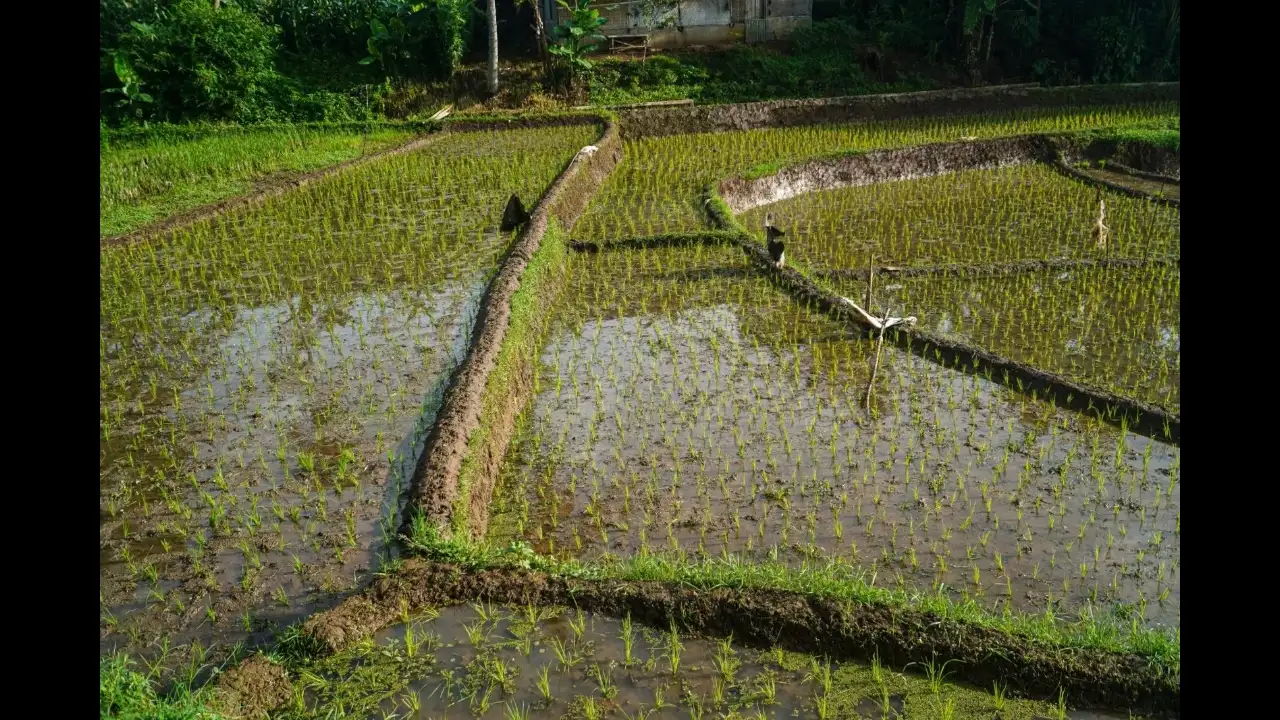
Rice paddies are usually discussed for one atmospheric problem: methane. But researchers at the University of California, Irvine found another chemical connection. Flooded rice fields release methyl halide gases, including compounds linked to ozone chemistry. The amounts are relatively small, yet they helped explain where some atmospheric gases originate. The finding also raised a broader question about agriculture's overlooked role in atmospheric chemistry.
The research focused on rice fields near Maxwell, California, during the 1998 and 1999 growing seasons. Researchers monitored emissions throughout the season instead of relying on occasional samples. That gave them a clearer picture of how emissions changed as rice plants developed. Their measurements showed that the field's chemistry could shift considerably during different stages of growth.