Get all your news in one place.
100's of premium titles.
One app.
Start reading
The Economic Times
The Economic Times
Team Global

In 2000, San Diego sank the 366-foot HMCS Yukon off Mission Beach; from 2015 to 2020, nine divers recorded 237 observations across 58 marine species

In 2000, the City of San Diego, working with the San Diego Oceans Foundation, acquired and refurbished HMCS Yukon, a decommissioned 366‑foot Canadian warship, to scuttle it as an artificial reef about 1.85 miles off Mission Beach. However, there were some issues with the actual sinking of the ship. On July 14, 2000, the ship unexpectedly began to capsize and sank before divers could position it properly, settling on the seafloor at depths ranging from about 60 to 105 feet.

A 366-foot warship sinks prematurely off Mission Beach
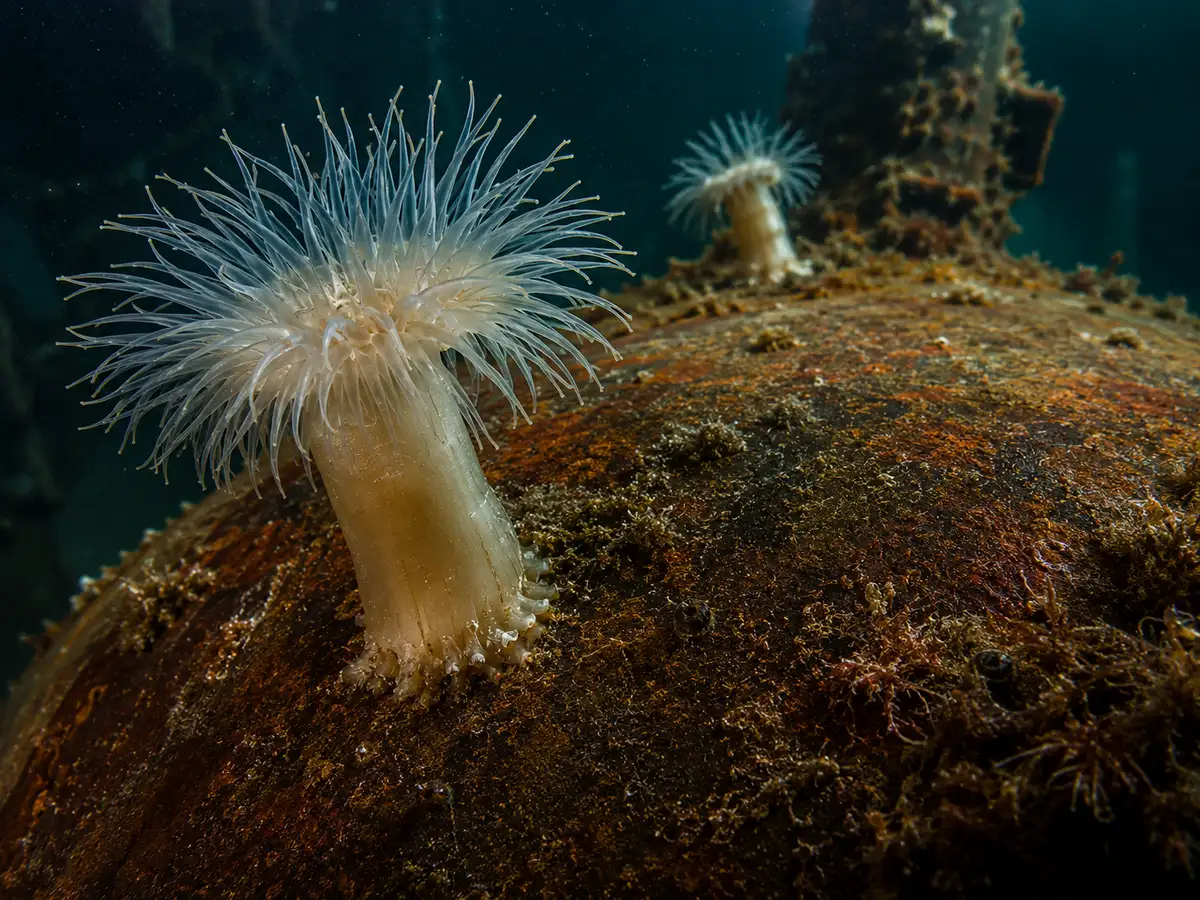
After the Yukon was sunk, one pressing concern that arose for researchers was whether an artificial reef such as this one truly contributed to the production of marine life or merely drew fish populations that were already living elsewhere into the vicinity of the reef. To investigate this question, the San Diego Oceans Foundation collaborated with Dr. Ed Parnell at the Scripps Institution of Oceanography to conduct what is known as a baseline study in 2004, the results of which were then published the following year. However, Parnell himself noted that this method, although successful, had its flaws, since it was voluntary participation that led to random sampling, not to mention the lack of uniform training among divers in species recognition.

Parnell's Scripps study sets a baseline

The San Diego-based nonprofit Ocean Sanctuaries expanded upon Parnell’s survey beginning in 2015, adopting a different methodology centered on diver-taken photographs uploaded to iNaturalist for AI-assisted, expert-verified species identification. Instead of asking divers to identify species on the spot, the nonprofit had them photograph marine organisms encountered during regular dives and upload the images to iNaturalist, a California Academy of Sciences platform that uses AI to suggest identifications, which trained naturalists then verify. The idea was to overcome the limitation of accuracy that had plagued the previous survey.

Nine divers log 237 observations, 58 species

According to the August 2025 Community Science Exchange article 'HMCS Yukon: A Case Study in Marine Citizen Science,' Ocean Sanctuaries divers recorded 237 observations of 58 marine species on and around the Yukon between 2015 and 2020. The vast majority of observed species turned out to be either sessile invertebrates or freely swimming fish; the observations of planktonic creatures were not included in the total number of species due to their being considered non-reef residents by the researchers. The divers’ work was particularly challenging because of the wreck’s depth (around 100 feet), cold water, strong currents and highly variable visibility that could drop to very low levels on some days. For safety reasons, the divers did not use the transect lines Parnell used in his study and collected no data inside the ship.

Evidence that the Yukon supports a genuine reef community

According to the study, the consistent presence over five years of both sessile invertebrates and actively swimming fish suggests that the Yukon supports a reef community rather than merely attracting nearby fish. The authors note that this fits a broader pattern seen in other artificial reef studies, where structures placed in degraded habitats appear to support biodiversity over time.

Sign up to read this article
Read news from 100's of titles, curated specifically for you.
Already a member? Sign in here
Related Stories
Top stories on inkl right now
One subscription that gives you access to news from hundreds of sites
Already a member? Sign in here
Our Picks
Fourteen days free
Download the app
One app. One membership.
100+ trusted global sources.