Get all your news in one place.
100's of premium titles.
One app.
Start reading
The Times of India
The Times of India
World
TOI World Desk

In 1998, Costa Rica spread 12,000 tonnes of orange waste over degraded pasture; 16 years later, tree diversity had tripled and forest biomass was 176% higher

In the late 1990s, an unusual conservation experiment began in Costa Rica when ecologists proposed using orange peels and pulp to help restore a badly degraded piece of land inside a national park.

Get breaking news anytime, anywhere. Download the TOI app now!
For this, orange juice company Del Oro and ecologists Daniel Janzen and Winnie Hallwachs, worked with the Area de Conservacion Guanacaste (ACG), or Guanacaste Conservation Area. According to Princeton University, the company had recently started production near the northern border of the conservation area and was looking for a way to deal with its orange waste.

Janzen and Hallwachs proposed a deal wherein Del Oro would donate some of its forested land to the ACG. In return, the company could take its orange peel waste to a degraded pasture inside the park, where it could break down naturally.

After the agreement was signed, around 1,000 truckloads of orange peels and pulp, totalling about 12,000 metric tonnes, were spread across the degraded land.

Over the next several years, the area changed dramatically. A place that had once been covered by exposed rock and dead grass became a dense forest filled with trees, vines and other vegetation.

A forest emerges

The site was largely forgotten after the orange waste was deposited. A rival orange juice company, TicoFruit, later sued Del Oro, arguing that the company had defiled a national park. The case reached Costa Rica’s Supreme Court, which ruled in favour of TicoFruit.

The legal dispute meant that the site received little attention for about 15 years. That changed in 2013, when Princeton University researcher Timothy Treuer was discussing possible research projects with Janzen.

Janzen mentioned the orange-peel site to Treuer and said that although taxonomists had visited the area, it had not received a thorough evaluation. Treuer decided to visit it during another research trip to Costa Rica.

When he arrived, the site looked completely different from what he expected. The vegetation had grown so densely that Treuer could not initially see the large sign marking the experiment.

“It was so completely overgrown with trees and vines that I couldn’t even see the 7-foot-long sign with bright yellow lettering marking the site that was only a few feet from the road,” Treuer said, as quoted by Princeton.

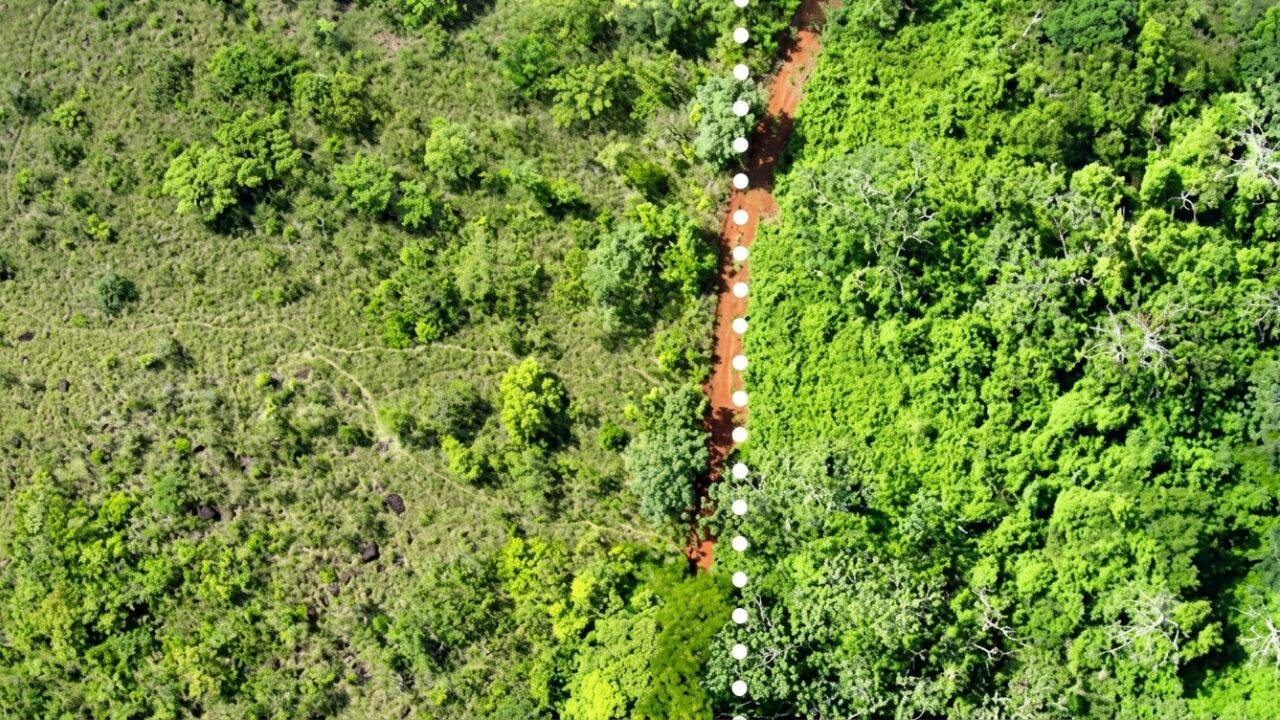
The contrast became even clearer when Treuer compared the orange-peel site with the nearby untreated pasture. The treated area had become a thick forest, while the neighbouring land remained much more open.

“It was just hard to believe that the only difference between the two areas was a bunch of orange peels. They look like completely different ecosystems,” Treuer explained.

Sign up to read this article
Read news from 100's of titles, curated specifically for you.
Already a member? Sign in here
Related Stories
Top stories on inkl right now
One subscription that gives you access to news from hundreds of sites
Already a member? Sign in here
Our Picks
Fourteen days free
Download the app
One app. One membership.
100+ trusted global sources.