Get all your news in one place.
100's of premium titles.
One app.
Start reading
The Economic Times
The Economic Times
Team Global

In 1997, HMCS Saskatchewan was sunk off Nanaimo; 448 days later divers recorded 46 taxa, including 9 molluscs and 7 echinoderms

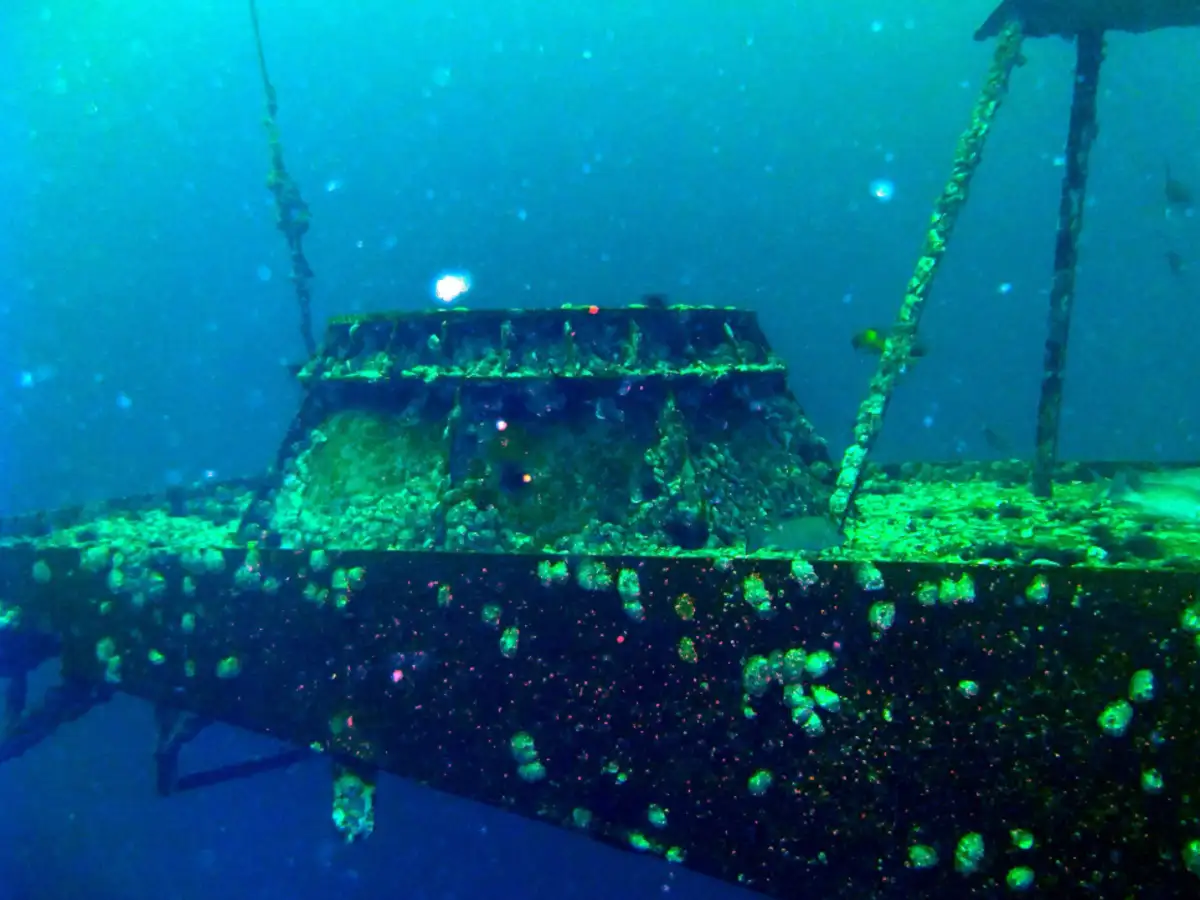
HMCS Saskatchewan, which belonged to the Mackenzie class of destroyer escorts, was sunk near Nanaimo in British Columbia, Canada, on June 14, 1997, to form an artificial reef. Divers investigating the artificial reef during the first 448 days after the sinking found 46 different types of flora and fauna, including 9 molluscs and 7 echinoderms, which marks one of the earliest records of colonization by marine life of this man-made reef. In this case, the speed of colonization is similar to other projects of the Artificial Reef Society of British Columbia (ARSBC): for example, in the case of G.B. Church, the first of the ARSBC's artificial reefs, sunk in 1991, surveys carried out within two and a half years of sinking recorded 96 species (62 invertebrates, 20 fish, and 14 algae) and in the case of HMCS Annapolis, which sank in 2015, almost twenty years after HMCS Saskatchewan, citizen-science surveys monitored recruitment over the course of a five-year investigation.

The Saskatchewan was part of the Royal Canadian Navy service for approximately thirty years and was decommissioned in 1994. After it was purchased by ARSBC, it was made non-hazardous, its hatches and doors opened for diving purposes, and it was sunk using the process that, according to the 1997 conference paper 'Artificial Reefs in British Columbia, Canada' by Jones and Welsford presented at OCEANS '97 MTS/IEEE in Halifax, NS, takes at least seven months, corresponding to approximately 75 person-months of volunteer time. Currently, the Saskatchewan rests upright at depths of 24 to 40 meters, becoming one of the most popular dive spots in British Columbia, according to local dive companies like Nanaimo Dive Outfitters.
Why sunken ships attract marine life

The logic behind reefing a ship is straightforward: bare steel placed on an otherwise soft or featureless seabed gives marine organisms a hard, stable surface to settle on, something the Strait of Georgia's silty bottom rarely offers on its own. Over time, filter feeders, anemones, sponges and mobile species such as rockfish and lingcod move in, layer by layer, until the wreck functions as a self-sustaining habitat rather than a static piece of scrap metal. That basic premise, though, doesn't mean an artificial reef behaves exactly like a natural one. This is where more rigorous, quantitative research becomes useful.

What regional research shows about artificial versus natural reefs

The following peer-reviewed study conducted in BC is titled ‘Differences in fish communities on natural versus artificial temperate reefs, groundfish conservation applications in British Columbia’. It was written by Bulger, Volpe and Fisher and published in Marine Environmental Research in 2019. The study involved ROV and sonar surveys of 18 reef sites, 9 artificial and 9 natural, located off the south coast of BC. The authors noted significant differences in the communities' composition in the reefs and concluded that artificial reefs demonstrate much higher variability in terms of rockfish abundance than natural reefs. Namely, the number of rockfish in artificial reefs may be exceptionally large in some cases and exceptionally small in other instances, while the number of rockfish in natural reefs remains fairly moderate and predictable. In addition, the authors concluded that total diversity of groundfish is significantly higher in natural reefs than in artificial reefs. Depth and structural relief turned out to be the best predictors of the abundance and species richness for all surveyed reefs.

Sign up to read this article
Read news from 100's of titles, curated specifically for you.
Already a member? Sign in here
Related Stories
Top stories on inkl right now
One subscription that gives you access to news from hundreds of sites
Already a member? Sign in here
Our Picks
Fourteen days free
Download the app
One app. One membership.
100+ trusted global sources.