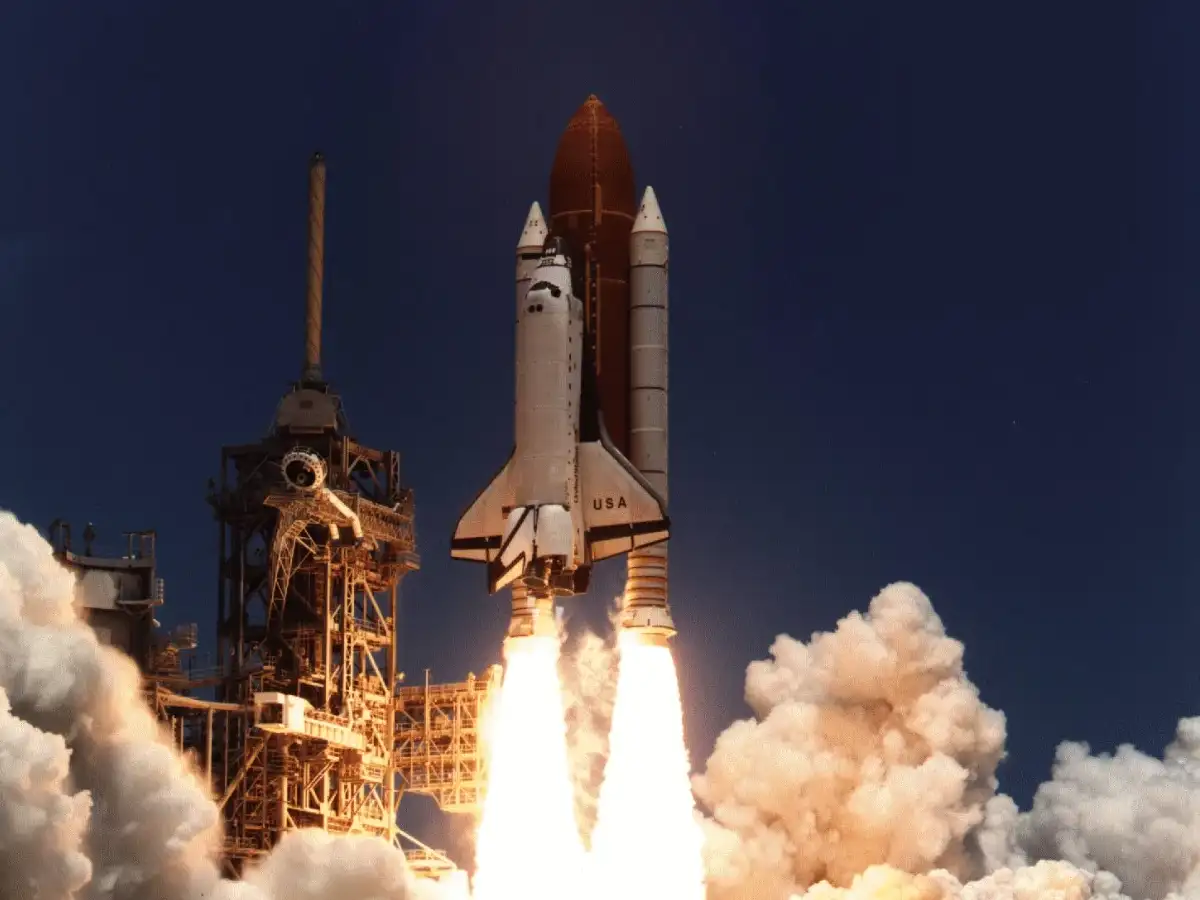
Space shuttle launches often make headlines because of the rockets, spacewalks, and flight duration. But when Space Shuttle Columbia lifted off in July 1994, one of the quieter experiments on board involved four Japanese red-bellied newts and a specially designed aquatic habitat. The experiment was part of STS-65, the second International Microgravity Laboratory mission, which carried more than 80 experiments examining how materials and living organisms behave in microgravity.
The seven-member crew launched Columbia on July 8, 1994, and returned to Kennedy Space Center on July 23 after 14 days, 17 hours, and 55 minutes in orbit. At the time, it was the longest shuttle flight yet completed. Among the life-science investigations was an experiment involving Japanese red-bellied newts, Cynops pyrrhogaster , designed to examine fertilisation, embryonic development and the formation of gravity-sensing organs in microgravity.