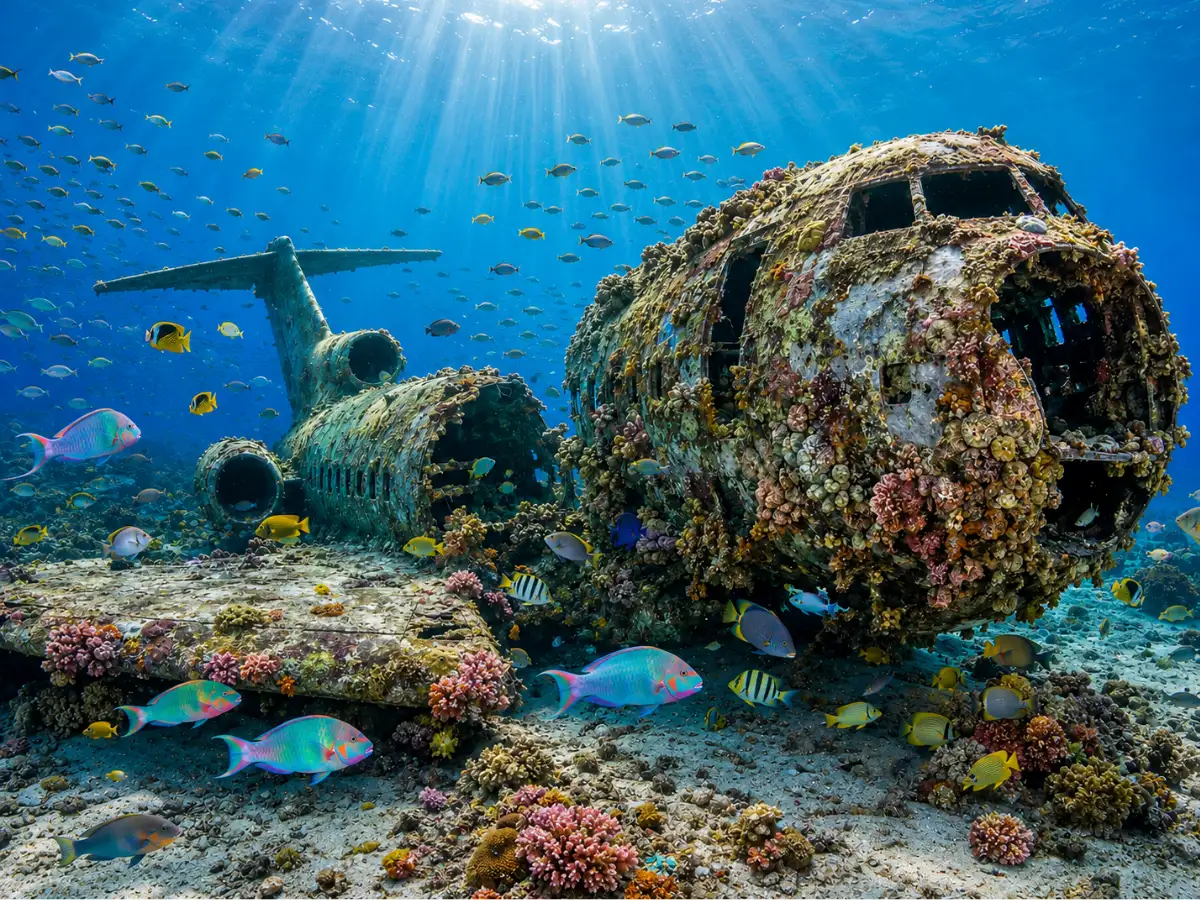
Off the coast of Miami, divers regularly visit a retired passenger jet that has spent more than three decades on the ocean floor. The Key Biscayne Artificial Reef Site is one of dozens of intentional wrecks that make up the region’s diving grounds, and on September 8, 1993, a decommissioned Boeing 727, named Spirit of Miami, was sunk in about 82 feet of water, according to DiveSpots. Shipwrecks like this one function much like natural reefs, providing structure and homes for a variety of fish and invertebrate species, the Office of National Marine Sanctuaries explains. What may seem like an unusual way to dispose of an old plane has become a practical method for rebuilding underwater habitat.
How an old plane ends up on the seafloor

Long before it went under, Spirit of Miami had a long life in the sky, serving several airlines since its original delivery in the mid-1960s. Before decommissioning, crews stripped out the fuel lines, wiring, and other materials that could contaminate the water, standard procedure when preparing a boat or aircraft for reefing. The usual method of sinking large vessels is to blow them into position, but instead it was put on a barge, towed a few miles offshore, and lowered gently to the sandy bottom. It remained mostly undisturbed for a time, attracting curious divers who wanted to swim past a full-sized jet on the bottom of the ocean.
When the ocean pushed back
In November 1994, about fourteen months after it had been sunk, Tropical Storm Gordon passed through the Florida Straits with turbulent seas. The force proved powerful enough to break the aircraft in half. The main fuselage and wings were close to their original position, but the tail section was pushed some 150 yards farther out into deeper water. This showed that even a heavy metal structure could not withstand such a storm and that reef building carries a risk of damage.