Get all your news in one place.
100's of premium titles.
One app.
Start reading
The Economic Times
The Economic Times
Team Global

In 1990, NASA recovered tomato seeds after nearly 6 years on LDEF; classroom tests found space seeds germinated at 73.8% versus 70.3% for Earth controls

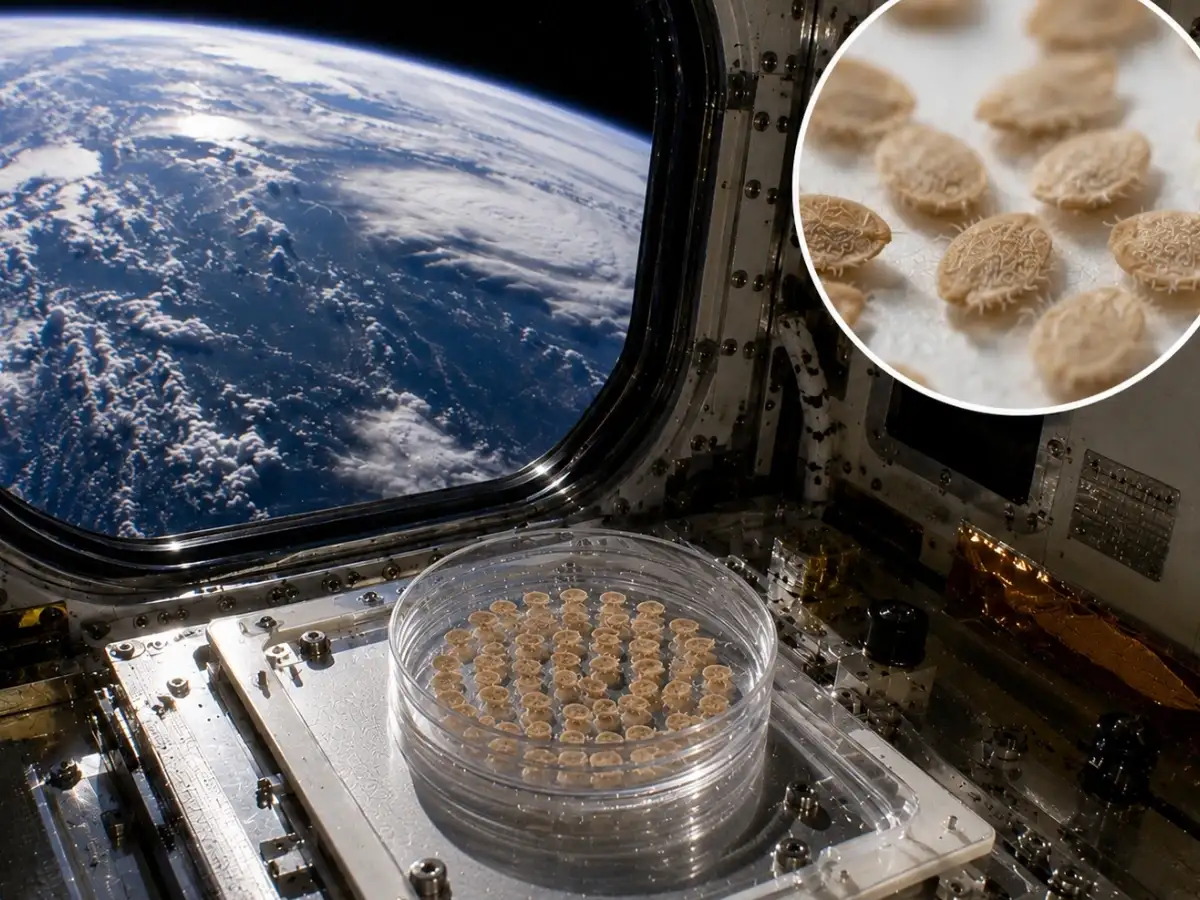
If you were in a classroom in the early 1990s, there is a real chance you planted a piece of space history without even realizing it. NASA sent Rutgers tomato seeds into space for nearly six years and then gave them to 3.3 million students across the country, according to NASA's Technical Reports Server. Years before people started talking about growing food on Mars, this quiet classroom project was already testing whether seeds could survive years of space radiation and still grow.

Why NASA left seeds in orbit for six years

The seeds were never meant to stay in space that long. The project, called the Space Exposed Experiment Developed for Students, or SEEDS, was a collaboration between NASA Headquarters, NASA's Langley Research Center, and the George W. Park Seed Company. Rutgers tomato seeds were loaded onto the Long Duration Exposure Facility, a satellite designed to see how materials and biological samples perform over periods in orbit. The Challenger disaster in January 1986 changed the timeline, grounding the shuttle program for about 32 months until it returned to flight in September 1988. The satellite stayed in space far longer than expected. When it finally returned to Earth in January 1990, the tomato seeds had been in orbit for nearly six years. They had been exposed to radiation and solar wind the entire time.

What happened when the seeds came back to Earth

When NASA retrieved the seeds, scientists needed a method to examine how the radiation had changed them. NASA sent 132,000 seed kits to schools across the country, reaching 3.3 million students from kindergarten to university. Each kit contained space-exposed seeds and a control batch that spent the same time in a climate-controlled warehouse on Earth. Students planted both sets, watched the seeds sprout, and mailed their observations back to NASA for analysis. This was not a controlled lab experiment. It was a classroom experiment chiefly carried out by students.

Sign up to read this article
Read news from 100's of titles, curated specifically for you.
Already a member? Sign in here
Related Stories
Top stories on inkl right now
One subscription that gives you access to news from hundreds of sites
Already a member? Sign in here
Our Picks
Fourteen days free
Download the app
One app. One membership.
100+ trusted global sources.