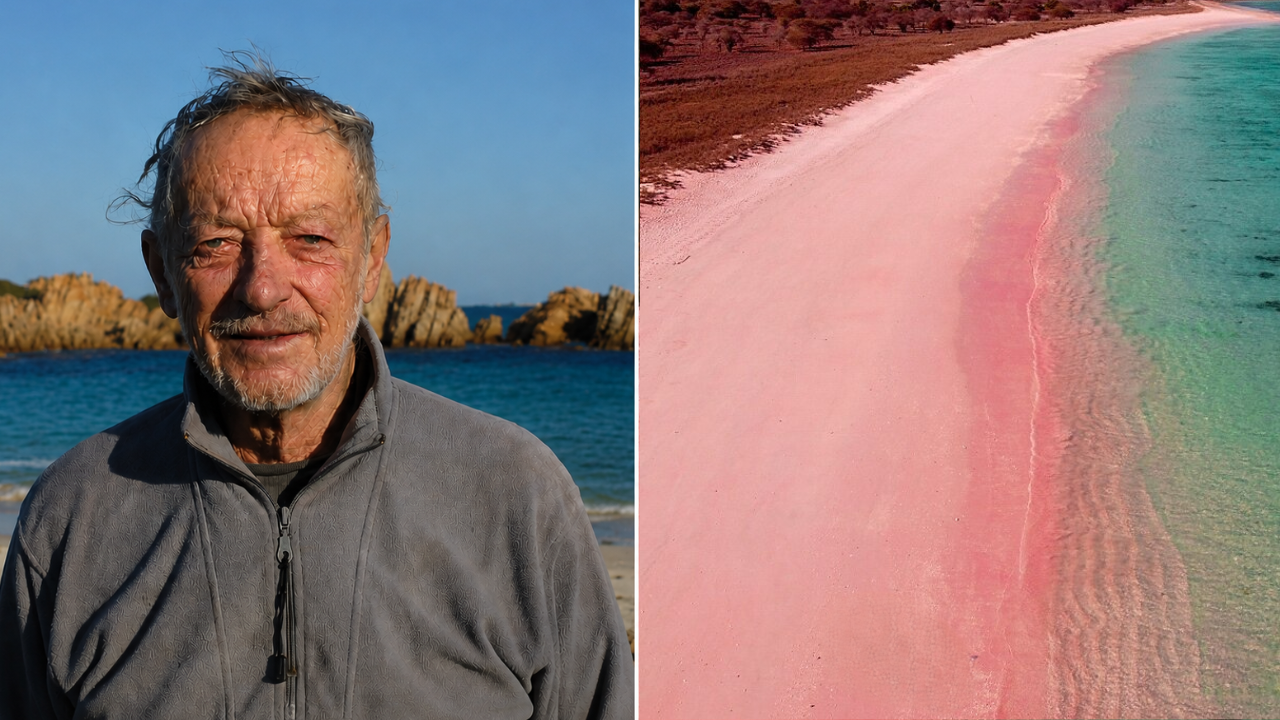
Most of us probably panic when our phone battery drops below 20%. Morandi chose a different path. In 1989, his boat's engine broke down off a small group of Italian islands. Once ashore, rather than repairing the boat and moving on, he chose to stay. He spent 32 years there, mostly alone. His story is documented in detail in a National Geographic feature that followed him in his final years as the island’s sole resident.
Get breaking news anytime, anywhere. Download the TOI app now!
How a broken boat changed one life forever
Morandi, a former physical education teacher, was from Modena, a town in northern Italy. Born in 1939, he was 50 years old in 1989 when he got tired of the city and went to sea, sailing towards Polynesia. But he never arrived. He had an engine failure on his catamaran off the Maddalena archipelago off the north coast of Sardinia. While his boat was not working, he discovered the nearby island of Budelli, then almost uninhabited and learned its caretaker was about to retire. On a whim, Morandi sold his boat and took the job himself.
The pink sand he was chosen to protect
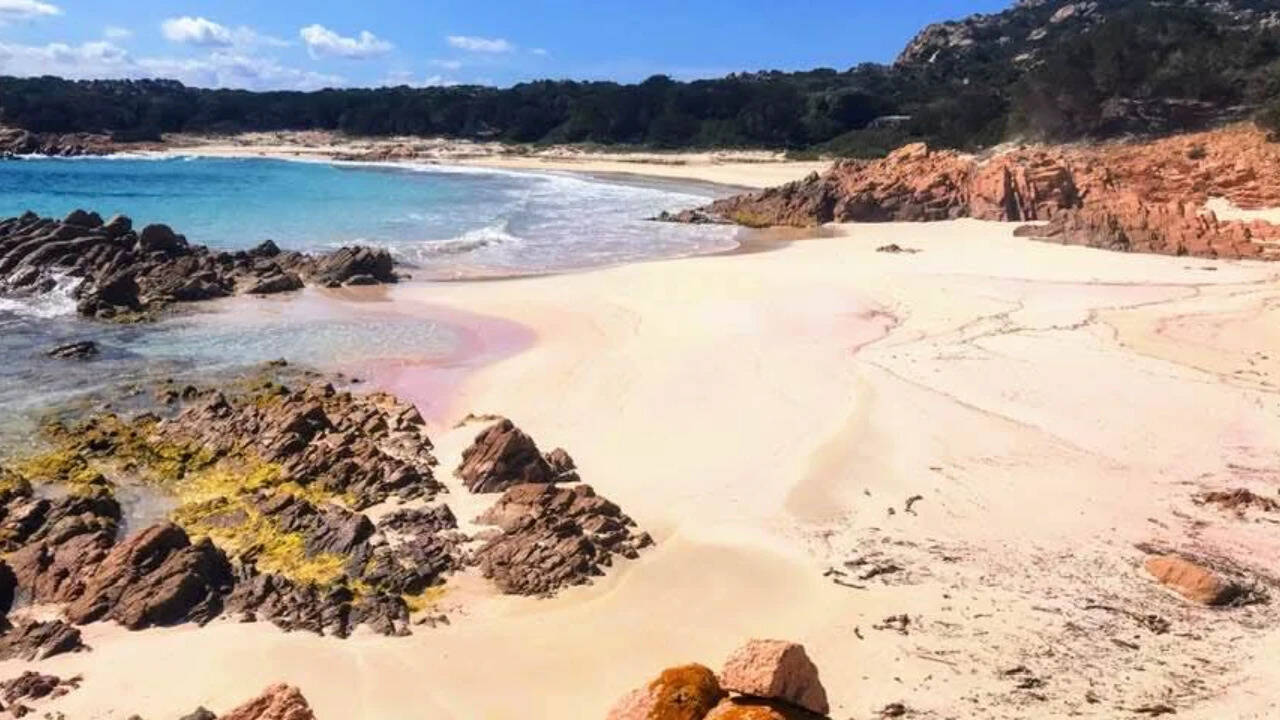
Budelli is one of the seven islands in the Maddalena Archipelago, and it’s famous for one thing above all else: Spiaggia Rosa or Pink Beach. The sand there is pink for a surprising reason. The colour comes from microscopic bits of coral and shell, including from a tiny creature called Miniacina miniacea that lives in the nearby seagrass meadows, National Geographic notes. When it dies, its shell decomposes and mixes into the sand. A 1976 study titled ‘ Miniacina miniacea: modern foraminiferal sands on the Outer Moroccan shelf ’ published in the journal Sedimentology looked at how this same organism makes pink foraminiferal sand elsewhere on the Atlantic coast, and it provided scientific evidence of just how much impact a single small creature can have on a beach’s colour.
Most of the beach was closed to visitors in 1994 by Italian authorities because it is so fragile. Morandi's job, unofficially, was to look after it. He lived in a converted Second World War shelter overlooking the beach, kept the footpaths clear, kept the sand free of rubbish and told the summer tourists why it mattered and why they shouldn’t touch it. He was no expert in marine biology. He simply cared, every single day, for three decades.
What three decades of solitude does to a person
Morandi sometimes spent 20 days without seeing another soul, particularly in winter, according to National Geographic. He read a lot, carved little sculptures out of juniper wood and watched the sea change colour through the day. Silence, he said, was what he loved best.
It might sound lonely and hard, but psychologists say it’s more complicated than that. The 2018 study, ‘ Solitude as an Approach to Affective Self-Regulation ,’ in Personality and Social Psychology Bulletin reports that time spent alone often decreases emotional arousal, easing both stressful negative feelings and excited positive ones. In short, solitude can have a soothing, balancing effect, even if it sometimes isn’t comfortable. Not to say it suits everyone, but it does help explain the fact that Morandi, after three decades alone, described himself as content rather than broken.
Leaving paradise, and finding a way back
Morandi’s peaceful life was not to remain simple forever. After a three-year ownership dispute, a court ruled in 2016 that Budelli was part of Italy’s Maddalena National Park. Park authorities then reportedly pressured Morandi to leave, wanting the island to become a centre of environmental education. National Geographic reports that a public petition on his behalf that garnered over 18,000 signatures delayed his eviction for years.
Morandi eventually left Budelli for good in April 2021. He moved to a small apartment on the nearby island of La Maddalena, which has about 15,000 inhabitants. Later he told CNN that beginning again in his 80s taught him something important: no matter your age, a second life is always possible.
Mauro Morandi, 85, died in Modena on 3 January 2025, according to international news outlets at the time. He had been guardian of one of Italy's rarest beaches for 32 years, from 1989 until his departure in 2021, looking after something most of us will only ever see in photographs.
A lesson for a generation that's rarely alone
Morandi’s story isn’t really about a broken boat or pink sand. It is about what happens when someone chooses silence over noise, and keeps choosing it for more than three decades. Most of us will never spend our lives alone on an island. But his life is a reminder that solitude, if chosen well, does not have to mean loneliness. Sometimes it just means looking a little closer at the world in front of you.