
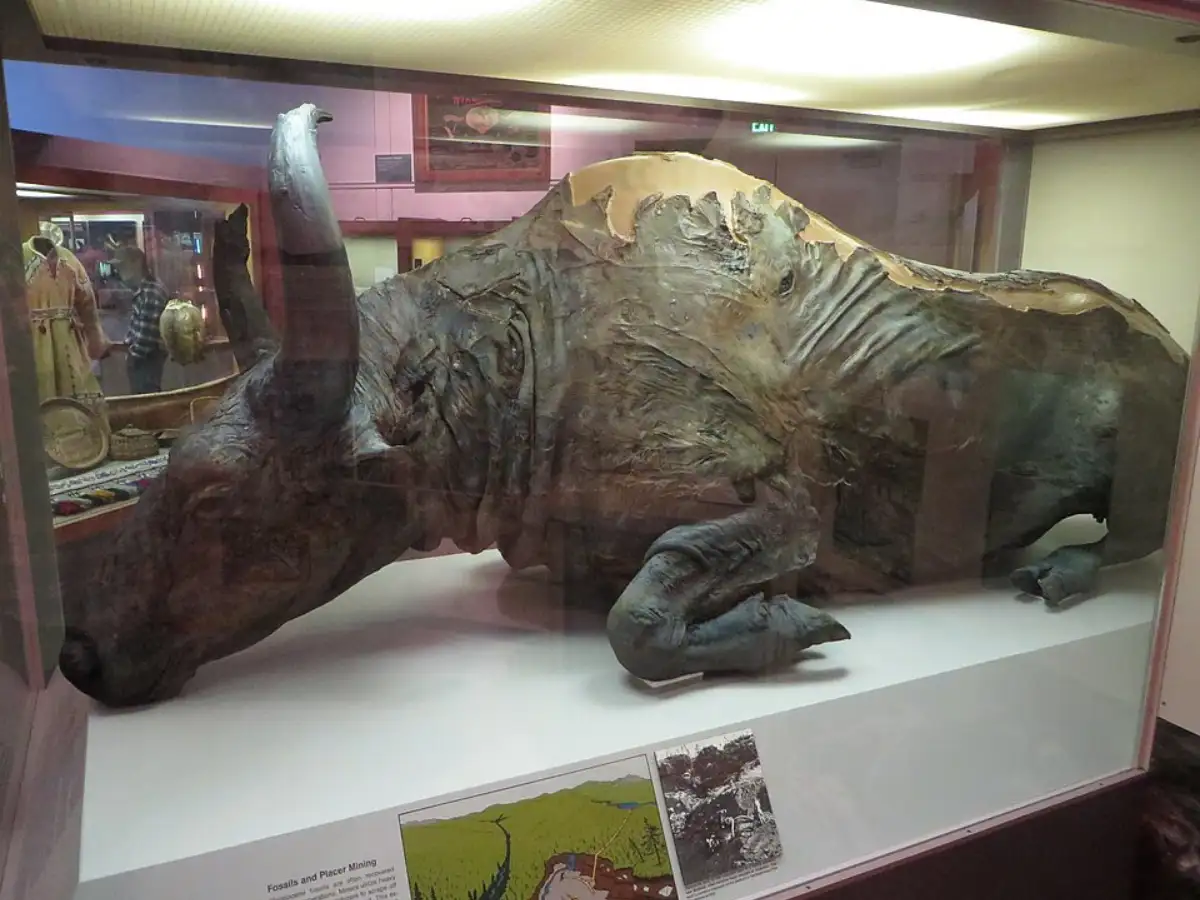
Gold miners working in northern regions around Fairbanks, Alaska, in 1979, were engaged in washing away frozen sediments at a placer mining operation with hydraulic hoses when something extraordinary caught their attention in the permafrost. Rather than rocks or other forms of soil, they unearthed a skull along with some body parts still covered with skin. As reported by the University of Alaska Museum of the North, the fossil is that of a 36,000-year-old Alaska steppe bison known as “Blue Babe” for its blue-colored hide.
What makes this find fascinating is that the bison has been preserved in an entirely different way compared to most fossils. It does not consist of just bones that have turned into minerals, but instead has retained most of its soft tissues, hide, and even some sections of its carcass. Scientists considered this fossil a mummified specimen rather than a fossil in the traditional sense.











