Spaceflight can take a serious toll on the body. Bones demineralize, muscles atrophy, fluids shift upwards, and even sleeping becomes a challenge since there is no gravity to hold you down. One unusual question researchers asked decades ago involved rats: could a mammal become pregnant and stay pregnant after mating in orbit?
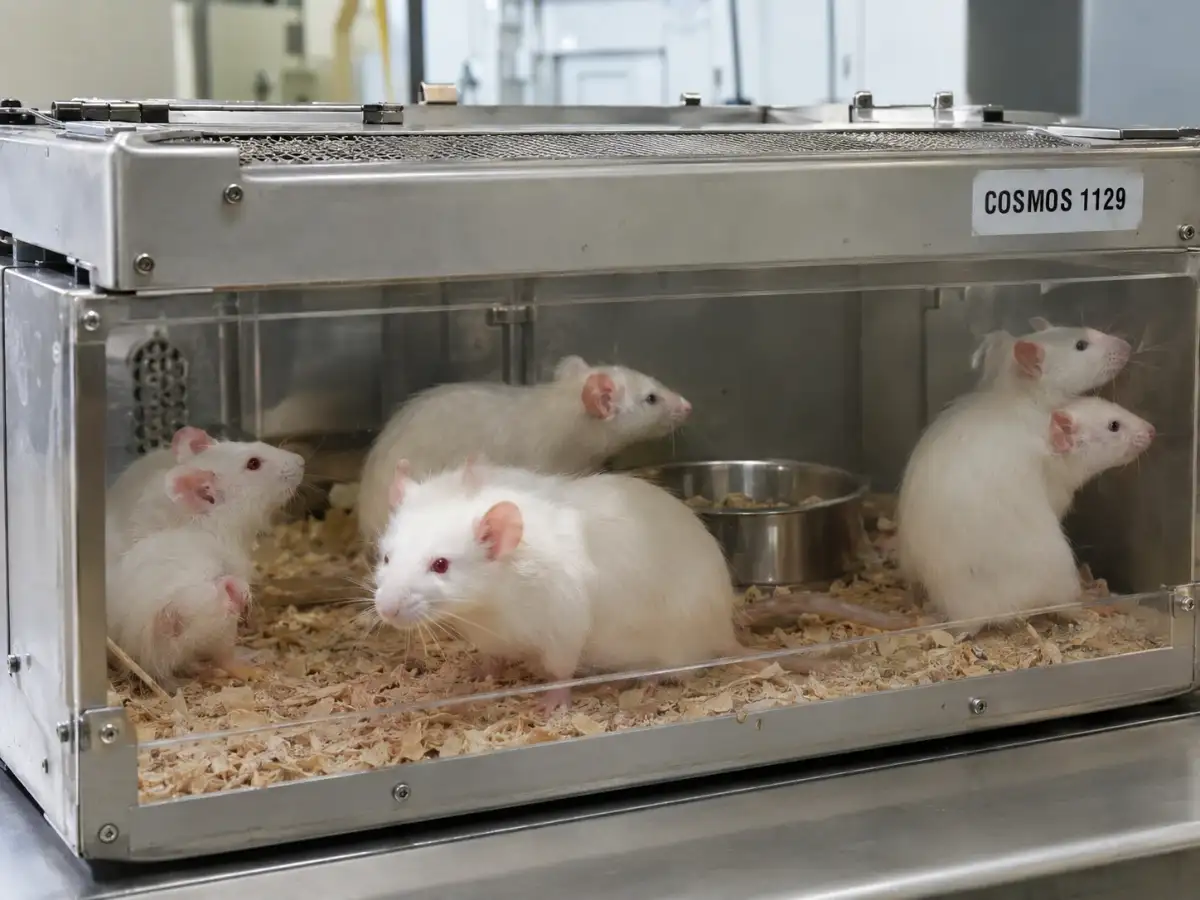
In September 1979, five female and two male rats were flown aboard the Soviet biosatellite Cosmos 1129, which spent 18.5 days in orbit. The animals were initially kept apart by a partition, which was removed after five days so they could mingle and mate during the remainder of the flight. The experiment was designed to examine whether the rats could mate in orbit and whether pregnancy could begin during spaceflight. NASA records describe the mission as an attempt to breed the rats during flight, while US researchers also conducted related embryology experiments aboard Cosmos 1129. The flight did not result in successful pregnancies and offspring. The results prompted further investigation by NASA scientists Eric Sabelman, Peter Chetirkin, and Robin Howard in their study Simulated Spaceflight Effects on Mating and Pregnancy of Rats .