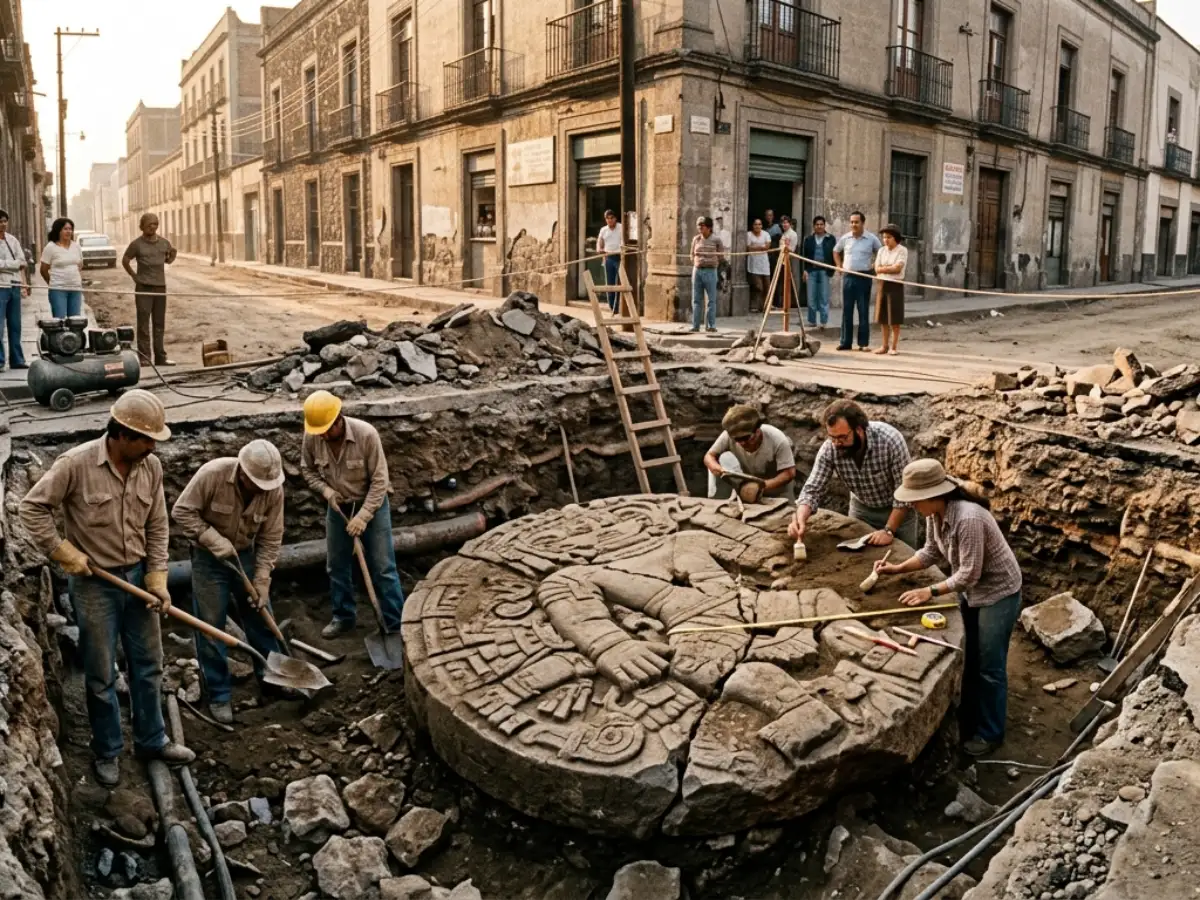
It all started with routine urban activity. On February 21, 1978, workers laying underground power lines below the streets of central Mexico City stumbled upon something large that had been buried there for centuries. Initially, it looked like just another carved stone hidden below all that urban development, but as the object became increasingly exposed to view, it was determined that these were, in fact, some of the most important archaeological discoveries ever made of a Mexica monument in situ.
The large round stone, carved in high relief, represented the dismembered goddess Coyolxauhqui and played an important role within one of the main sacred stories of the Mexica people. According to Britannica and INAH, which is the official cultural body of Mexico, the stone once belonged to the foot of the central ceremonial pyramid of Tenochtitlan, known as the Templo Mayor.