Get all your news in one place.
100's of premium titles.
One app.
Start reading
The Economic Times
The Economic Times
Team Global

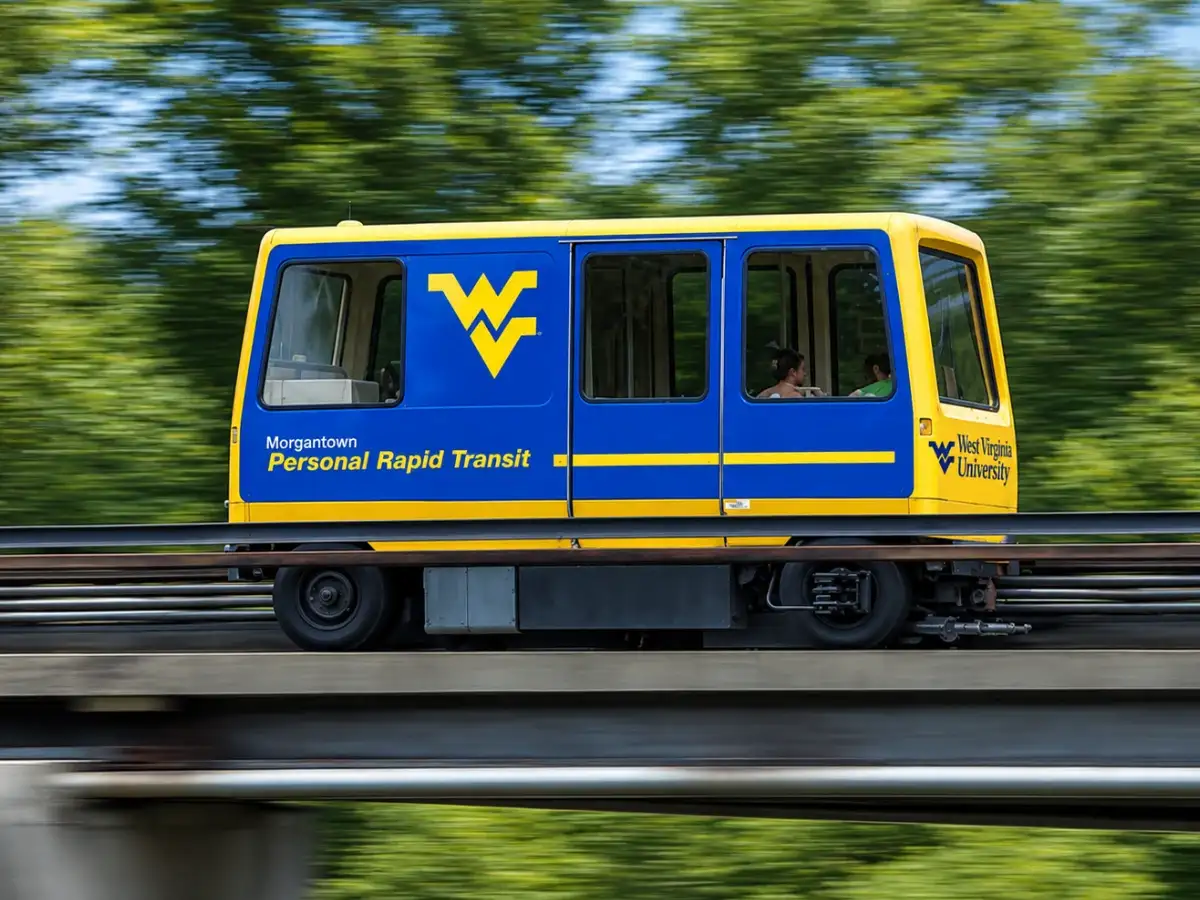
In 1975, West Virginia University opened a driverless transit system built as an experiment; 50 years later, its 67 cars have carried over 100 million trips

More than half a century ago, a concept that still seems like science fiction today was tried out in a small university town in West Virginia: driverless cars, taking people wherever they wanted to go. Researchers Steve Raney and Stanley Young reported in a paper presented at the Transportation Research Board's 2005 meeting that this small campus experiment has grown into one of the longest continuously running automated transit systems in the world. It's called the Personal Rapid Transit (PRT) system, and it's still in operation at West Virginia University (WVU) today.

A traffic problem requiring a bold solution

West Virginia University's own account of the project's history notes that the PRT began as an experimental project. The university's campuses were scattered throughout a hilly town, and buses couldn't get students to class on time. The school needed something different, and needed it fast.

The project's concept was shaped with help from WVU industrial engineering professor Dr. Samy Elias, and federal funding was secured. It was funded by the U.S. Department of Transportation and designed and built by Boeing. Phase I between Walnut Street and the Evansdale campus was dedicated on October 24, 1972, and opened for regular passenger service in October 1975. Phase II was completed in July 1979, extending the tracks further to the Health Sciences Center. According to WVU's own transit records, the daughter of President Richard Nixon, Patricia Nixon Cox, took one of the first demonstration rides.

50 years, 5 stations, 100 million rides

According to WVU's own 50th-anniversary account of the system, the PRT today connects five stations across WVU's Morgantown campus and the city's downtown: Walnut, Beechurst, Engineering, Towers, and Health Sciences. The system runs on 8.7 miles of dedicated guideway using 67 electric, rubber-tired vehicles, and it has carried over 100 million passenger trips since 1975, with about 12,000 riders boarding on a typical school day. It's a system that has kept operating year after year while other automated transit projects have struggled or disappeared elsewhere.

Sign up to read this article
Read news from 100's of titles, curated specifically for you.
Already a member? Sign in here
Related Stories
Top stories on inkl right now
One subscription that gives you access to news from hundreds of sites
Already a member? Sign in here
Our Picks
Fourteen days free
Download the app
One app. One membership.
100+ trusted global sources.