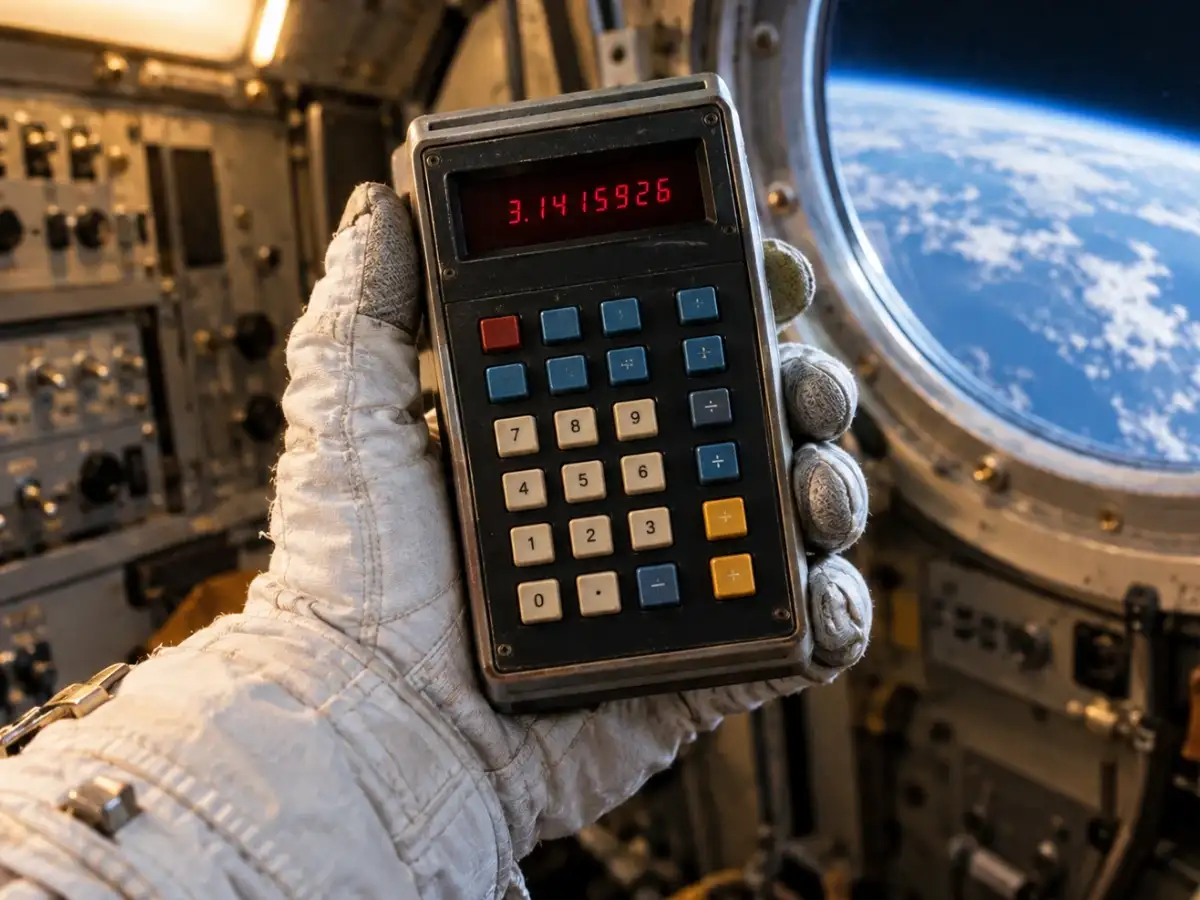
Imagine a handheld calculator small enough to fit in an astronaut’s pocket, carried on a spacecraft in case the main flight computer ever failed. That is pretty much what happened in July 1975. The Smithsonian’s National Air and Space Museum notes that NASA used a Hewlett-Packard HP-65 pocket calculator for the Apollo-Soyuz Test Project, programmed with rendezvous and guidance equations as a backup in case the main Apollo Guidance Computer failed. Today, a pocket calculator on a spacecraft seems almost quaint, but at the time it was really state-of-the-art technology, and its assigned job was anything but small.
A calculator made for the job