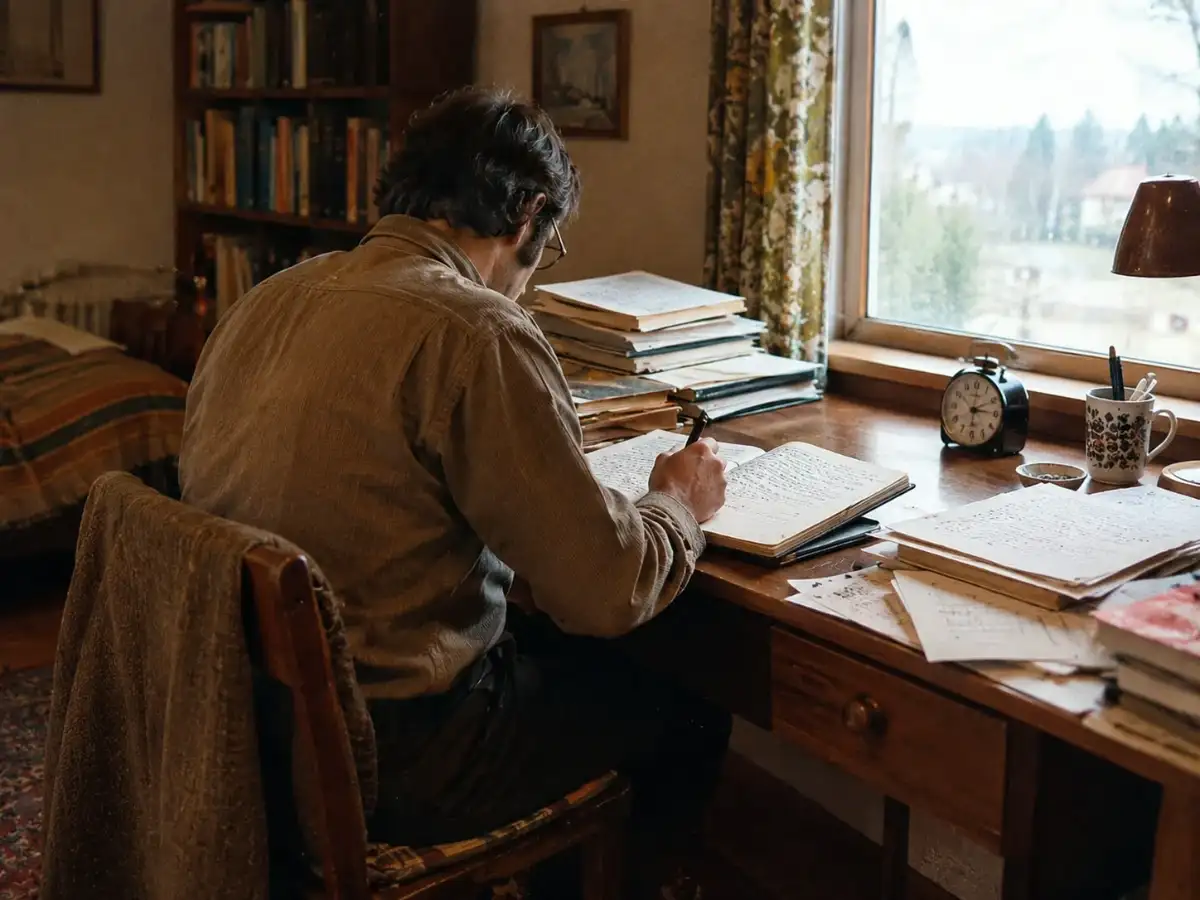
Somewhere in the basement vaults of Washington State University, there are 97 boxes containing documents that, by the terms of the family's original deed of gift, could not be opened for research until after the deaths of both Robert Shields and his wife, Grace Hotson Shields; Grace passed away in April 2024, and separate reporting has put the date for a full, exact accounting of the diary's word count as far out as 2057, fifty years after Shields's own death. Inside those boxes are approximately 37.5 million words, single-spaced, chronicling the life of one ordinary man, written in five-minute installments, over the course of nearly three decades. Washington State University Libraries' own archives put that word count and box count on record, and it was Washington State Magazine writer Adriana Janovich's deeply researched 2025 profile of Shields, built from his archived diary and interviews with the people who knew him, that went on to win the writer several journalism awards; not, as an earlier draft of this piece implied, a face-to-face interview with Shields himself, who had died in 2007, years before she wrote about him. It seems that, more than fifty years later, Shields' particular obsession with recording his life in such granular detail still fascinates us, and it's easy to understand why. Long before we had smartphones to quantify every step we take or every tweet we post, a small-town Washington teacher was out there conducting the social science experiment of the century, finding out just what it costs to have such an existence.
Man, six typewriters, and no vacation