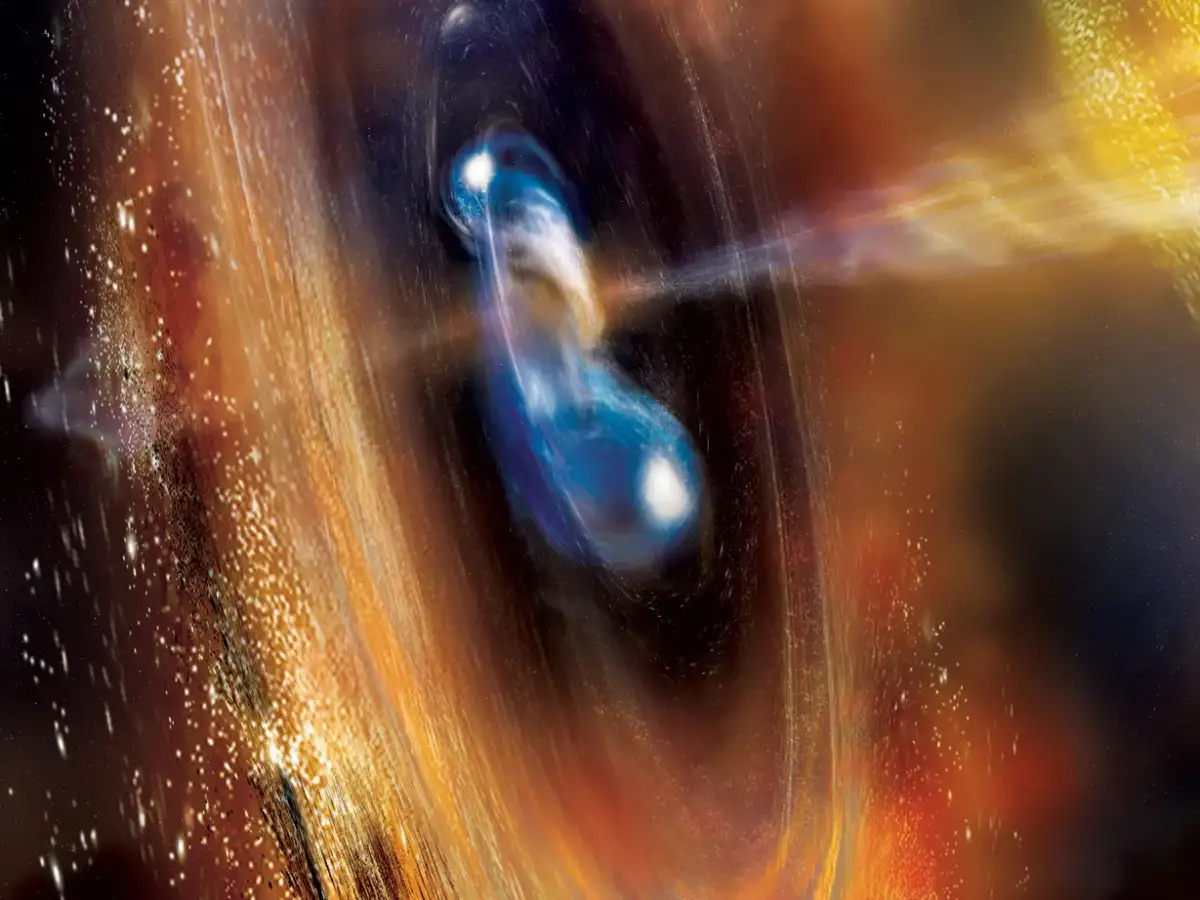
For more than five decades, gamma-ray bursts have puzzled astronomers — but new observations of their powerful afterglows are challenging long-held ideas about how these cosmic explosions work. Detected accidentally in 1967 by US military satellites searching for nuclear tests, these brief flashes of high-energy radiation were later found to originate billions of light-years away and can release extraordinary amounts of energy in seconds.
Recent observations of gamma-ray burst afterglows, including one tracked by the High Energy Stereoscopic System (HESS), have offered scientists a closer look at what happens after these explosions and raised fresh questions about the physics driving them.