Sometimes the most important scientific discoveries aren’t made in a lab. They are made in a long-forgotten box that sat in a freezer for more than 50 years.
And that’s what happened with a tube of frozen dirt pulled out of Greenland by the US Army in 1966. According to a study published in the Proceedings of the National Academy of Sciences (PNAS), inside that soil sample was something nobody saw coming: preserved leaves, twigs and moss from a Greenland that had no ice at all.

A Cold War project with an unexpected payoff
Back in the 1960s, the US military built Camp Century, a base tunneled right into the Greenland ice sheet. On paper, it was a polar research station. But it also doubled as cover for Project Iceworm, a secret Cold War plan to hide nuclear missiles under the ice, according to a University at Buffalo report. The plan never materialized. But the science team there did work that mattered a whole lot more decades later.
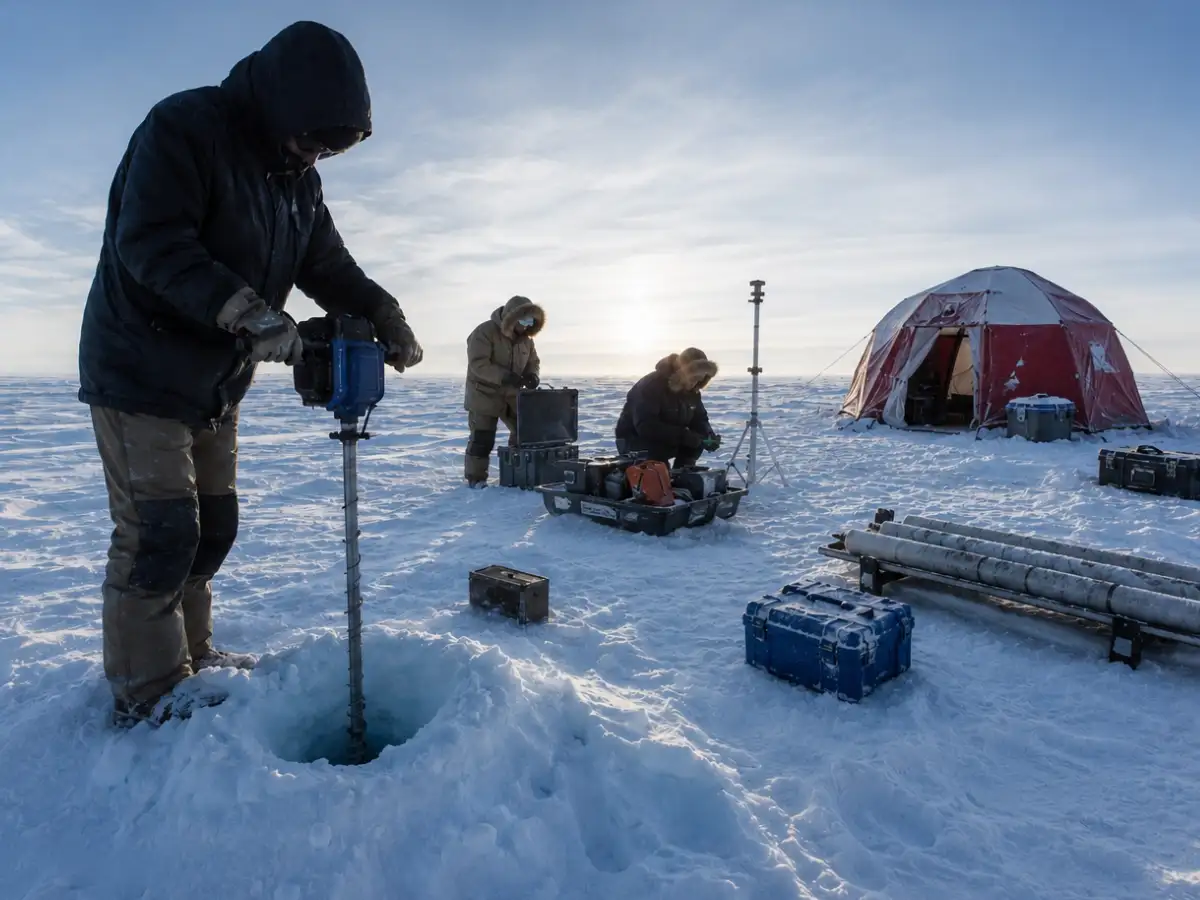
They drilled a core of ice almost 1.4 kilometers deep, almost 4,560 feet, to land under the ice, at a site about 120 kilometers from Greenland’s coast. As the drill reached bottom, the team pulled up about 15 feet of frozen dirt and rock, the PNAS study says. At the time, hardly anybody probably thought twice about it. It was put away and pretty much forgotten.
Lost, then found again, decades later
The sample spent years moving between storage facilities. According to the University at Buffalo report, it was first stored frozen at the university starting in 1966, then moved to Denmark’s Niels Bohr Institute in the mid-1990s, where it was stored in unmarked boxes, essentially lost to science, for another 20 years.