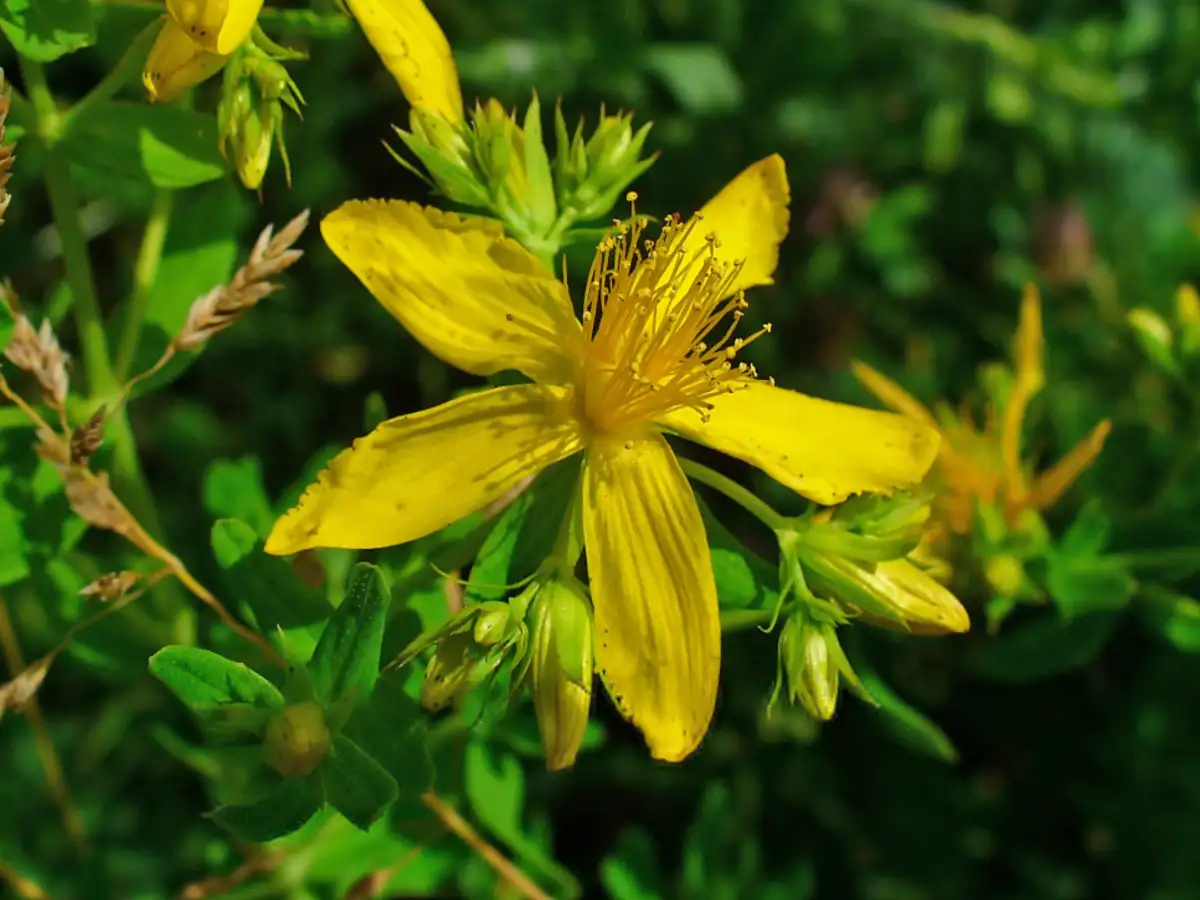
Common St. Johnswort, which is called Klamathweed by California ranchers, is a European and West Asian native that had become one of the worst rangeland weeds in California by the 1940s. Common St. Johnswort contains hypericin, which causes the animals to become sun‑sensitive, resulting in blisters, weight loss and even death in severe instances. UC IPM notes that it is a rangeland weed that was poisonous for grazing animals and had spread to such an extent that it was threatening vast areas of grazing lands in the northern region of California
Chrysolina hyperici and C. quadrigemina were chosen for their narrow diet on Hypericum