
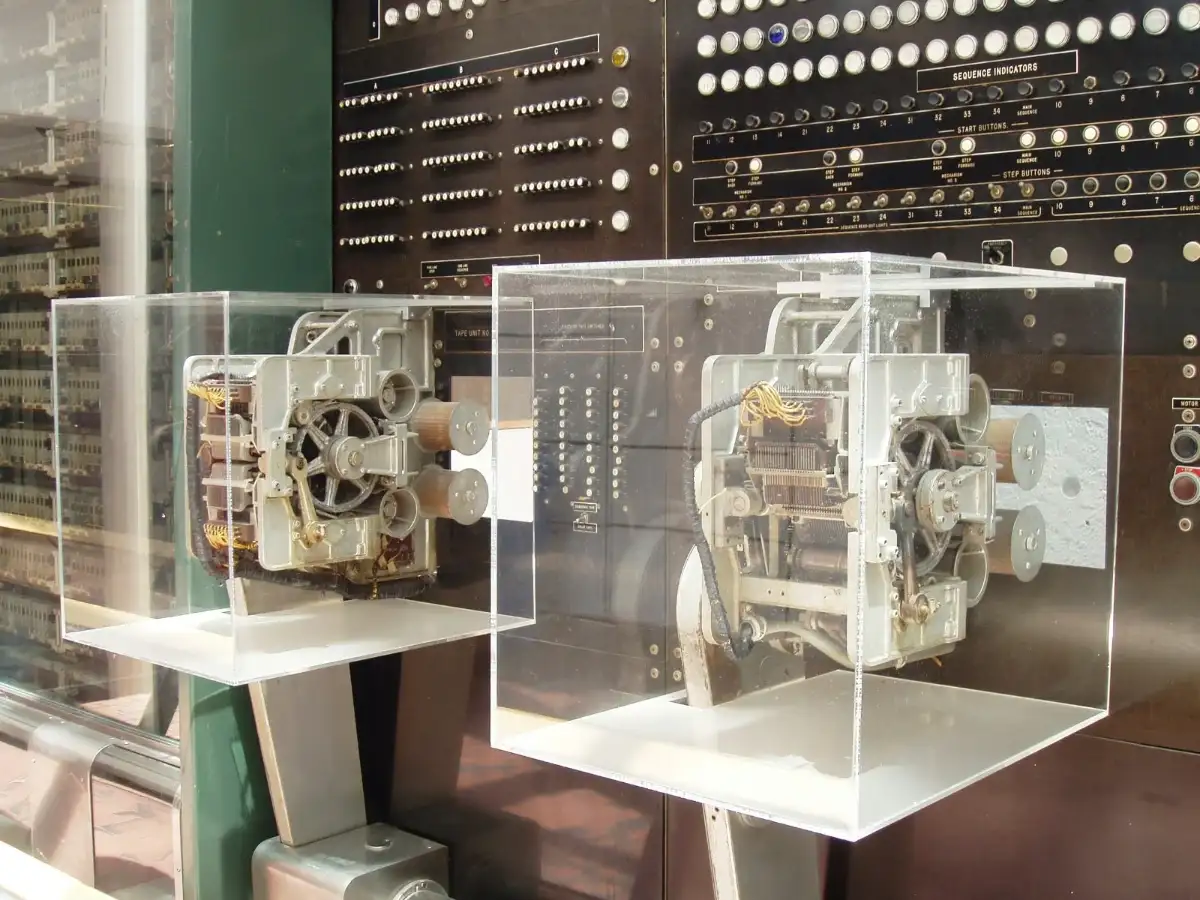
Picture the noisiest "smart" gadget you own. Maybe it's a laptop fan on its last legs. Now imagine a machine the length of a city bus, making the kind of racket a freight train could appreciate, all to do simple arithmetic. This machine was real; it was housed at Harvard, and according to the National Inventors Hall of Fame, it was the brainchild of engineer Howard Aiken and a crew of IBM designers, Clair Lake, Frank Hamilton, and Benjamin Durfee among them, who built the device in 1944 to solve equations the U.S. Navy needed solved yesterday.
They called it the Automatic Sequence Controlled Calculator. Everyone else knew it as the Harvard Mark I. It's easy to dismiss the Mark I as a quaint artifact. But the device that outweighed a pickup truck is, in fact, the awkward, oversized ancestor to the phone in your pocket, and its story has more than a few uncomfortable echoes for anyone keeping up with the modern gold rush around AI.












