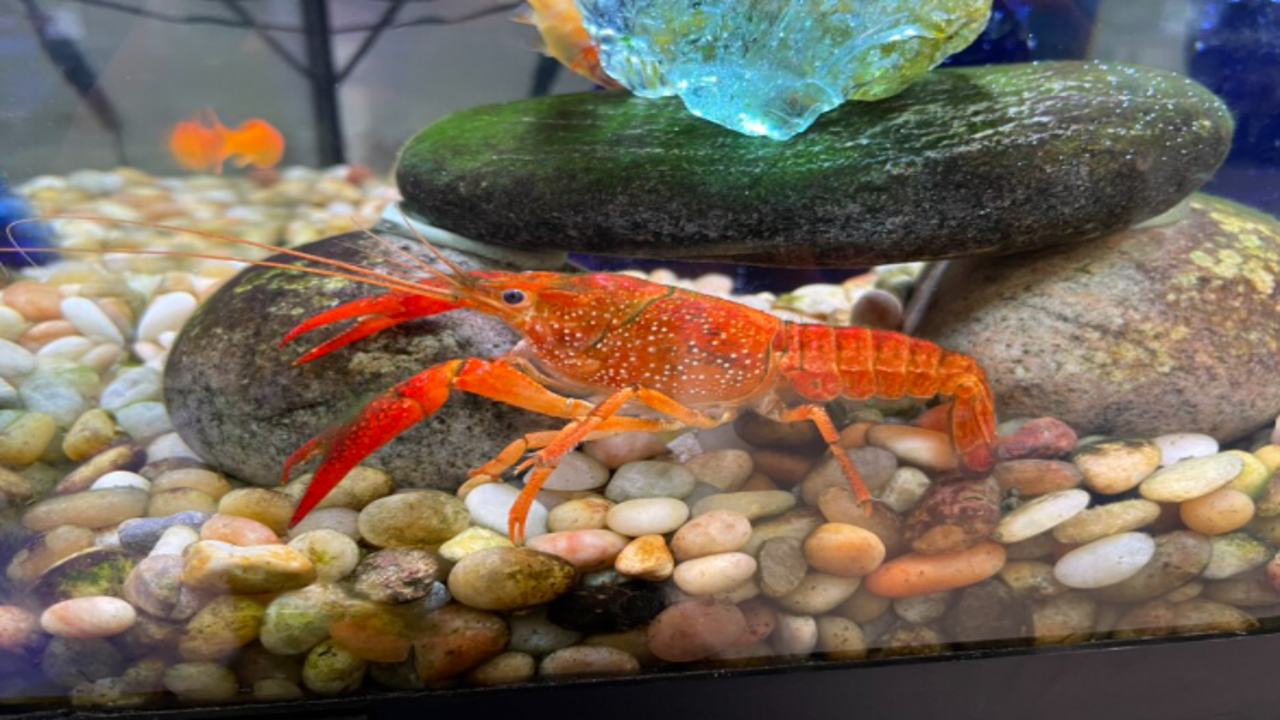
The red swamp crayfish has become a familiar sight in Japan, particularly around ponds, irrigation channels, and rice fields. It is now widespread in the country's rice-growing areas, particularly where established populations have taken hold. Much of Japan's red swamp crayfish population traces its origins to a shipment of roughly 100 crayfish brought to the country in 1927 for a single purpose: feeding another imported animal that Japan was trying to farm for profit.
Get breaking news anytime, anywhere. Download the TOI app now!

Imported for frogs, not fields
The sequence of events started with the American bullfrog rather than the crayfish. In the 1920s, Japanese entrepreneurs experimented with raising American bullfrogs as a potential commercial venture. The frogs had been introduced to Japan as a potential food resource, creating demand for a readily available source of feed. Frog-farming operations were established in Kanagawa Prefecture. Around 100 red swamp crayfish ( Procambarus clarkii ) were shipped from New Orleans, Louisiana, to Japan in 1927 to serve as a potential food source for a bullfrog farm. Most did not survive the journey; according to Conquering the World: The Invasion of the Red Swamp Crayfish , about 20 survived and were released into ponds at the farm to provide food for the frogs.
The species' ability to tolerate a wide range of conditions may also have helped it spread beyond its original range. A 2023 peer‑reviewed genomic study titled Genomic adaptive potential to cold environments in the invasive red swamp crayfish , published in iScience in 2023, found that Japanese populations of Procambarus clarkii have evolved genetic mechanisms for cold tolerance. RNA‑seq analysis revealed differentially expressed genes linked to protease inhibitors and cuticle development, alongside gene family duplications, suggesting that these adaptations may help the species tolerate cooler environments.
From surviving a few individuals to becoming a national species
This bullfrog project, like other animal-importation efforts in the 1920s, was not successful. After the frog-farming operation ended, crayfish remained in the ponds and were able to establish themselves in nearby waters. The surviving individuals are thought to have begun breeding in the wild in Kanagawa around 1930. The crayfish spread rapidly from that point of origin. Within decades, the species had spread far beyond Kanagawa, occupying rivers, lakes, irrigation channels, and rice fields across Japan. The species was already abundant and damaging rice fields by the 1950s, and by the mid-1970s, it had spread to every Japanese prefecture except Hokkaido. This represented a remarkable expansion from an initial surviving population of only about 20 crayfish.
How the crayfish succeeded while the bullfrog business failed
The same traits that made the red swamp crayfish a convenient, low-maintenance source of feed for farmed bullfrogs became problematic once the species established itself in the wild. The crayfish is omnivorous and feeds on aquatic plants, insects, tadpoles, and decomposing matter. It also tolerates poor water conditions and low dissolved oxygen better than many native species, and it digs elaborate tunnels in ponds and rice-paddy banks.
The crayfish's digging behavior, fast reproductive rate, and long lifespan make it a persistent problem in rice-growing areas, where it undermines earth banks that retain irrigation water and feeds on native pond creatures. A study published in the Journal of Crustacean Biology found that the crayfish preys on native paddy-dwelling organisms, including giant water bugs and the larvae of native salamanders.
A complex heritage
In 2023, 96 years after its initial importation from New Orleans, Procambarus clarkii was officially designated an invasive alien species by Japan's Ministry of the Environment and Ministry of Agriculture, Forestry and Fisheries. This regulatory approach reflects the crayfish's mixed status in Japan. The species remains familiar to many people in Japan, where it can be caught in ponds, irrigation channels, and other freshwater habitats. But at the same time, it is a problematic creature that continues to threaten the agricultural and natural environment by compromising paddy dams and competing with native species over a territory that now covers most of Japan.