Get all your news in one place.
100's of premium titles.
One app.
Start reading
The Times of India
The Times of India
World
TOI World Desk

In 1898, an adventurer abandoned the sea for California's desert and built a home on a volcanic island; his strange settlement later became known as Hell's Kitchen

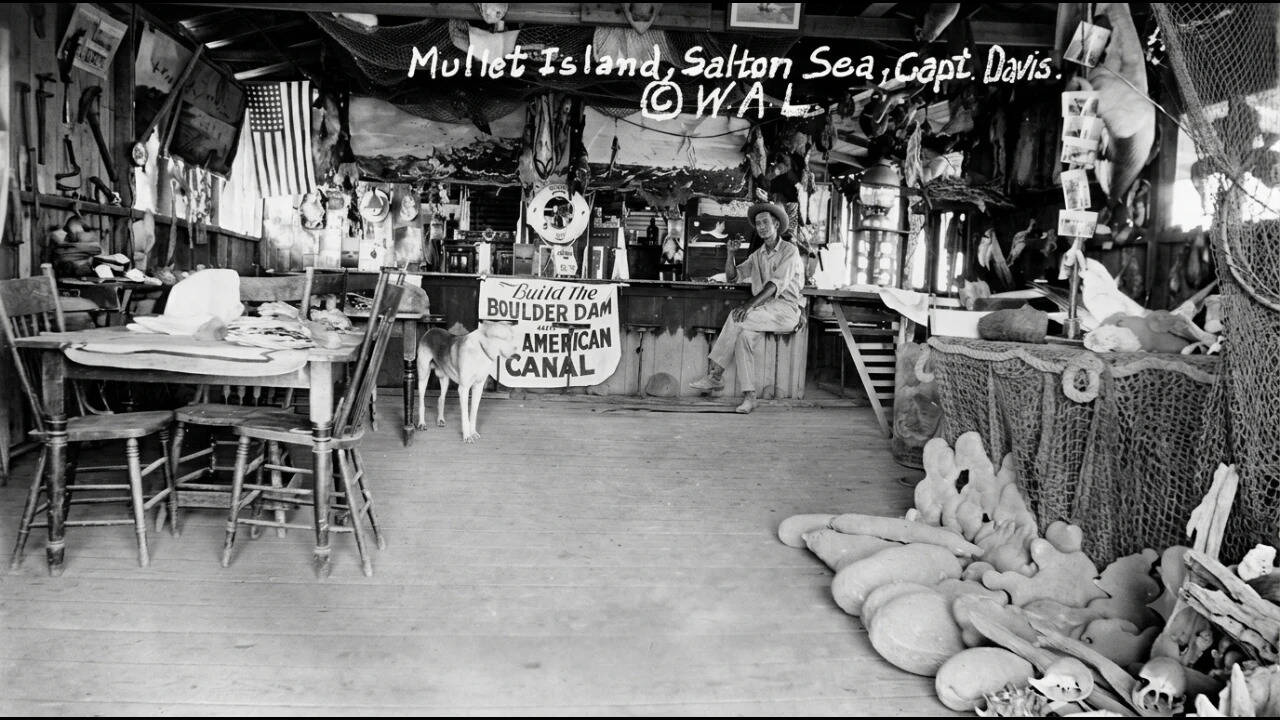
The Salton Sea has long attracted people drawn to its strange landscape, but few embraced its isolation quite like Captain Charles E. Davis. Born into a wealthy Massachusetts family, Davis left home for a life at sea and earned the title “captain” by the age of 18. His adventures eventually brought him to California, where he settled on a volcanic butte that became Mullet Island after the Colorado River flooded the Salton Sink. There, he built a cabin and created Hell’s Kitchen, an unusual cafe, dance hall and boat landing surrounded by boiling mud pots and extreme desert heat. Davis spent more than two decades making the remote site his home and playground. He sold alfalfa-fed mullet, hosted dances, sang sea shanties and pursued a string of eccentric schemes. Yet his strangest obsession came later, when he became fascinated by the doomed Donner Party and set out to retrace its historic journey. What followed turned Davis from an eccentric desert settler into an unlikely chronicler of one of the most notorious journeys in American pioneer history.

Get breaking news anytime, anywhere. Download the TOI app now!

Captain Davis turned a remote desert island into his home while retracing the extraordinary journey of stranded settlers

According to Atlas Obscura, in 1898, Davis made camp on a barren volcanic butte near the Salton Sink. When flooding created the Salton Sea, the elevated land became Mullet Island. Fascinated by the idea of living on a dead volcano roughly 200 feet below sea level, Davis built his cabin there and eventually established Hell’s Kitchen. In 1908, the unusual outpost became a boat landing, cafe and dance hall. Davis appeared remarkably comfortable in the harsh surroundings. The area was known for intense heat, hissing geysers and boiling mud pots, yet he turned the isolated island into a destination for fishermen, travellers and adventurers. He also became involved in conservation, local politics and wildlife activities, earning a reputation as one of the Salton Sea’s most colourful residents.

Hell’s Kitchen served fish, music and plenty of eccentricity

Hell’s Kitchen was more than a remote restaurant. Davis cooked meals, hosted dances, rented boats and entertained visitors with his powerful baritone and sea shanties. He also sold what he called “alfalfa-fed mullet”, feeding alfalfa to fish around his dock before selling them to customers. His buildings and even his truck were decorated using natural pigments made from mineral-rich mud around the Salton Sea. His ambitions frequently extended beyond the ordinary. Davis once transported a large barge from San Pedro, intending to transform it into a showboat offering music, dancing and moonlight excursions. The vessel promptly sank when he launched it. He also introduced sea lions to the Salton Sea, but they failed to survive in the environment. Rather than deterring him, such failures seemed to become another part of his remarkable legacy.

His fascination with the Donner Party took him thousands of miles

In the 1920s, Davis became deeply fascinated by the Donner Party, whose disastrous 1846–47 journey to California had become one of the darkest episodes in American westward migration. He began creating large paintings depicting the group's ordeal, using homemade paints made from mineral pigments and fish oil. He displayed the works at Hell’s Kitchen, transforming the remote establishment into an unusual gallery. Eventually, Davis decided that studying the story was not enough. Armed with newspaper clippings and extensive research, he retraced the Donner Party’s route from Independence, Missouri, to Sacramento, covering more than 2,000 miles. Along the way, he collected photographs, documents, relics and other material connected with the journey. His collection ultimately became part of the Charles E. Davis Overland Trail Project Collection at Sutter’s Fort. Davis eventually left Mullet Island and returned to Massachusetts, where he died in 1933. Today, the island is no longer surrounded by water and the mud pots that once defined Hell’s Kitchen have largely disappeared, but remnants of his dwelling remain. His extraordinary life survives in photographs, collections and historical accounts as a portrait of a man who repeatedly chose the most unlikely places and projects for his next adventure.

Sign up to read this article
Read news from 100's of titles, curated specifically for you.
Already a member? Sign in here
Related Stories
Top stories on inkl right now
One subscription that gives you access to news from hundreds of sites
Already a member? Sign in here
Our Picks
Fourteen days free
Download the app
One app. One membership.
100+ trusted global sources.