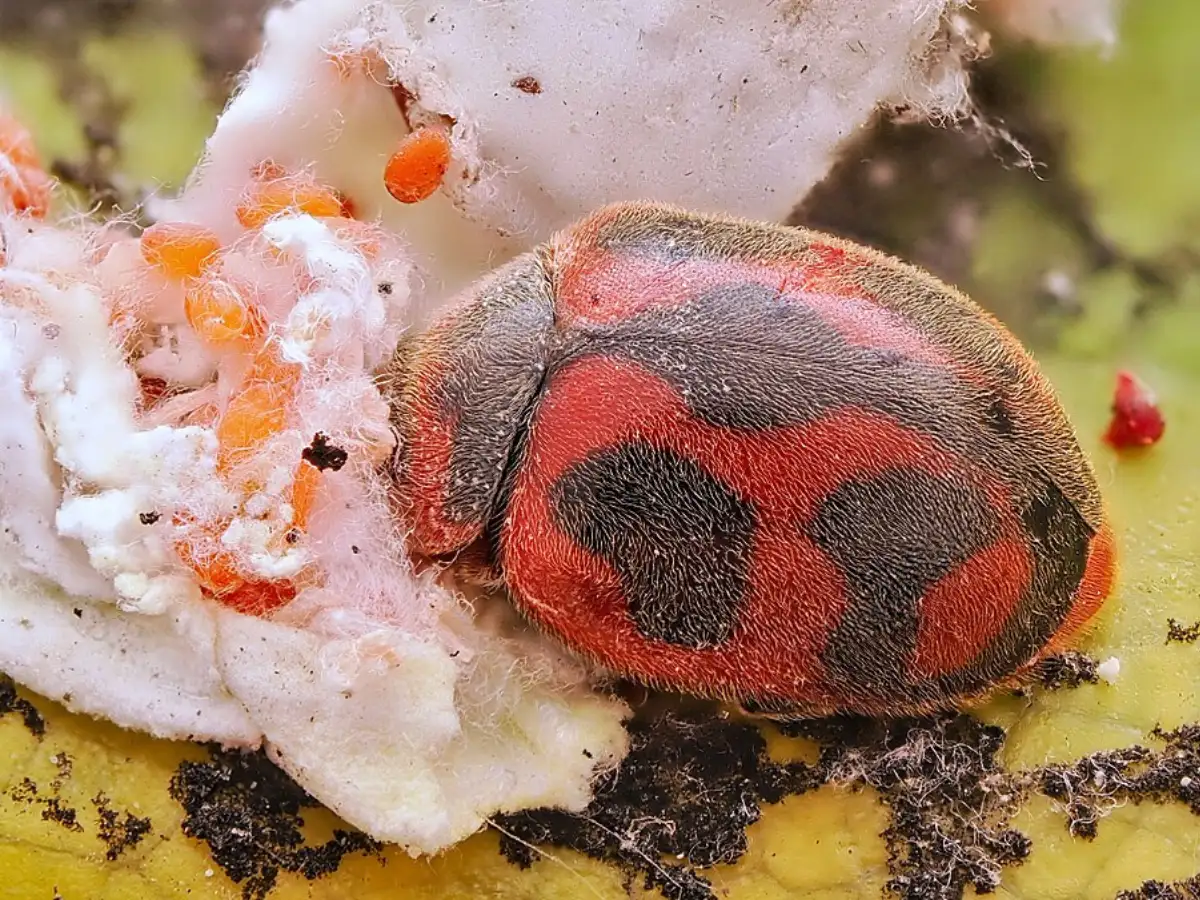
California’s citrus growers were staring ruin in the face. The cottony cushion scale was a tiny, sap-sucking insect that had spread through orange and lemon groves, and nothing appeared to stop it. So the United States Department of Agriculture (USDA) did something unusual: it sent a scientist to Australia to bring back a beetle. This story is documented in the Charles Valentine Riley Collection, a USDA National Agricultural Library archive. What followed became an important case in pest control and is still discussed today.
A pest that arsenic and kerosene could not kill
The cottony cushion scale, scientifically known as Icerya purchasi, was first recorded in California in 1868 after arriving from Australia. According to an overview published in Biological Control, the insect was ravaging citrus groves in southern California by 1886. Growers tried arsenic sprays, kerosene, and tent fumigation, but the methods were largely ineffective and often damaged the trees themselves. Charles Valentine Riley, the USDA's chief entomologist then, had an idea of his own. He reasoned that if the pest came from Australia, it probably still had natural enemies there too. So in 1888 he hired entomologist Albert Koebele to make the voyage across the Pacific for them.