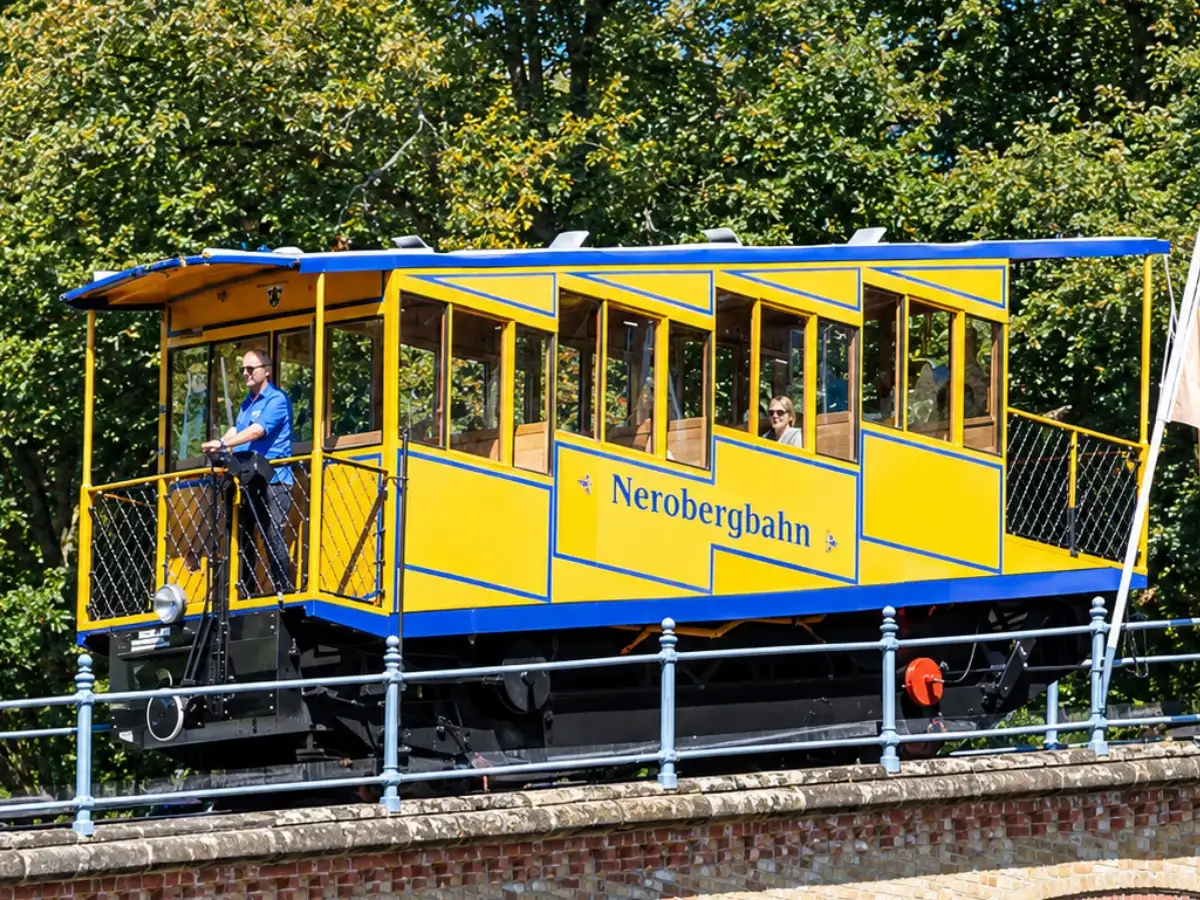
Wiesbaden's Nerobergbahn has climbed the same hillside since September 25, 1888, and it has never used a motor to do it. Instead, it uses water. The technical specifications published by ESWE Verkehr, the transit company that has operated the railway under the city's public transit authority since it opened, confirm this. Every year, about 300,000 passengers ride two carriages that pull each other up and down a 272-foot rise using nothing but gravity and Wiesbaden's public water supply. The idea might seem too simple to work for a real train. But the Nerobergbahn remains Germany's oldest water-ballast rack railroad, and it still runs pretty much as it did in the days of Kaiser Wilhelm II.
How the water does the work

At the top station, one carriage fills a tank with water under its floor. The tank has a capacity of 1,849 gallons, or 7,000 liters, adding about 15,430 pounds to the carriage. Both carriages run on a steep 1,439-foot track and share a single steel cable that passes through a pulley at the top station. When the tank is full, the downhill carriage, which is heavier, begins to sink under its own weight. It pulls the cable as it falls, and the cable drags the lighter carriage up from the bottom. The route is mostly single track, with the two cars passing at a short loop halfway.
When the loaded carriage reaches the bottom, its tank is emptied. That water is kept in a 200-cubic-meter reservoir near the bottom station until a 37-kilowatt pump pushes it back up to a 350-cubic-meter tank at the top, ready for the next round trip. No part of the carriages' own cycle involves burning fuel, though the pump that returns the water to the top does draw electricity. The "no engine" design refers to the cars themselves, which carry no onboard motor.