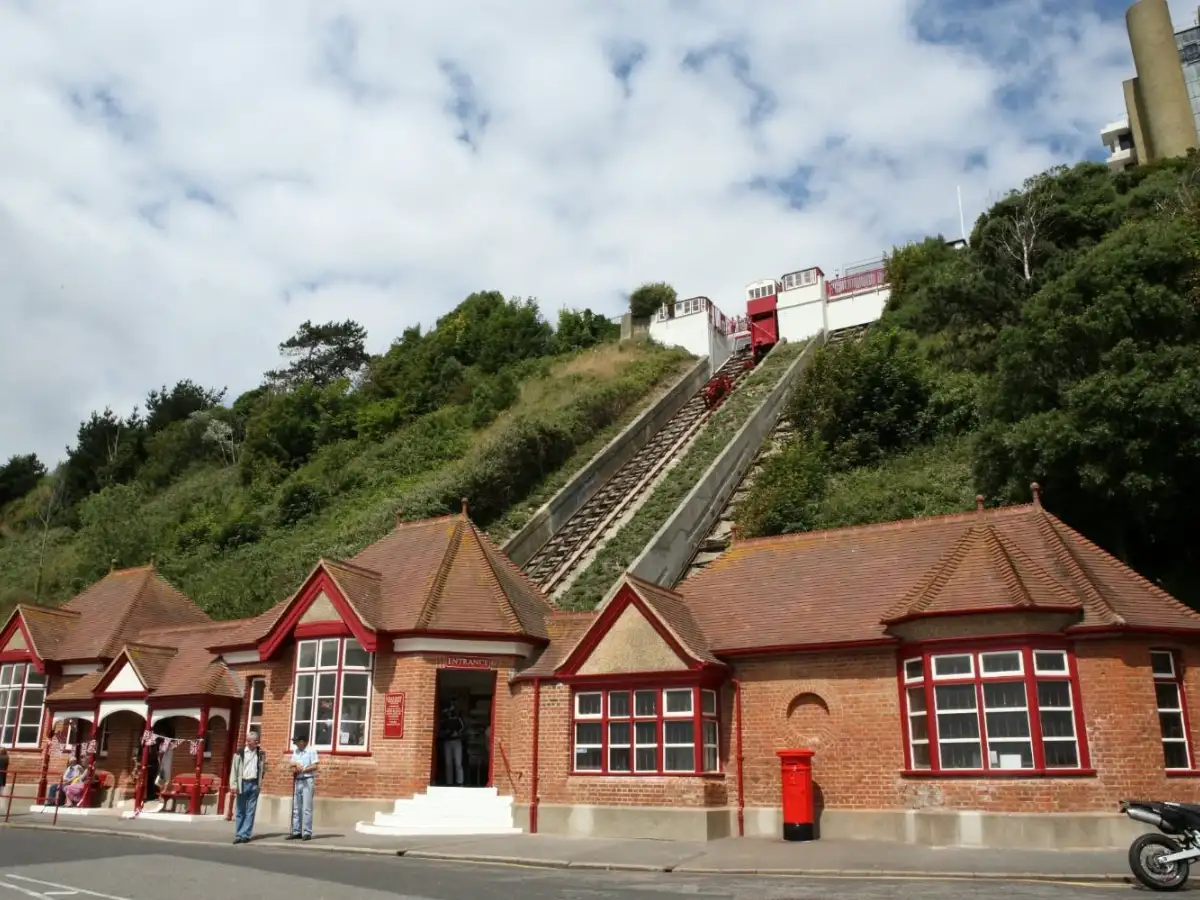
There's a machine that has overcome the same challenge that Silicon Valley is trying to disrupt: how to get people up a hill without burning anything, and it's been somewhere along the English coast for more than 100 years. No battery pack, no charging station, and no software update. It's just water, gravity and a Victorian engineer's determination not to complicate things.
This is the Leas Lift in Folkestone, Kent, one of the most amazing cliff railways, powered exclusively by water to move over 36.4 million passengers between the town's clifftop promenade and seafront, before its closure for safety repairs. Built in 1885 by engineers Waygood and Co. and designed by architect Reginald Pope for Folkestone Lift Company, the lift is protected by the official body, Historic England, that safeguards historic sites in the UK. It is Grade II listed, meaning that it is what the British government says “please for the love of history do not destroy this” about.