Get all your news in one place.
100's of premium titles.
One app.
Start reading
The Times of India
The Times of India
World
TOI World Desk

In 1857, Napoleon III ordered French towns to drain a swamp and plant pine trees; the result became a 10,000-square-kilometre forest

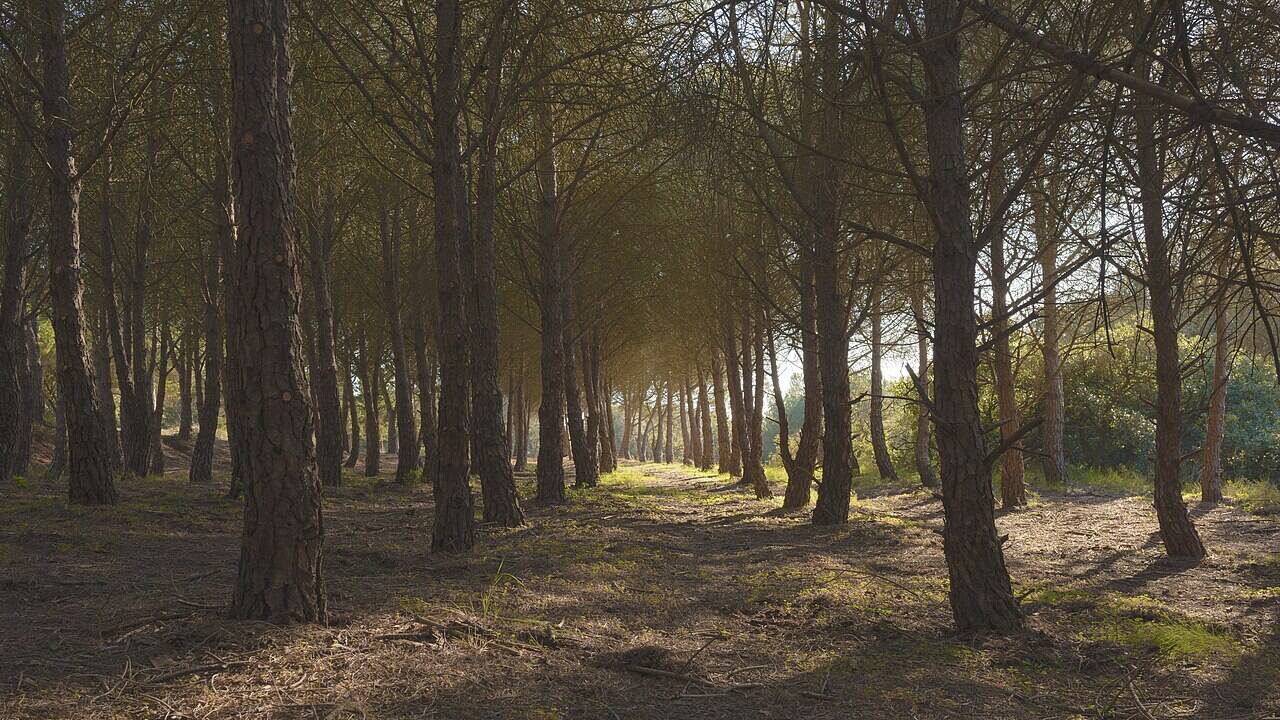
Today, it is hard to imagine that one of Europe’s largest forests was once an expanse of marshes, shifting sand dunes and waterlogged land where farming was difficult, and settlements were scattered. In the middle of the nineteenth century, French Emperor Napoleon III backed an ambitious plan that reshaped the landscape of south-western France over several decades. The initiative gradually transformed much of the region into the Forest of Landes, which continues to shape the area's identity nearly 170 years later.

Get breaking news anytime, anywhere. Download the TOI app now!

The Associated Press reports that the transformation began in 1857, when Napoleon III ordered municipalities across the Landes region to drain marshland and plant maritime pine trees. The aim was to address several challenges at once. However, waterlogging prevented cultivation, loose sand hindered transportation, and standing water in the marshes facilitated the breeding of mosquitoes. The construction of drainage systems, along with the plantation of maritime pine trees, enabled the drying of the marshes, stabilisation of the sandy soil, and improved economic potential.

The AP article says the Forest of Landes now covers about 10,000 square kilometres, making it the largest man-made forest in Western Europe. Over time, it became a major source of timber, paper and pine resin, supporting local industries and shaping the communities that developed around it.

A landscape created by people, shaped by generations

Maritime pine was selected because it adapts well to the region's sandy soils and grows relatively quickly. As plantations expanded, much of the former marshland gave way to dense forests that supported sawmills, paper mills and generations of forestry workers. The woodland has also become part of daily life for residents and a destination for visitors exploring its walking and cycling routes.

The forest’s expansion has also brought new challenges. The AP report notes that large plantations dominated by a single tree species can be more susceptible to wildfire during prolonged periods of hot and dry weather. Such conditions have become a growing concern as climate patterns change across parts of Europe.

Those risks became evident during the severe wildfires that affected south-western France in 2022. As reported by AP, tens of thousands of hectares burned, forcing large-scale evacuations and damaging extensive areas of woodland. The fires prompted foresters and land managers to reconsider practices that had been followed for many decades.

Instead of doing away with maritime pine entirely, forest management authorities have been looking into means of increasing forest resilience. According to the report, some landowners are diversifying their tree species composition, while others are widening fire breaks and facilitating easy access to the site by emergency personnel.

Adapting a nineteenth-century vision to a changing climate

The challenges facing the region today are very different from those that inspired Napoleon III’s original plan. In the nineteenth century, the priority was to reclaim marshland and create productive land. Today, attention is increasingly focused on helping the forest cope with hotter summers, longer dry spells and a higher risk of wildfire.

According to the AP report, many forest managers are now seeking to balance the region's long-established timber industry with measures that improve resilience to future climate conditions. Maritime pine remains central to the local economy, but there is growing interest in management practices that can better withstand extreme weather. For people in the region, the Forest of Landes is more than a source of timber. It forms part of the area's history, supports local businesses and provides a landscape that residents and visitors continue to enjoy throughout the year.

Nearly 170 years after Napoleon III launched the project, the Forest of Landes remains one of Europe's most remarkable examples of how large-scale land management can reshape a region. What began as an effort to drain marshes and stabilise sandy ground gradually developed into a forest that continues to influence the area's economy, landscape and way of life.

Today’s foresters are no longer focused on creating the forest from scratch. Instead, as the AP article suggests, the focus is increasingly on adapting long-established management practices so the Forest of Landes can remain productive while becoming better prepared for the environmental challenges of a changing climate.

Sign up to read this article
Read news from 100's of titles, curated specifically for you.
Already a member? Sign in here
Related Stories
Top stories on inkl right now
One subscription that gives you access to news from hundreds of sites
Already a member? Sign in here
Our Picks
Fourteen days free
Download the app
One app. One membership.
100+ trusted global sources.