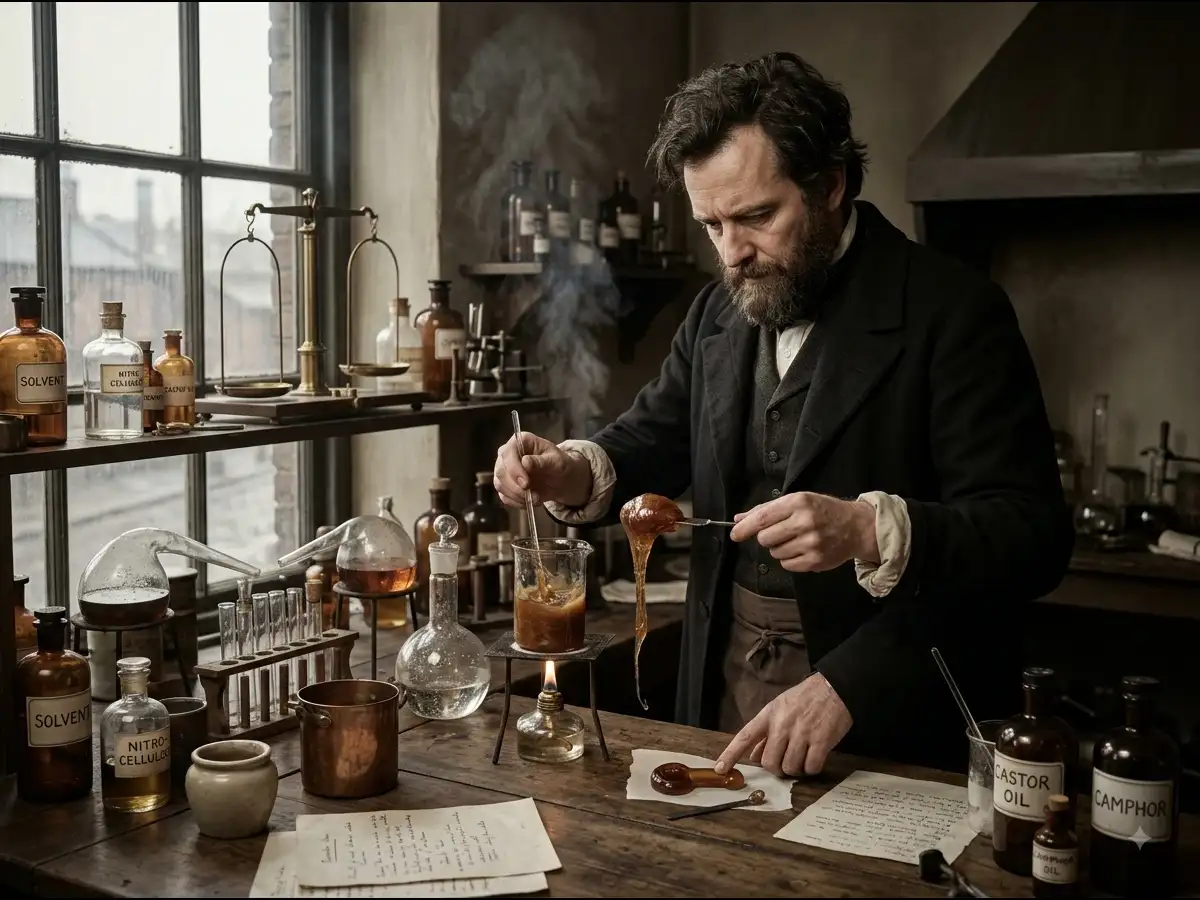
In 1856, an English chemist invented a unique material which set the foundation stone for huge global industry . English chemist and inventor Alexander Parkes developed Parkesine, a flexible material made from mixtures of nitrocellulose, alcohols, camphor and oils. The material predated celluloid and is regarded as the first man-made thermoplastic. Parkes presented it publicly at the 1862 International Exhibition in London. He hoped it could provide a substitute for materials such as ivory and tortoiseshell. However, the cost of production, cracking and fire risks affected its commercial use. The Parkesine Company closed in 1868.