
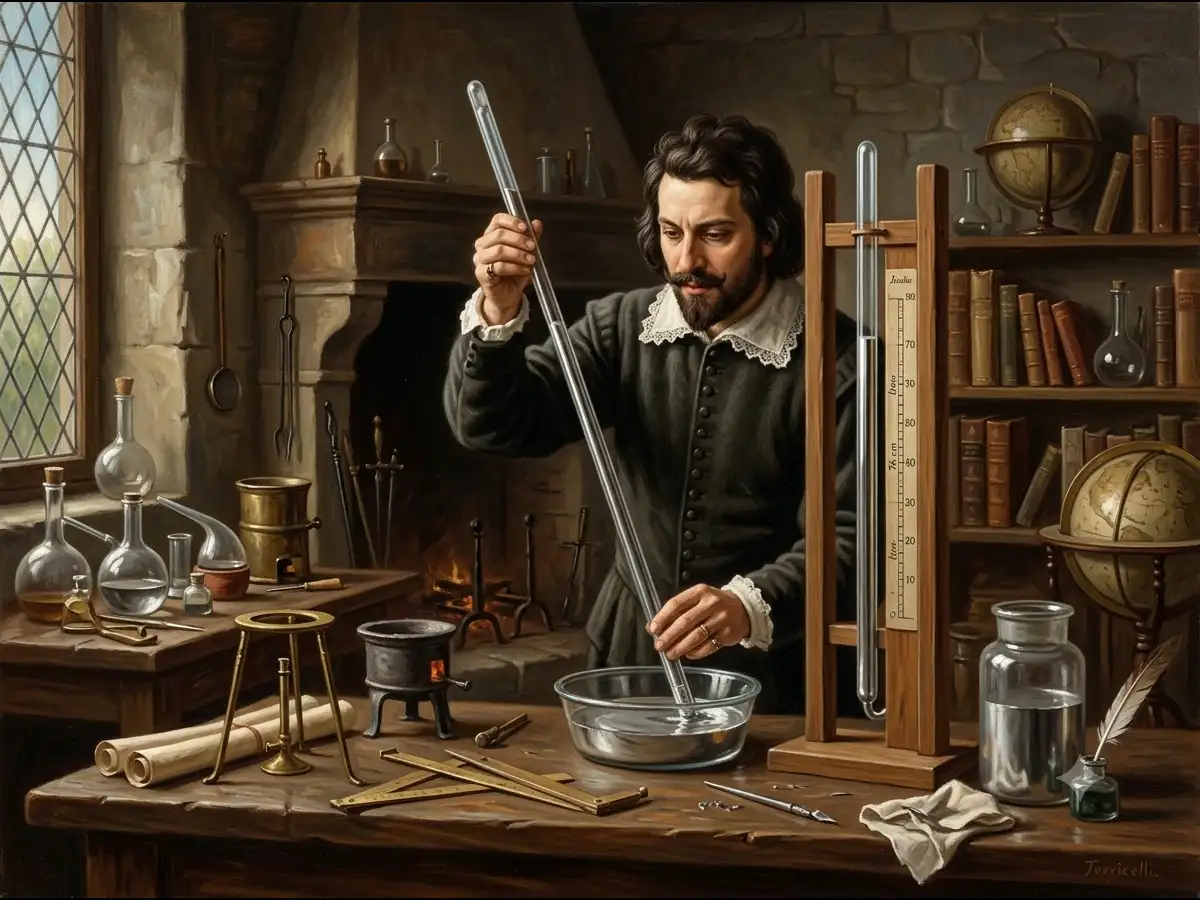
In 1643, an Italian physicist and mathematician came up with a crucial invention to help measure atmospheric pressure laying foundation for weather forecasts and unraveling many secrets in thermodynamics and modern meteorology. The scientist was Evangelista Torricelli, an Italian physicist and mathematician who invented the mercury barometer. The instrument gave scientists a way to measure atmospheric pressure by observing the height of mercury inside a glass tube. Torricelli also created a sustained vacuum during the experiment. His observations helped establish that air has weight and that atmospheric pressure can change. The invention later became linked with weather tracking, altitude measurement, pressure units and the development of modern meteorology.













