
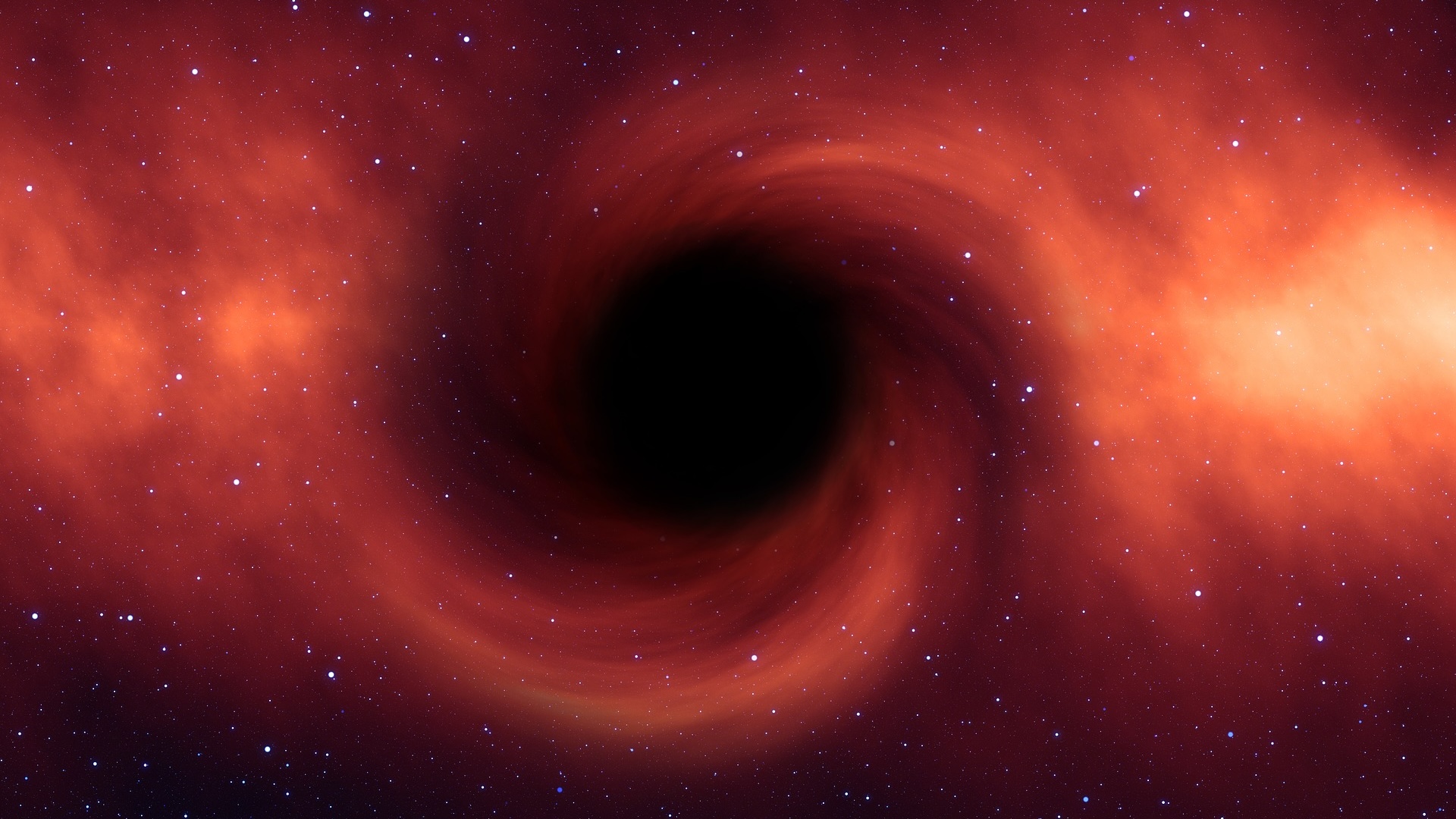
A recent study offers a potential solution to one of cosmology's most perplexing mysteries: how supermassive black holes in the early universe grew so massive, so quickly. By introducing a novel physics model, researchers explain how supermassive black hole seeds could have formed through the collapse of the mysterious entity known as dark matter.
Dark matter, an enigmatic ingredient of the universe that is effectively invisible and interacts with other matter only through gravity, provides the structural framework for galaxy formation. Despite its critical role, its nature remains one of the greatest mysteries in astrophysics. The standard cosmological model assumes that dark matter interacts solely through gravity, but this framework struggles to explain the existence of supermassive black holes as early as 800 million years after the Big Bang.













