
Get all your news in one place.
100's of premium titles.
One app.
Start reading
Golf Monthly
Golf Monthly
Sport
Michael Weston

I'm Seeing More Unrepaired Divots Than Ever Before... Why Do Standards Seem To Be Falling?

Unrepaired divots in golf .

It’s infuriating. You hit a perfect drive, march off the tee with a spring in your step, and then arrive at your ball only to see it has nestled down in an unrepaired divot.

It’s less of a problem for the pros who have the know-how to escape poor lies - just pop the ball back in the stance a little to encourage a steeper angle of attack and get that ball-first strike.

Playing from difficult lies is all part of the game, of course, and something we should all learn how to do.

However, if you come to rest in a huge crater (a slight exaggeration, maybe), you have every right to feel a little unfortunate (and angry).

Never mind that, of greater importance is the effect it has on the condition of the golf course, and the extra work it creates for the greenkeepers.

I’ve travelled fairly extensively around the UK this year, playing golf up and down the country, and I’m seeing more unrepaired divots than ever before.

So, why is this the case?

It’s a question I’ve put to many of the golfers I’ve played with, both members and casual players.

At the top of the list, I believe, is mixed messaging. “I’ve always thought it’s the job of the greenkeepers,” one person told me, adding that he believed that was their request at his club, because they would ensure it was replaced properly.

Very honest.

In fairness, maybe some greenkeepers prefer to do this job themselves, as they know they can replace divots correctly, therefore ensuring that it knits nicely back together.

Speak to most greenkeepers, though, and they’ll tell you that they’d rather be focusing their efforts elsewhere and that repairing a divot is actually really simple.

When a nice, clean slice of turf is taken - i.e., it’s still intact with its soil and roots - you should just replace it and then use your feet to apply a bit of pressure and smooth it out.

To help the healing process, it's also important to place the divot back in the correct orientation, too.

However, when a divot separates into lots of parts, you can do more harm than good by attempting to stamp all the little pieces back into place - it just won’t re-root to the ground.

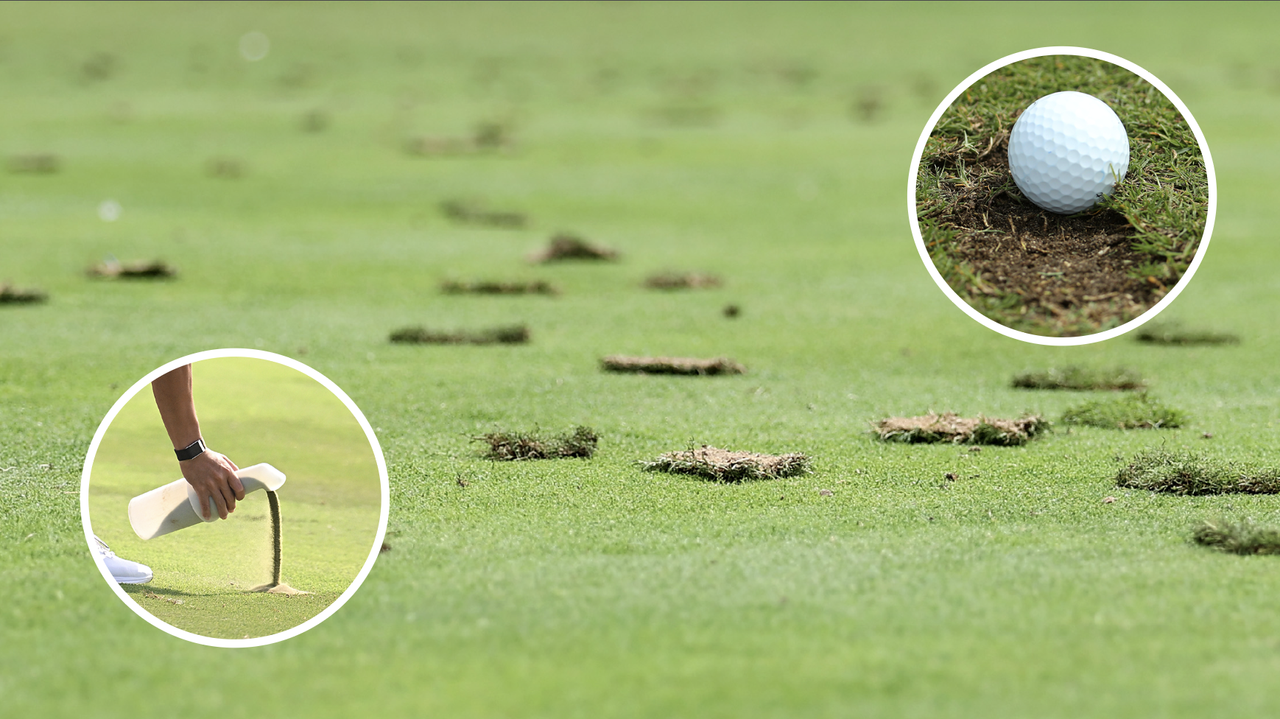
Using divot mix helps the healing process (Image credit: Getty Images)

Lots of clubs will provide a divot mix for these situations, where the job is on you to fill the hole evenly to just below and nearly level with the turf surface.

I suspect that in lots of cases, there’s still a lack of awareness around the correct procedure and what you should and shouldn’t do when you create a divot.

Some courses in the UK have artisan sections, which are made up of members who will typically pay a reduced rate but provide unpaid manual labor to help maintain the course.

And a fine job they do, too, which is something I’ve witnessed at my home club, Formby Golf Club in Merseyside.

Does having an artisan section give you the freedom to leave your divots where they lie? I would suggest not, for the longer that piece of turf is left loose, the less chance it has of knitting back together.

Perhaps the increase in the number of unrepaired divots - and I should stress that this is just my own general observation - is down to an influx of new players.

I’m not blaming beginners. Maybe golf clubs aren’t doing a good enough job of reminding members and visitors of the etiquette around repairing divots and pitch marks.

Finding a divot, whether fresh or unrepaired, happens to us all (Image credit: Getty Images)

I’ve seen some players replace divots on the tees, which also suggests there is some confusion around the dos and don’ts.

Either use some divot mix or leave it for the greenkeepers, because no one wants to be teeing up their ball on a wobbly bit of turf or lose their footing on a loose divot.

In many cases, however, it’s laziness - experienced golfers who should know better, but leave the job for someone else to do. It’s the equivalent of littering.

An unrepaired divot can take months to heal. They also tend to leave unsightly scars, and create unfavorable playing conditions. Basically, we all suffer.

If you're one of the guilty ones, consider yourself told off. See some walk on without repairing theirs… have a quiet word.

End of lecture.

Sign up to read this article
Read news from 100's of titles, curated specifically for you.
Already a member? Sign in here
Related Stories
Top stories on inkl right now
One subscription that gives you access to news from hundreds of sites
Already a member? Sign in here
Our Picks
Fourteen days free
Download the app
One app. One membership.
100+ trusted global sources.